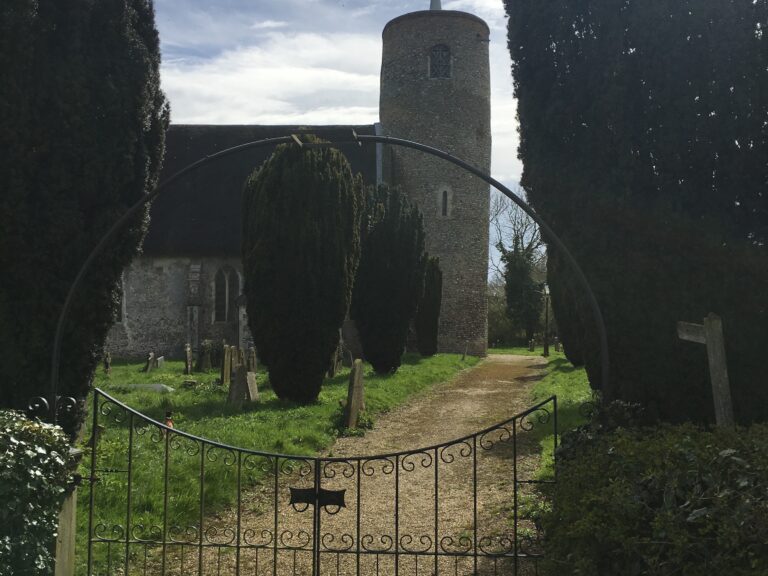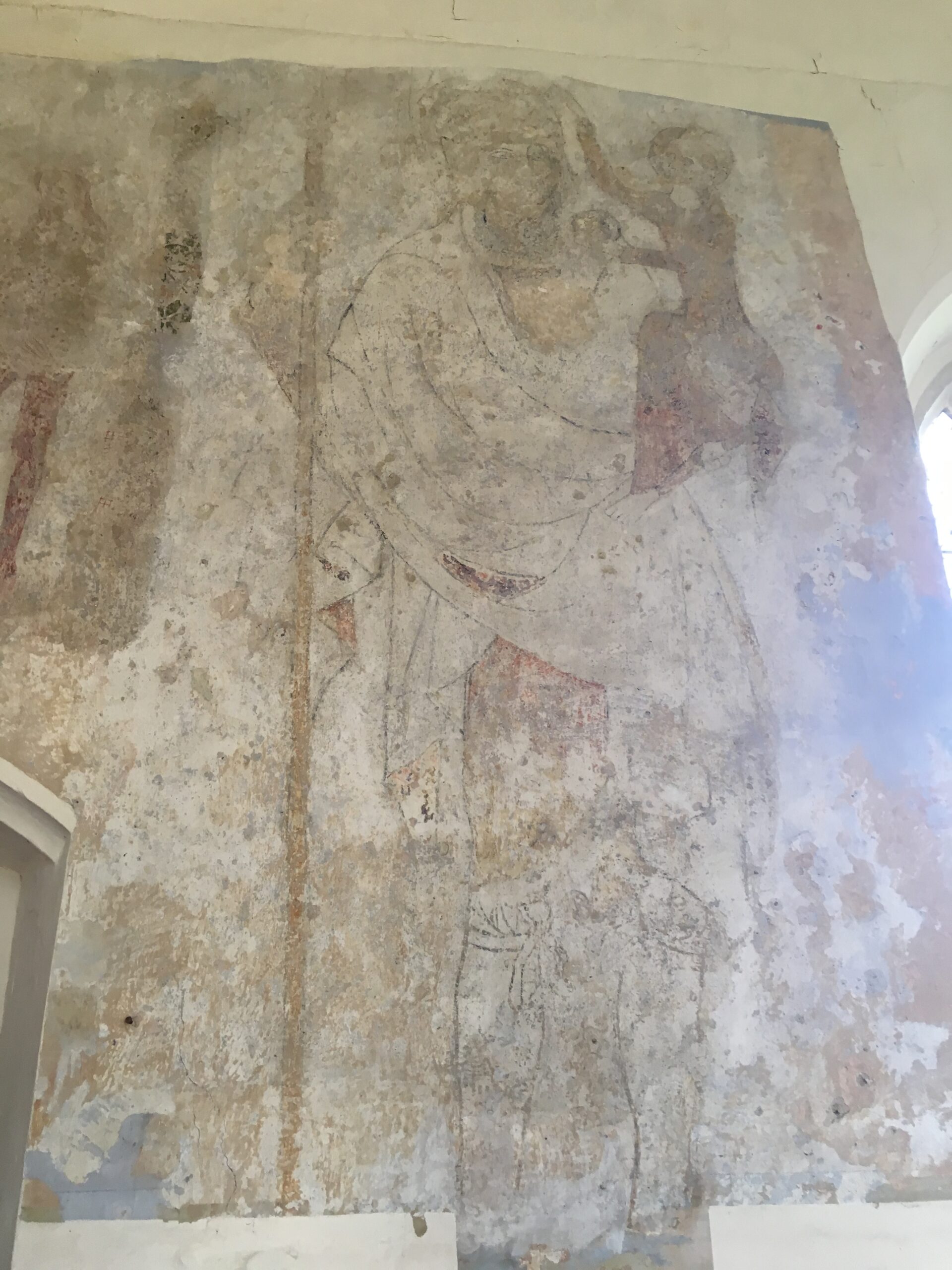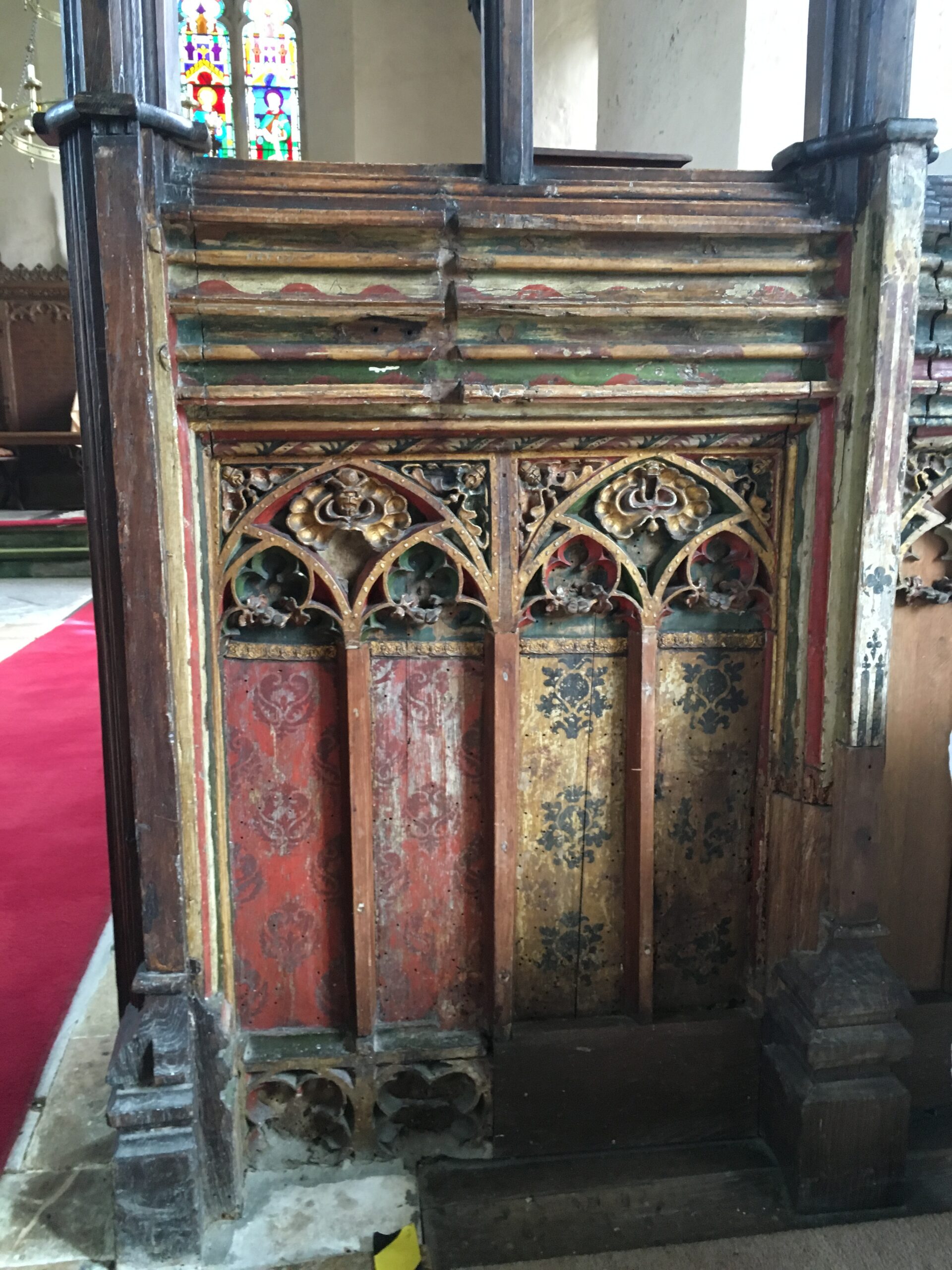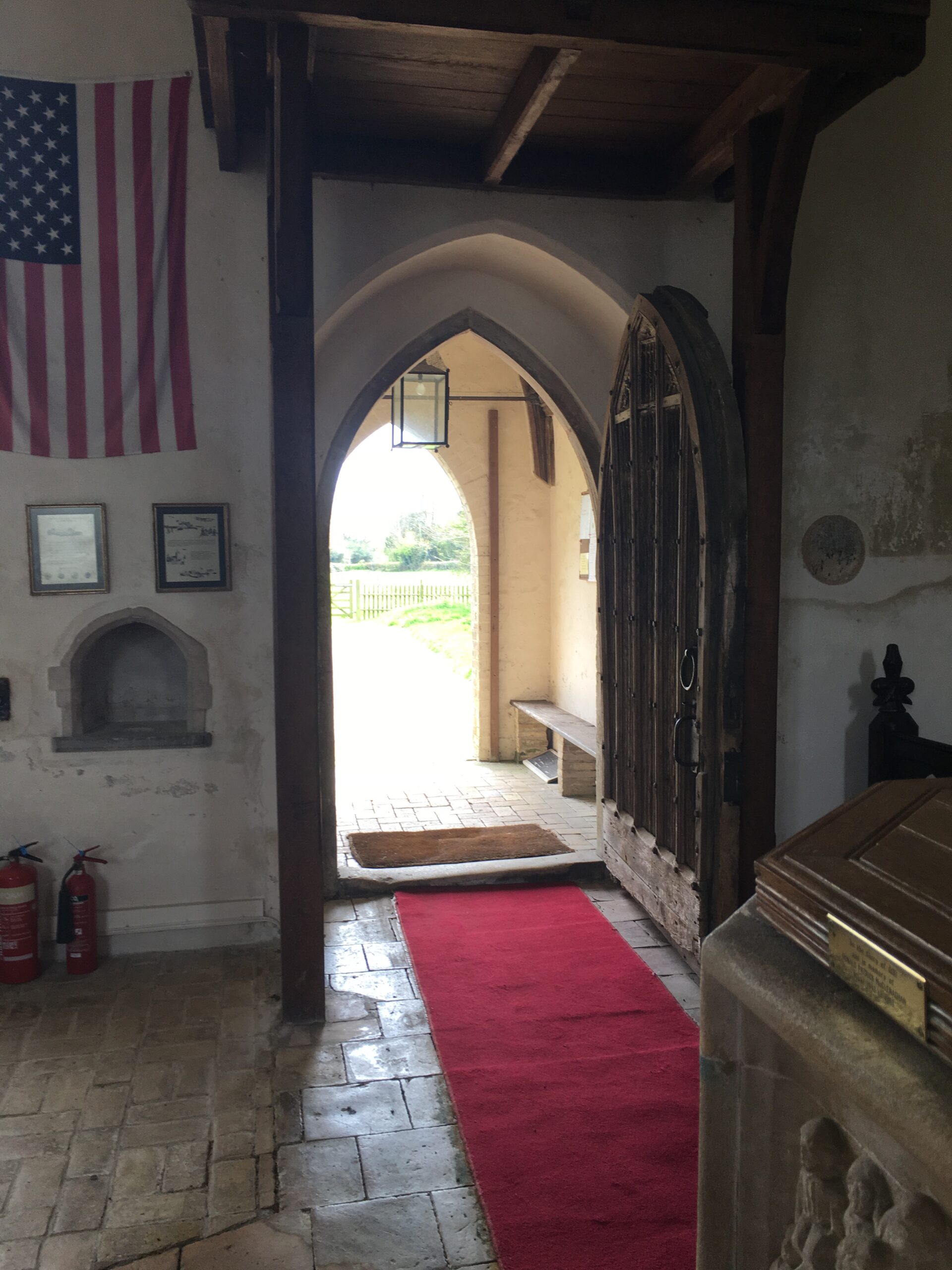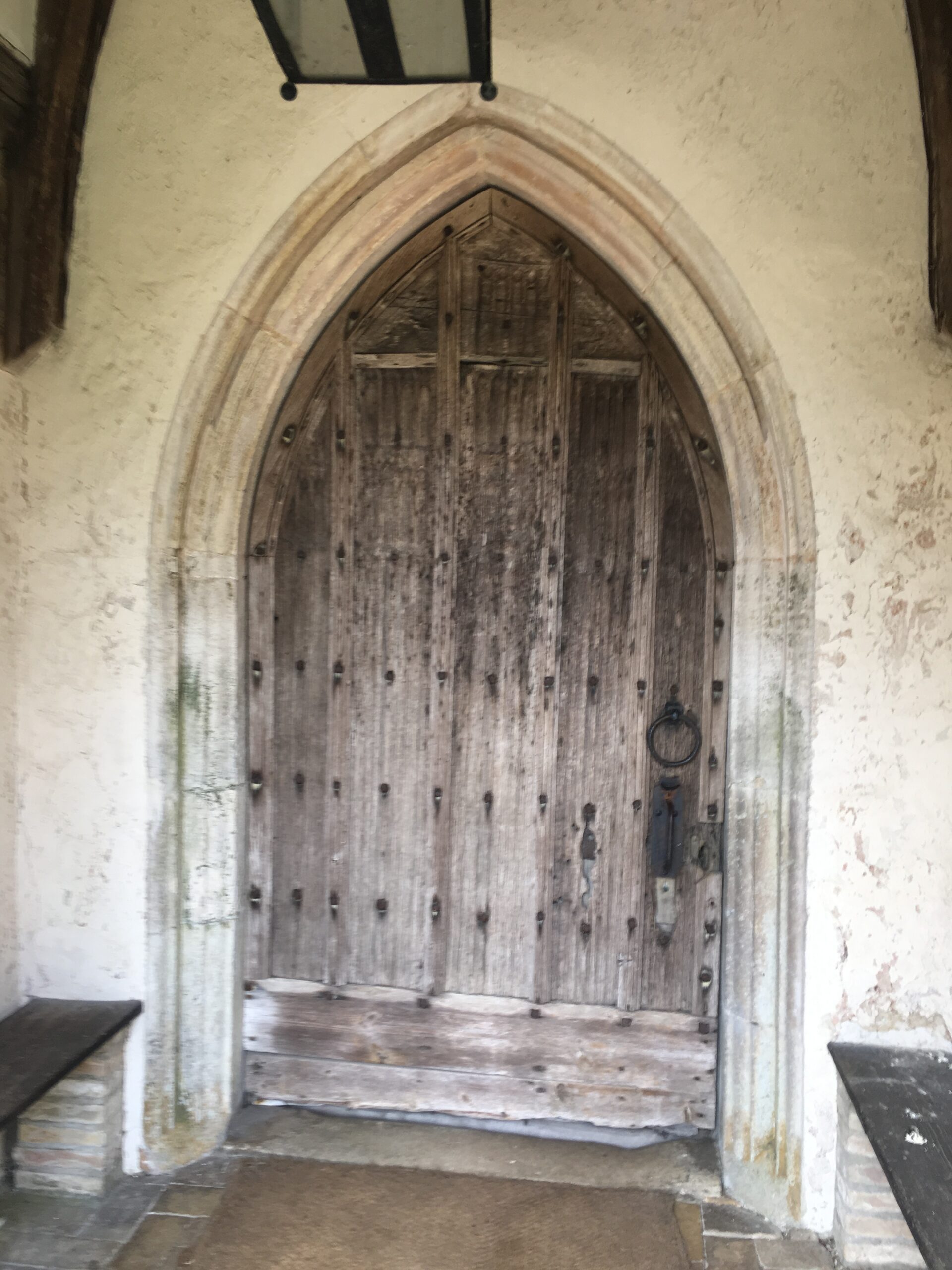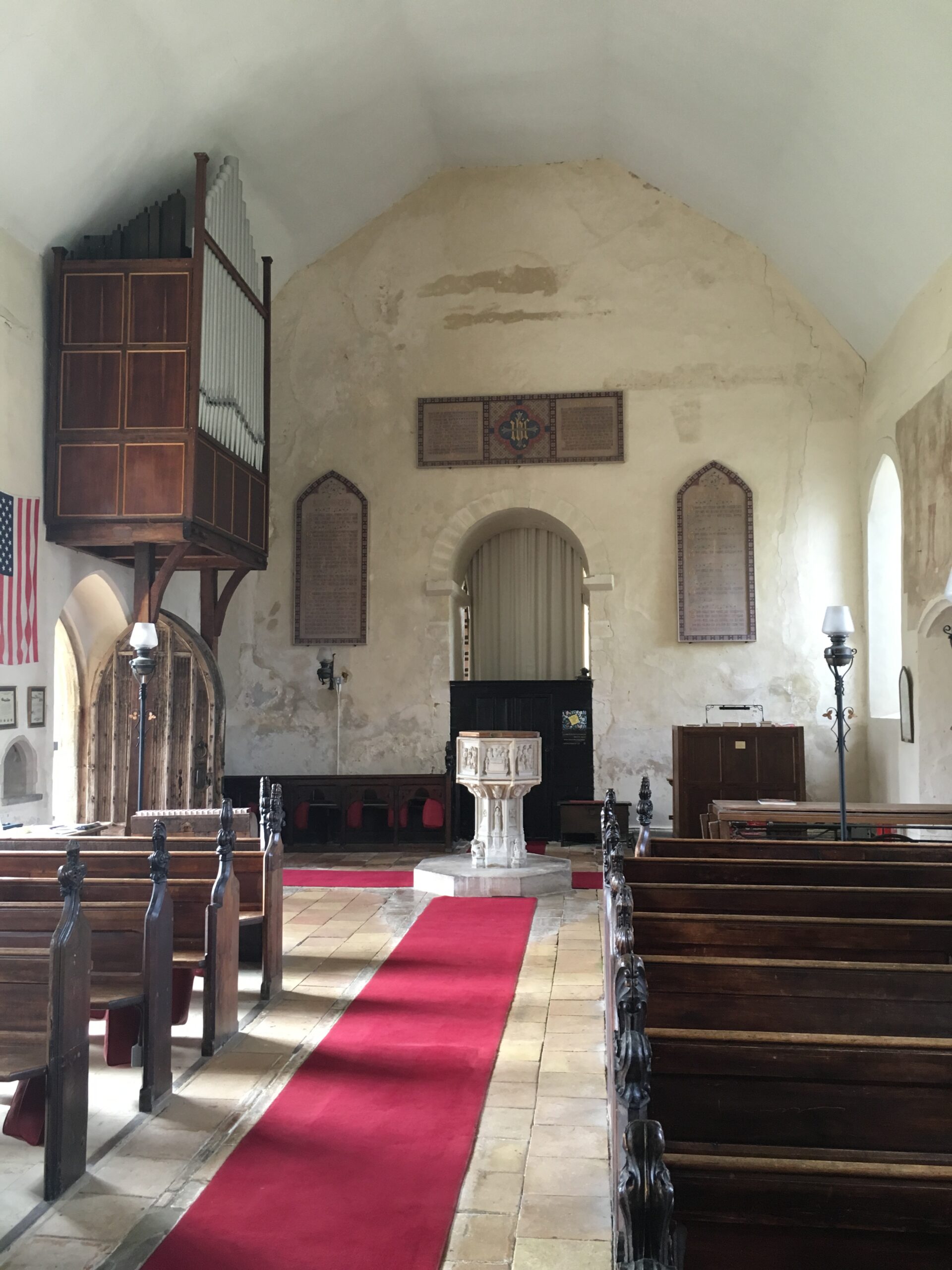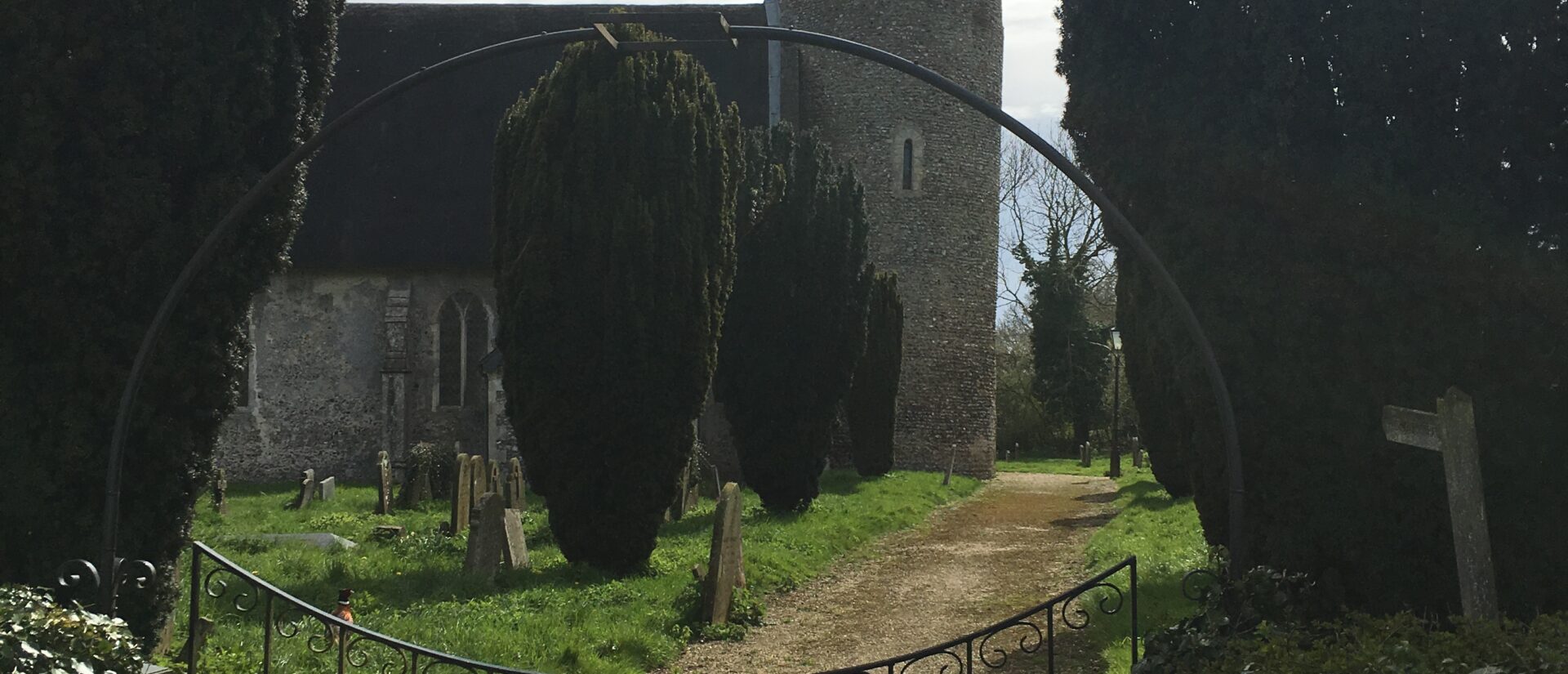
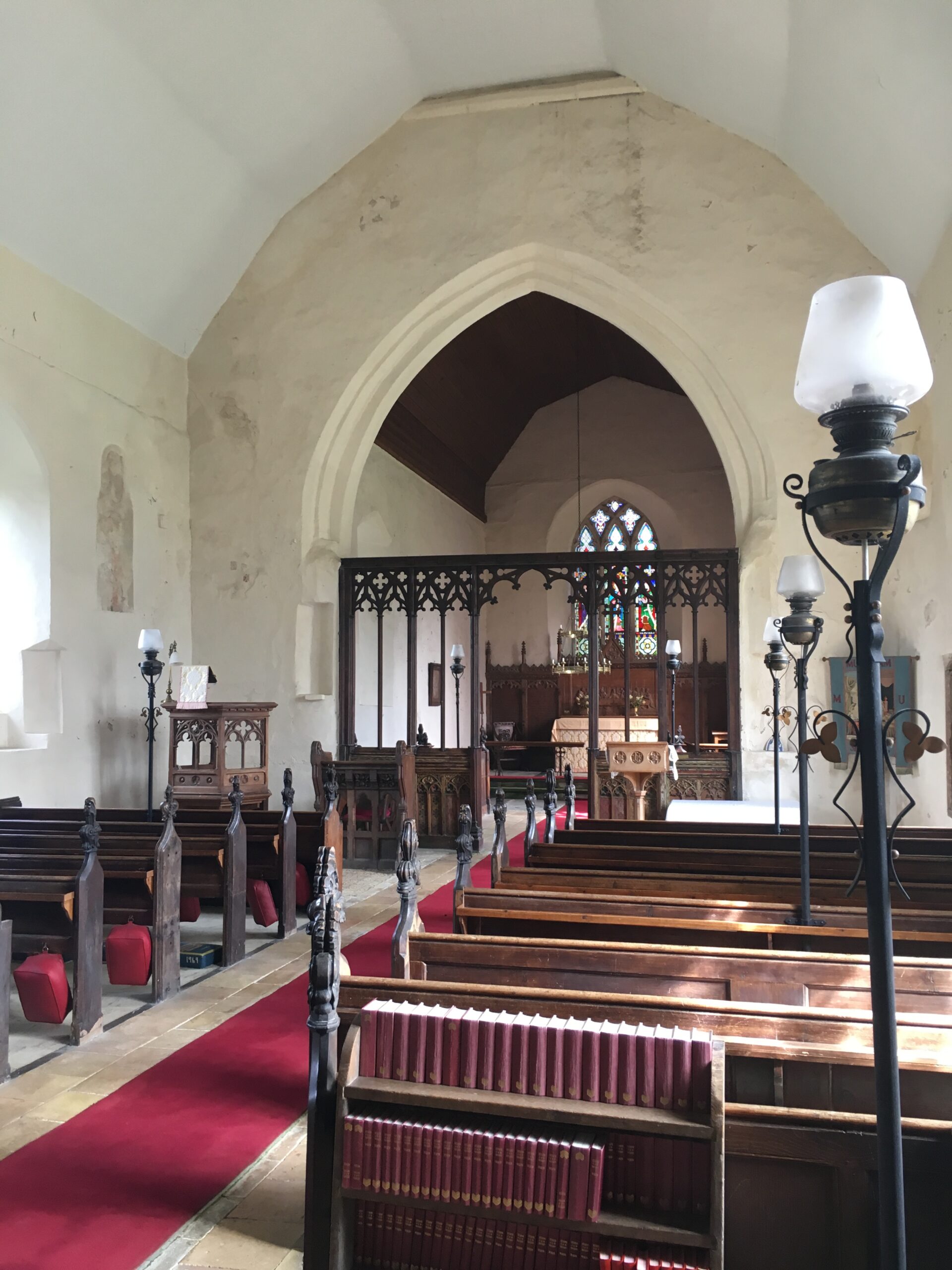
The church contains extensive wall paintings including St Christopher, The Three Living and Three Dead, The Joys of St Mary sequence and a warning against Gossip. There is a Seven Sacrament Font, and fragments of medieval stained glass, and the base of a C15 rood screen.
Norfolk's easterly position facilitated aerial missions in occupied Europe during the Second World War. Its flat terrain was ideal for airfields, particularly bomber stations. This predominantly rural county saw the building of thirty airfields on its land and a huge influx of allied servicemen into its midst by way of the 'Friendly Invasion'. Norfolk's proximity to occupied Europe brought with it a risk of invasion and in 1940 the East Anglian coast was declared a Defence Area which resulted in strict restrictions on movement in and out. A series of defences was constructed and many pillboxes can still be seen dotted across the landscape. Airfields were attacked by German bombers and, whilst they were well defended and the raids did not cause serious damage, these attacks struck fear into the local communities. In addition, Norwich was targeted in the 'Baedeker' bombing raids of 1942 and King's Lynn and Great Yarmouth also suffered, with the latter losing St Nicholas' Church (now Great Yarmouth Minster). The Royal Norfolk Regiment fought with great distinction in the Second World War and five members were awarded the Victoria Cross, the highest number of any British regiment in the conflict. The Regiment saw action at Dunkirk and in Normandy, North Africa and the Far East. Key events which greatly affected Norfolk families include the Le Paradis Massacre in 1940, and the surrender of Singapore in 1942 in which three battalions of the Royal Norfolk Regiment were captured and held prisoner by the Japanese until September 1945. Several battalions were used in home defence roles and as reinforcements for the overseas battalions. Norfolk's churches once again became quiet witnesses to the sorrow of war and a focus for mourning and commemoration. Some were permanently destroyed but others rose from the ashes.
Norfolk is famed for its great number of medieval churches. Many of these parish churches have a distinctive feature hardly seen outside this region: a round tower.
We and our partners use information collected through cookies and similar technologies to improve your experience on our site, analyse how you use it and for marketing purposes. Because we respect your right to privacy, you can choose not to allow some types of cookies. However, blocking some types of cookies may impact your experience of the site and the services we are able to offer. In some cases, data obtained from cookies is shared with third parties for analytics or marketing reasons. You can exercise your right to opt-out of that sharing at any time by disabling cookies.
Privacy Policy
Manage Consent Preferences
Necessary
Always ON
These cookies and scripts are necessary for the website to function and cannot be switched off. They are usually only set in response to actions made by you which amount to a request for services, suchas setting your privacy preferences, logging in or filling in forms. You can set your browser to block oralert you about these cookies, but some parts of the site will not then work. These cookies do notstore any personally identifiable information.
Analytics
These cookies and scripts allow us to count visits and traffic sources, so we can measure and improve the performance of our site. They help us know which pages are the most and least popular and see how visitors move around the site. All information these cookies collect is aggregated and therefore anonymous. If you do not allow these cookies and scripts, we will not know when you have visited our site.