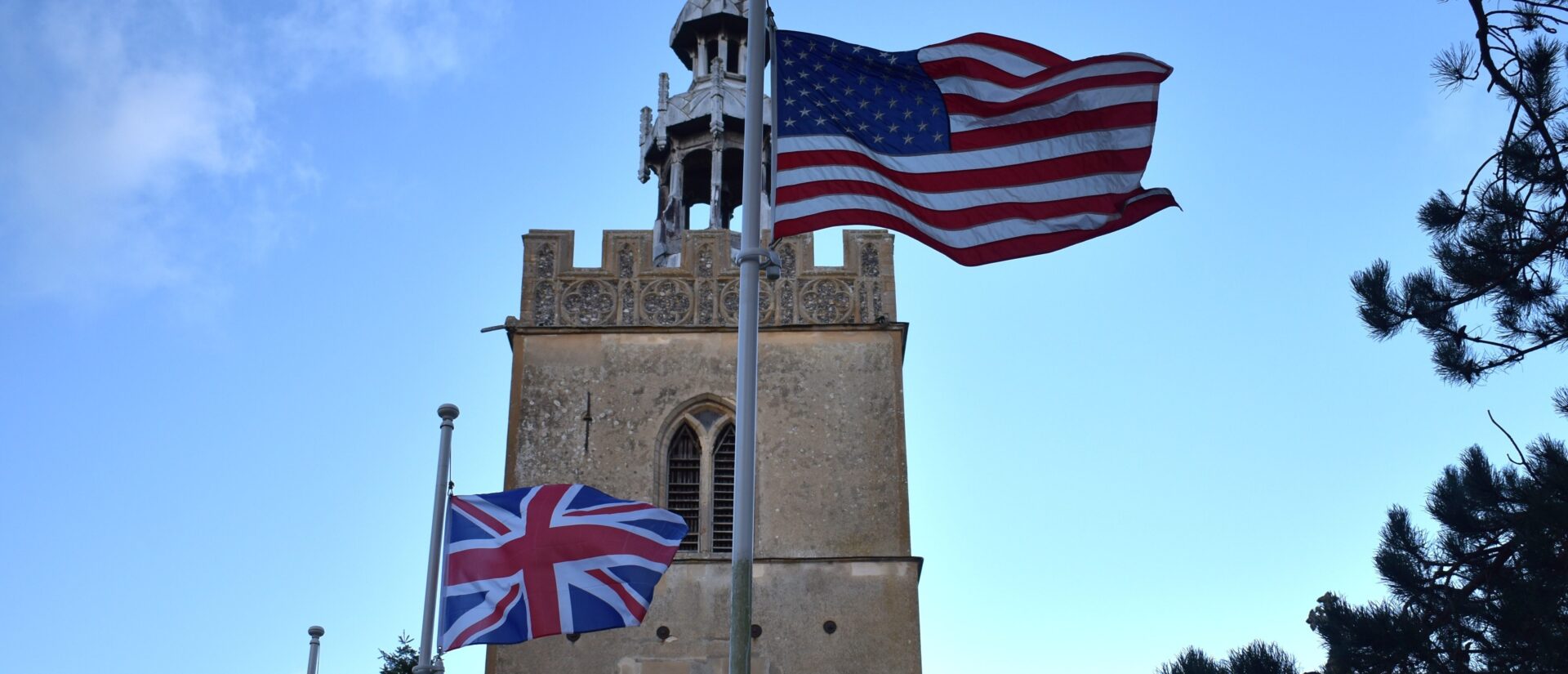

American Connections to Norfolk Churches
Abraham Lincoln
Hingham, St Andrew and Swanton Morley, All Saints
President Abraham Lincoln’s ancestral roots on his father’s side can be traced back to two Norfolk villages: Hingham and Swanton Morley. Richard Lincoln (born 1552/3) was the six times great grandfather of Abraham Lincoln and was a churchwarden at All Saints’ Church, Swanton Morley. His home is now the Angel Inn. From 1557-1625, 40 baptisms and 24 burials of Lincoln family members took place in the church. Richard’s grandson Samuel was born in Hingham in 1622 and became an apprentice weaver in Norwich. He sailed to America with his master in the John and Dorothy and arrived in Boston, Massachusetts in June 1637. The journey took 2 months and 12 days. Samuel settled in Hingham, Massachusetts (MA) where his two brothers were already living. Eight male members of the family set up households in America at this time. He married Martha in 1649 and it is from their son Mordecai that Abraham Lincoln is descended, his three times Great Grandson. Old Testament names were evidently popular in the family as the tree reveals various members called Jedediah, Enoch and Levi. Abraham Lincoln was born in 1809 in rural Kentucky.
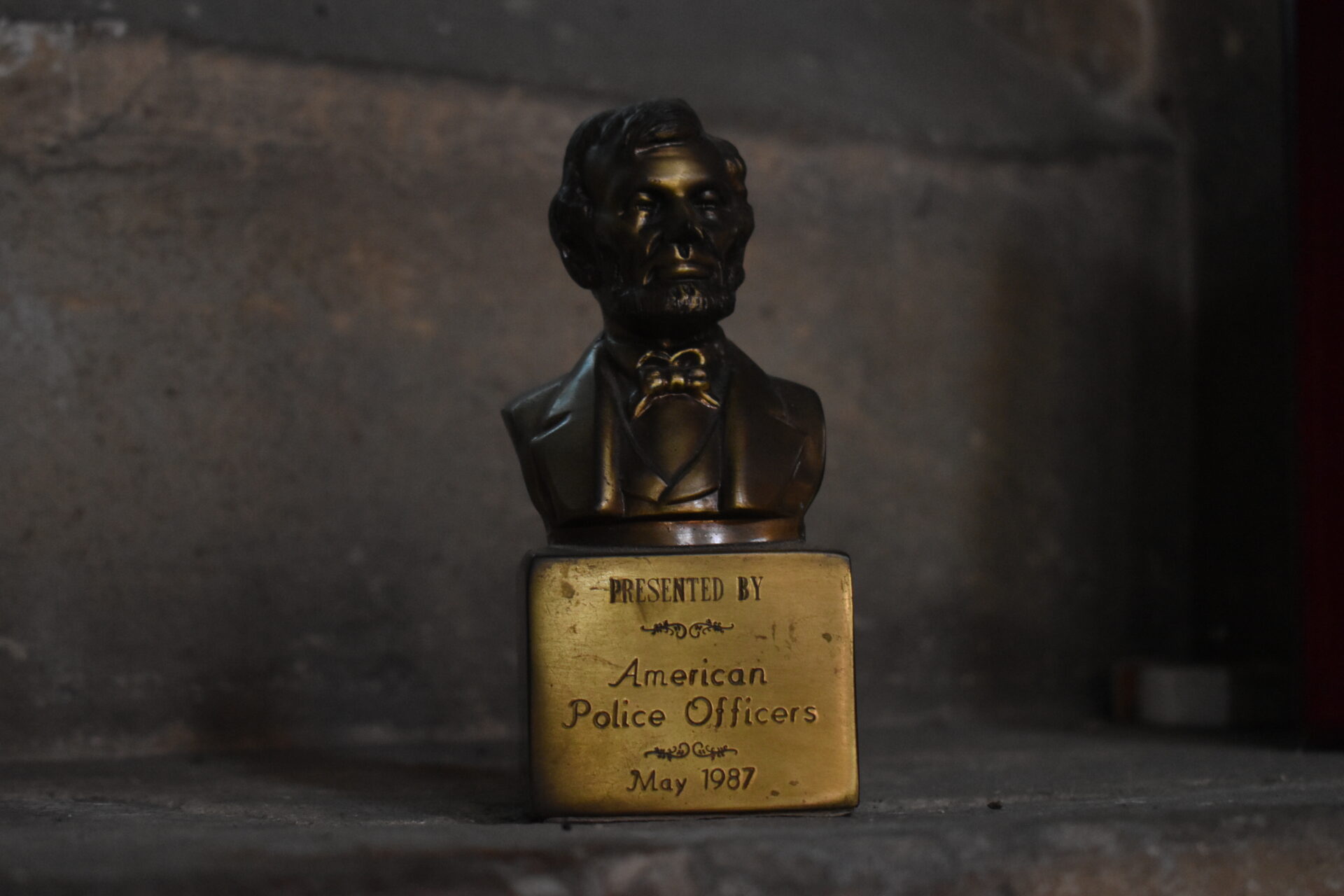
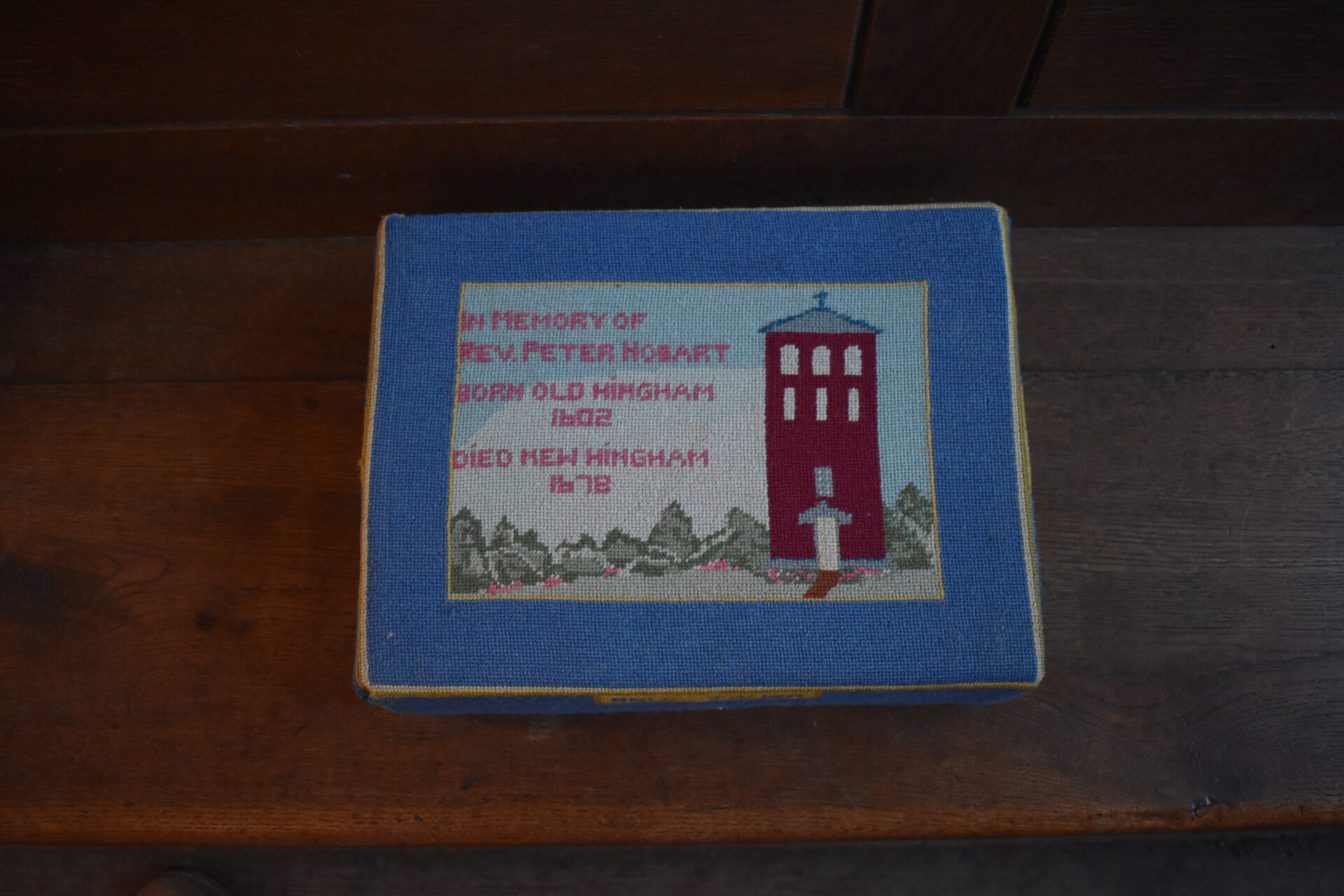
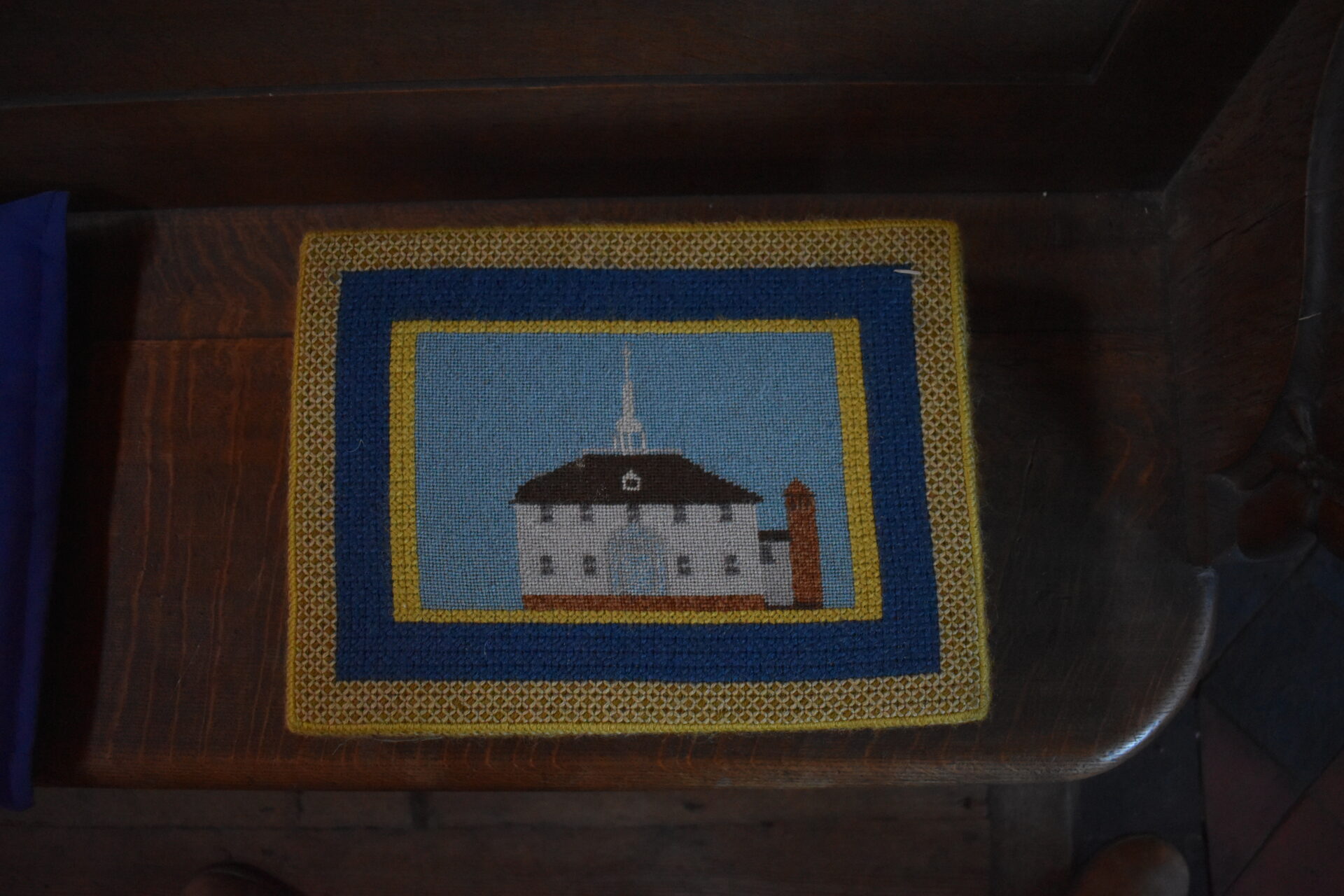
St John’s Chapel in Hingham, MA was built in 1883 and received the lectern, an ancient bishop’s chair and silver from St Andrew’s Church in Hingham. A 16th century carving of St Peter’s keys from a ceiling boss was gifted to Old Ship Church in Hingham, MA. To mark the 275th Anniversary of the founding of the town, the ancient mounting block from Hingham was sent over the pond and is displayed within the Memorial Tower. Eleven bells hang within the tower and three are copies of the bells in Hingham. The bells feature the original inscription along with the words “I ring in memory of the founders of this free plantation”, “I ring their courage” and “I ring their love of freedom”. Public subscriptions raised money for a bust of Abraham Lincoln to be sent to St Andrew’s Church. It occupies a niche on the north wall of the nave above the inscription: “In this parish for many generations lived the Lincolns, ancestors of the American Abraham Lincoln. To him the greatest of that lineage many citizens of the United States have erected this memorial in the hope that for all ages between that land and this land and this land and all lands there shall be malice towards none and charity for all.” The unveiling of the bust was delayed due to the First World War. It was finally unveiled by the American Ambassador in 1919 with great celebration. The bells rang out, stars and stripes bunting adorned the town, and school children processed with flags. The Bishop led the service which received musical accompaniment from the band of the 1st Norfolk Battalion. The Ambassador spoke at length about the life and achievements of Abraham Lincoln. Hingham, MA is now a commuter hub for Boston with a population of over 24,000. The town has a bronze replica of the sitting Lincoln Memorial in Washington DC.
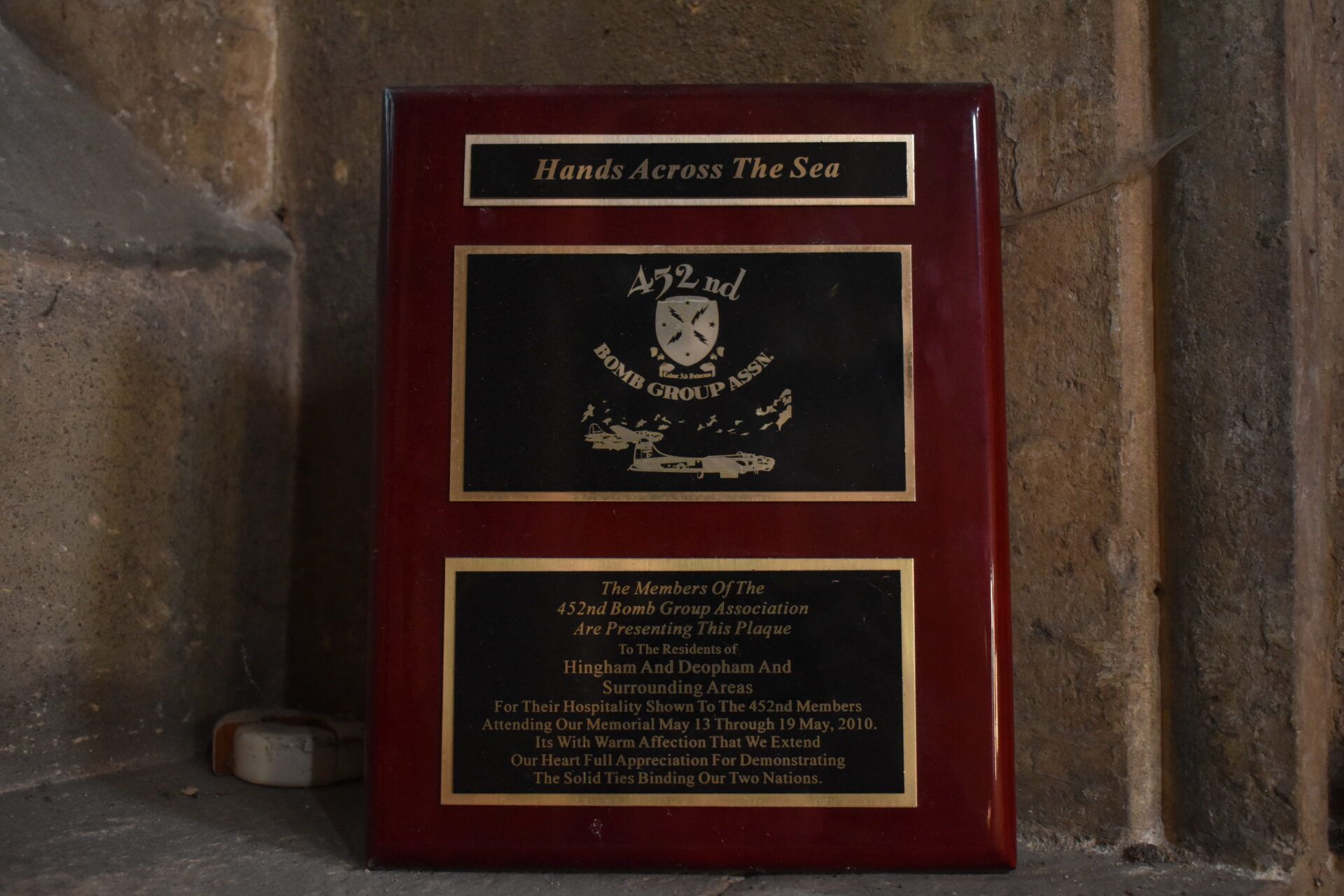
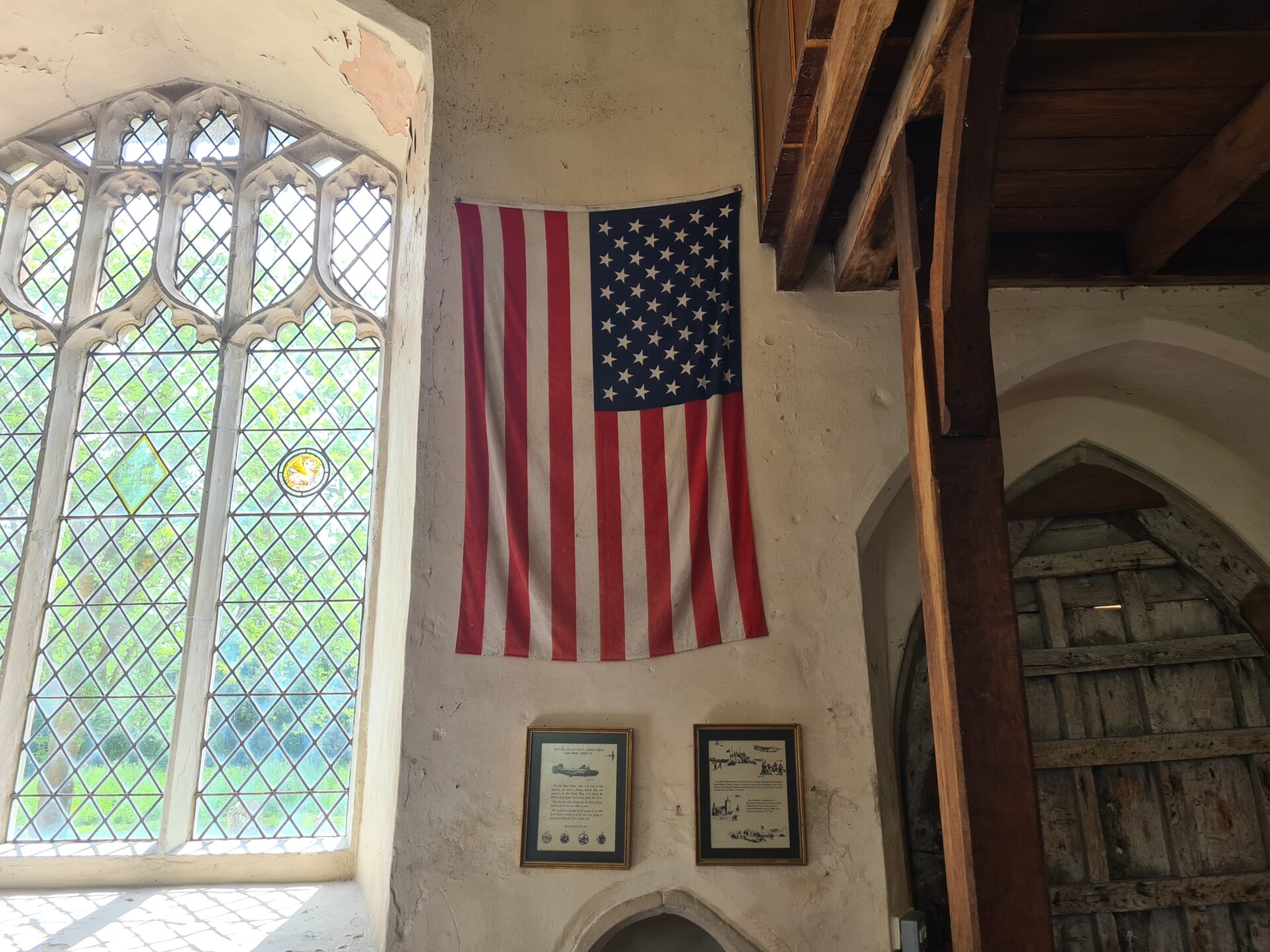
Deopham Green airfield is partly situated in the parish of Hingham and was used by the 452nd Bomb Group of the United States Air Force during the Second World War. A plaque in the churchyard commemorates those who gave their lives. The unveiling ceremony in 1979 was attended by veterans of the bomb group and there were a number of further visits in subsequent years.

Pocahontas and John Rolfe
Heacham, St Mary and Wymondham Abbey
There is a memorial in the Church of St Mary, Heacham commemorating Pocahontas and her husband John Rolfe, a Heacham man. It states, ‘Princess Matoaka Rebecka Pochontas daughter of Powhatan hereditary overking of the Algonquin Indians of Virginia born 1595 baptised 1613 died 1617. Her romantic marriage in 1614 to John Rolfe brought peace to the settlement to mark a picturesque episode in the history of two nations.’ Pocahontas was held captive by the English colonists and was baptised as Rebecca. Her husband John Rolfe played a key role in turning the fortunes of the settlement of Jamestown around following what became known as ‘the Starving Time’ of 1609-10. John joined the Third Supply Fleet sailing from England to Virginia in 1610 but was delayed at Bermuda until the following year due to a severe storm which destroyed the ship. Native Virginia tobacco was not popular on the English market and so John experimented with growing sweeter West Indian tobacco from seeds he had brought with him. In 1614 this new cash crop was first exported to England and it became a hugely profitable venture, securing the economic future of the Virginia Colony. John and Pocahontas had a son, Thomas, in 1615. Soon after they travelled to London and Pocahontas mixed with high society at a masque at the Palace of Whitehall, becoming a celebrity. She died soon after the ship had departed for Virginia and was buried in St George’s Church in Gravesend, Kent. The exact location of her grave is unknown. John remarried and had a daughter. He died in 1622, possibly during the Indian Massacre which resulted in the deaths of a third of the settlers in Jamestown.
A plaque previously situated in Wymondham Abbey is dedicated to Reverend Richard Bucke ‘who was born in 1573 in Wymondham and died in Jamestown, Virginia in 1623 is here commemorated in 1977 by his American descendants. He served as chaplain to Virginia Colony 1610-1623 and to the first representative legislature in the New World the Virginia House of Burgesses and in Jamestown he married Princess Pocahontas to John Rolfe of Heacham.’

The Second World War
Quidenham, St Andrew
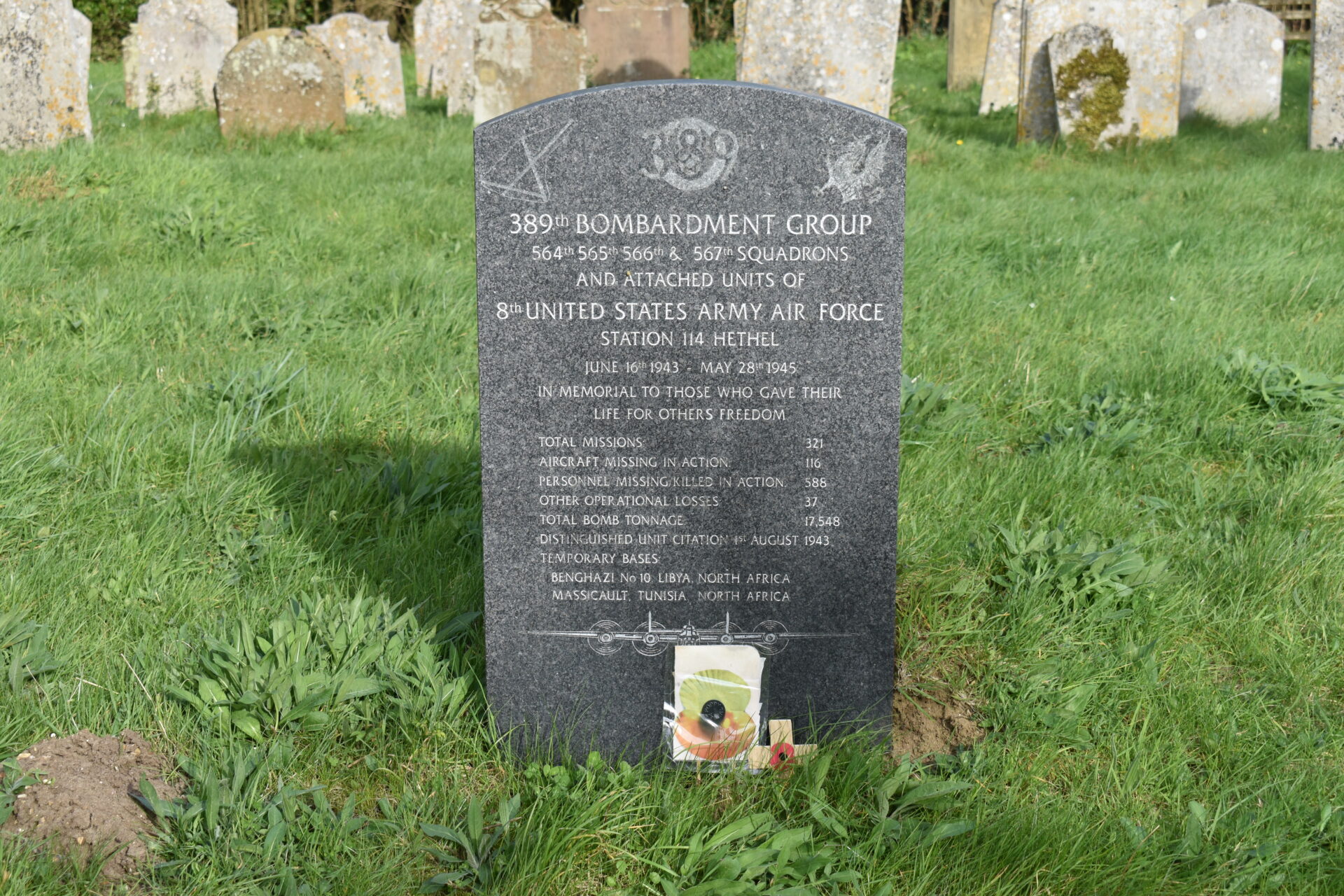
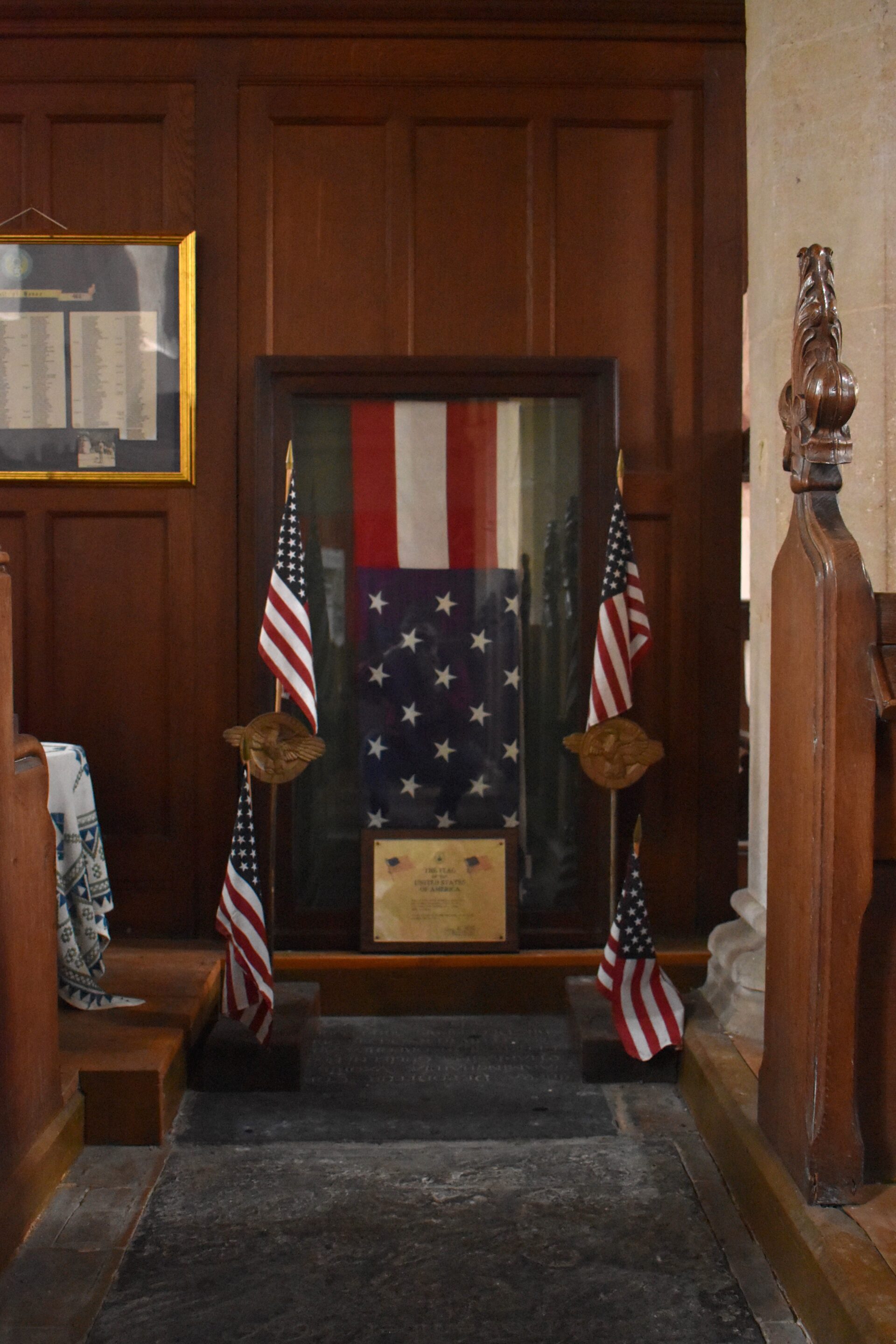
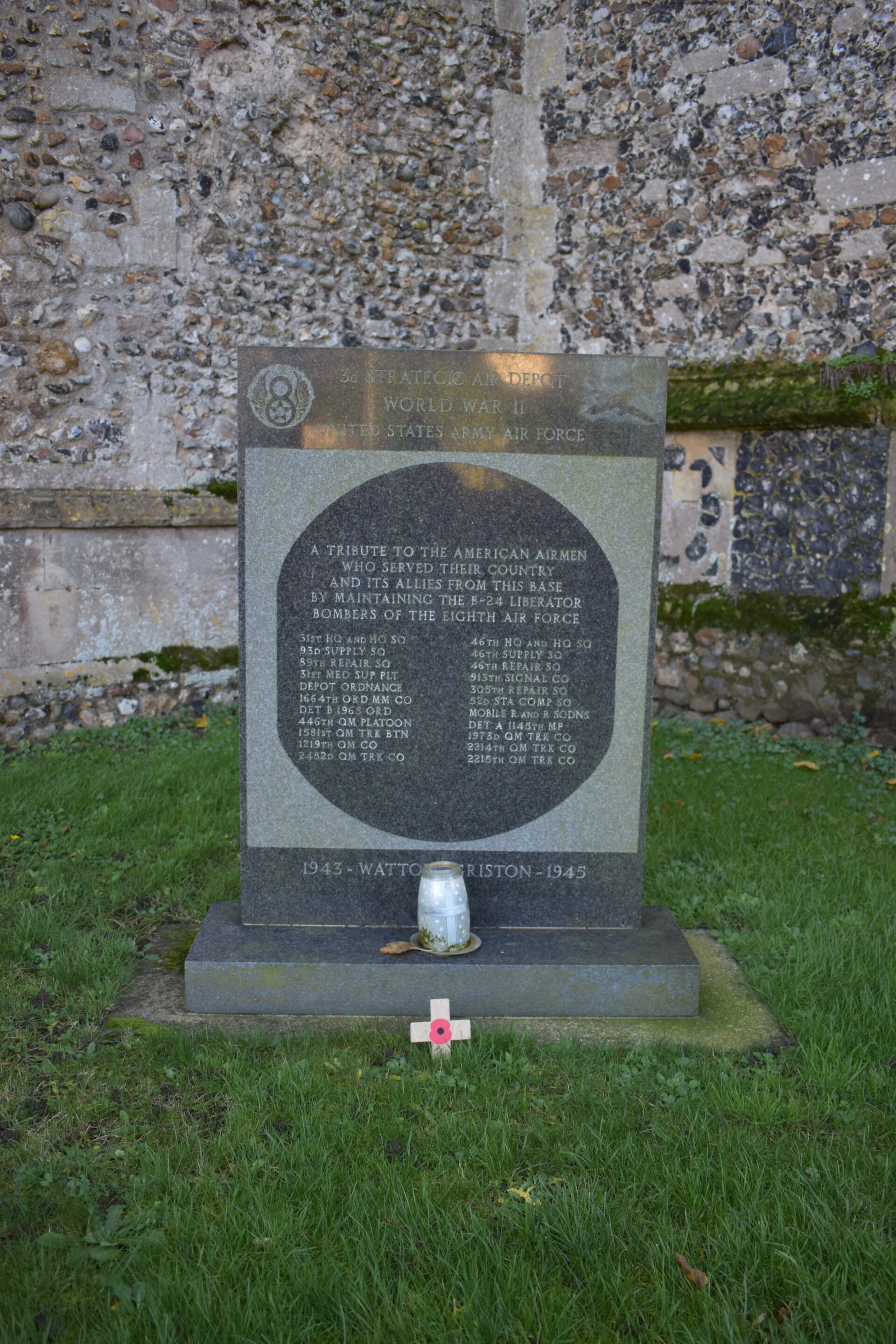
During the Second World War there were 18 United States Army Air Forces (USAAF) bases in Norfolk. The 96th Bombardment Group was based at Snetterton Heath Airfield in South Norfolk. Young men from the western USA arrived in 1943 to join in the battle of the skies. The Group flew B-17 Flying Fortresses and has an impressive list of battle honours. It attacked industrial targets such as factories, shipyards, harbours, railway yards, aerodromes and oil refineries across occupied Europe. Other missions included the bombing of coastal defences, gun emplacements and bridges prior to and during D-Day on 6th June 1944. Daylight raids had resulted in unsustainable losses for American bombers in 1943 but in 1944 Allied escort fighters gained superiority over the Luftwaffe and daylight bombing recommenced. Due to the proximity of Snetterton Heath to the 3rd Divisional Headquarters at Elveden Hall, the 96th often led major operations carrying commanding generals. After VE Day, it dropped food and supplies into the Netherlands. 938 members of the 96th Bombardment Group made the ultimate sacrifice during the Second World War, amounting to the second highest loss rate of the 8th Army Air Force, which was more than the ‘Bloody Hundredth’ based at nearby Thorpe Abbotts. It flew 321 missions and lost 190 aircraft. The servicemen enjoyed much fellowship with the people of Quidenham parish, knew the vicar as a friend and counsellor, worshiped and married in the church, and fell into their bombing formations over the tower. Rationed Britain was introduced to American peanut butter, doughnuts, chewing gum, popcorn and Coca-Cola. In 1944 the Reverend W. Harper-Mitchell began planning for a new memorial chapel in St Andrew’s Church. The east window of the south aisle was designed by Sergeant Gerald Athey of the 413th Squadron and depicts an airman and radiant Christ. On 2nd November 1944 the Memorial Chapel was dedicated by the Bishop of Norwich and became the earliest Eighth Bomb Group memorial in Norfolk. On the altar is a selection of photos and newspaper cuttings. There is also a Roll of Honour. An old Nissen Hut, formerly the mortuary for the base, is now a museum and study centre. It is located in the grounds of the Aurora Eccles School and is open several days a year.

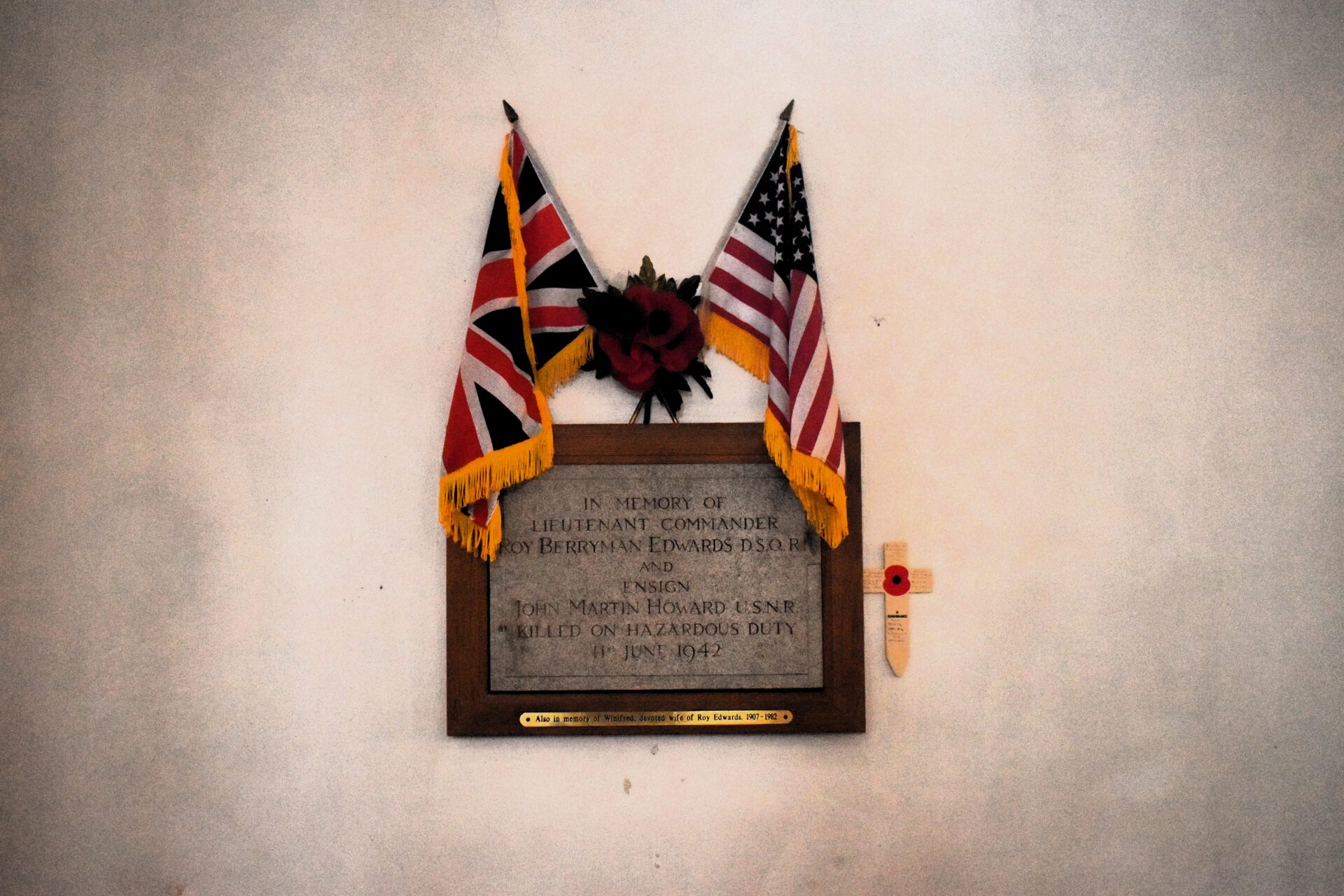
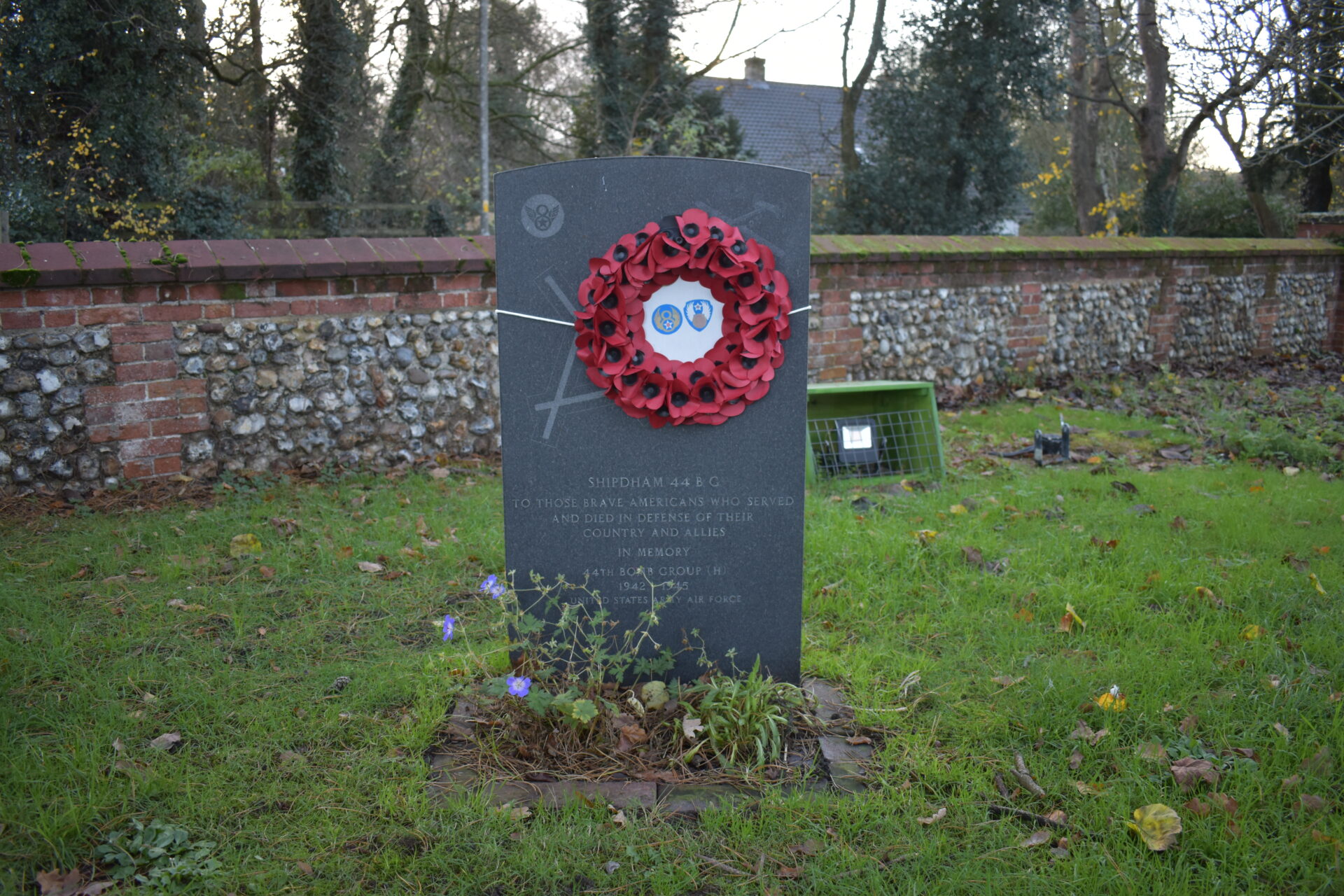
Quidenham, St Andrew is only one example of the many Norfolk churches and churchyards which contain some form of grateful commemoration of the sacrifice of American servicemen during the Second World War.
 American servicemen attending a service at Griston, St Peter & St Paul
The Pettus Family
Norwich, St Simon & St Jude and Rackheath, All Saints
The Pettus family played a key role in trade and exploration, and were involved in the settlement of the New World. Sir John Pettus was a Member of Parliament and served as Mayor of Norwich like his father before him. He was a member of the London Company which held the Third Charter of the Colony of Virginia and had business interests in the New World. Sir John died in 1614 and was buried at the Church of St Simon & St Jude, Norwich. A magnificent alabaster memorial commemorates both men. The church is redundant and is in the care of the Norwich Historic Churches Trust; it is now used by a theatre company. Sir John’s nephew Colonel Thomas Pettus was born in 1598 and was baptised at St Simon & St Jude’s. Thomas sailed for Jamestown, Virginia in the 1630s. The Pettus family name was synonymous with status and wealth and this served him well. It is likely that he was entitled to some property in Jamestown through investments made by Sir John. Thomas became a long-serving member of the prestigious Govenor’s Council. He set up a substantial tobacco plantation four miles downriver from Jamestown called Littletown and his estates eventually amounted to over 1200 acres. In around 1638 he married Elizabeth Freeman. Evidence also points to an earlier Native American wife called Ka-Okee. He is known to have had a least two sons. Elm Hill is perhaps the most well-known street in Norwich due to its well-preserved medieval and tudor buildings and its cobbles. A blue plaque marks what remains of the Pettus house. Later Pettus family monuments adorn the walls of Rackheath, All Saints. Rackheath Hall was the family seat. The current hall replaced the earlier building in the 1850s and was used as the headquarters for the USAAF 467th Bomb Group during the Second World War.


