
Estate Churches of Norfolk
Blickling Hall
Blickling Hall is situated in around five thousand acres of parkland just north of the town of Aylsham. The beautiful red brick hall is in the Jacobean style and was built by Sir Henry Hobart. Building started in 1616 on the site of a 15th century hall owned by the Boleyn family and it is presumed that Anne Boleyn was born here. During World War Two the hall was requisitioned by the RAF and used as the Officers’ Mess by nearby RAF Oulton. The last private owner, Philip Kerr, 11th Marquess of Lothian, died in 1940 and the estate was taken on by the National Trust. Philip was the driving force behind the National Trust Act of 1937 and the creation of the Country Houses Scheme which facilitated transfers in lieu of death duties. The Hall is a treasure trove and contains paintings by Gainsborough and Reynolds, rich furnishings and a fine collection of tapestries. It houses the National Trust’s largest and most significant library. Three hundred years of planting has resulted in fifty-five acres of formal gardens comprising ancient yews, parterre and a kitchen garden. Explore the vast parkland and you will find a pyramidal monument and a folly tower which was once the Earl of Buckingham’s stand for watching the horse racing and can now be rented out for holidays.

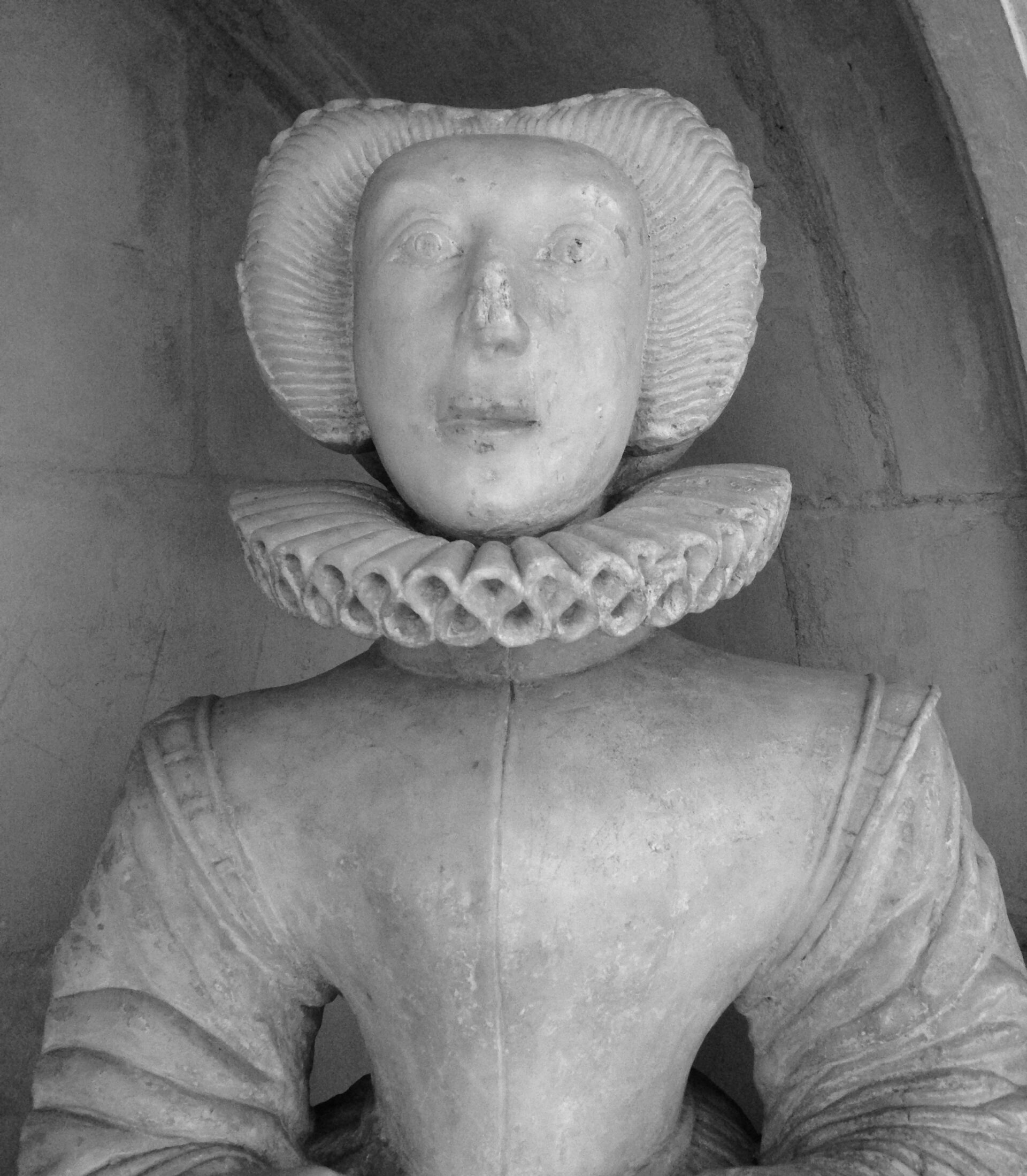
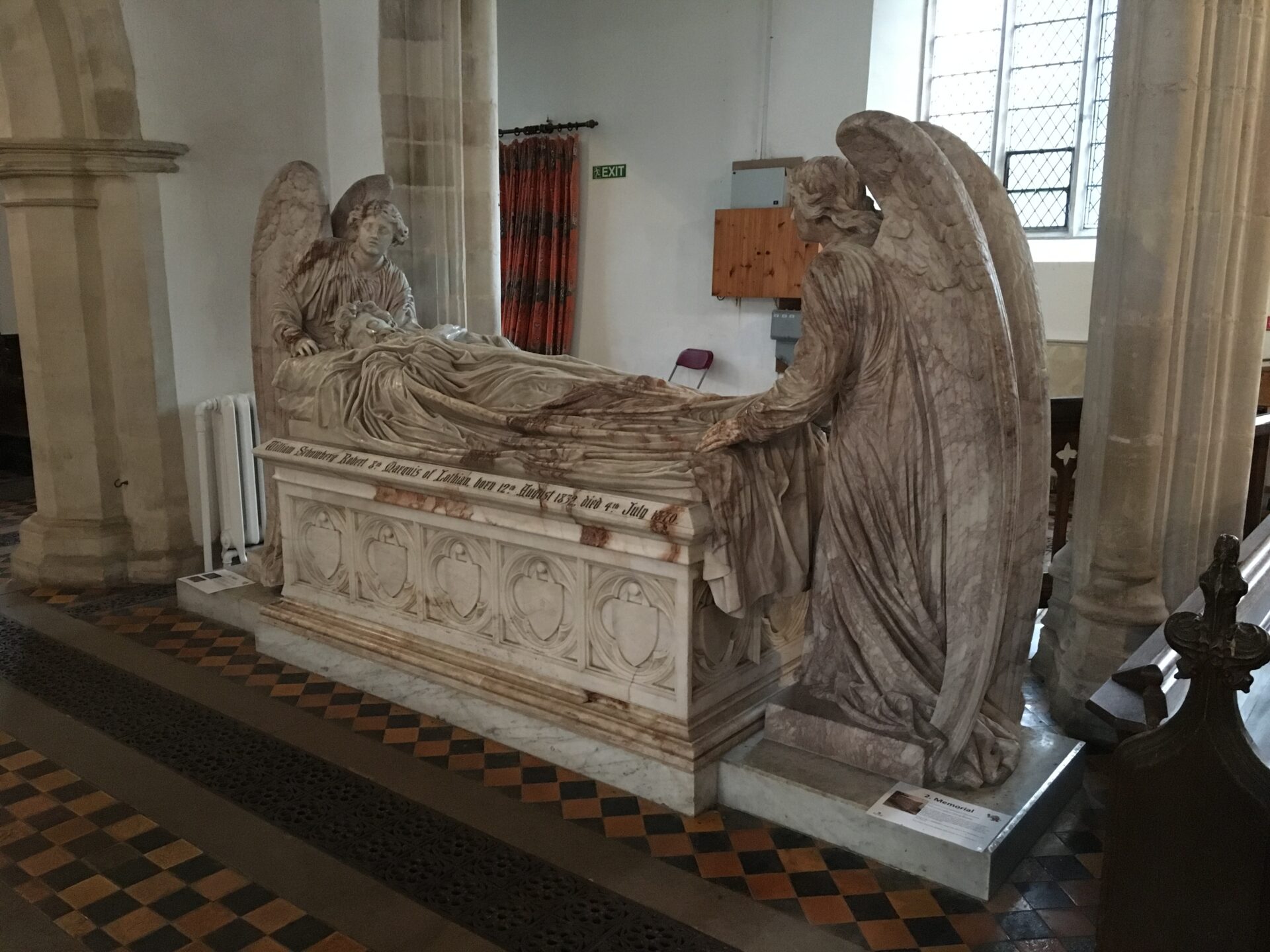
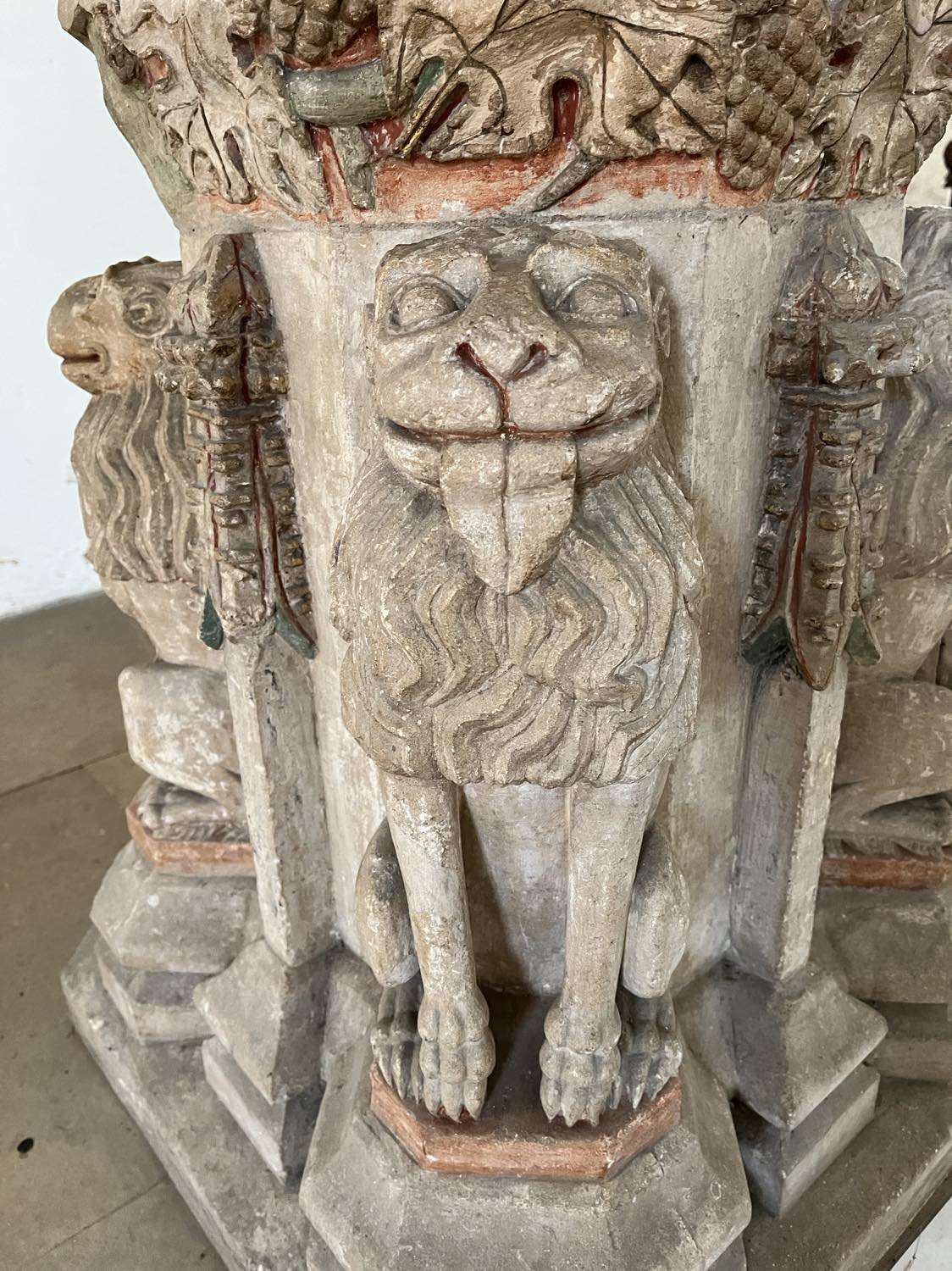
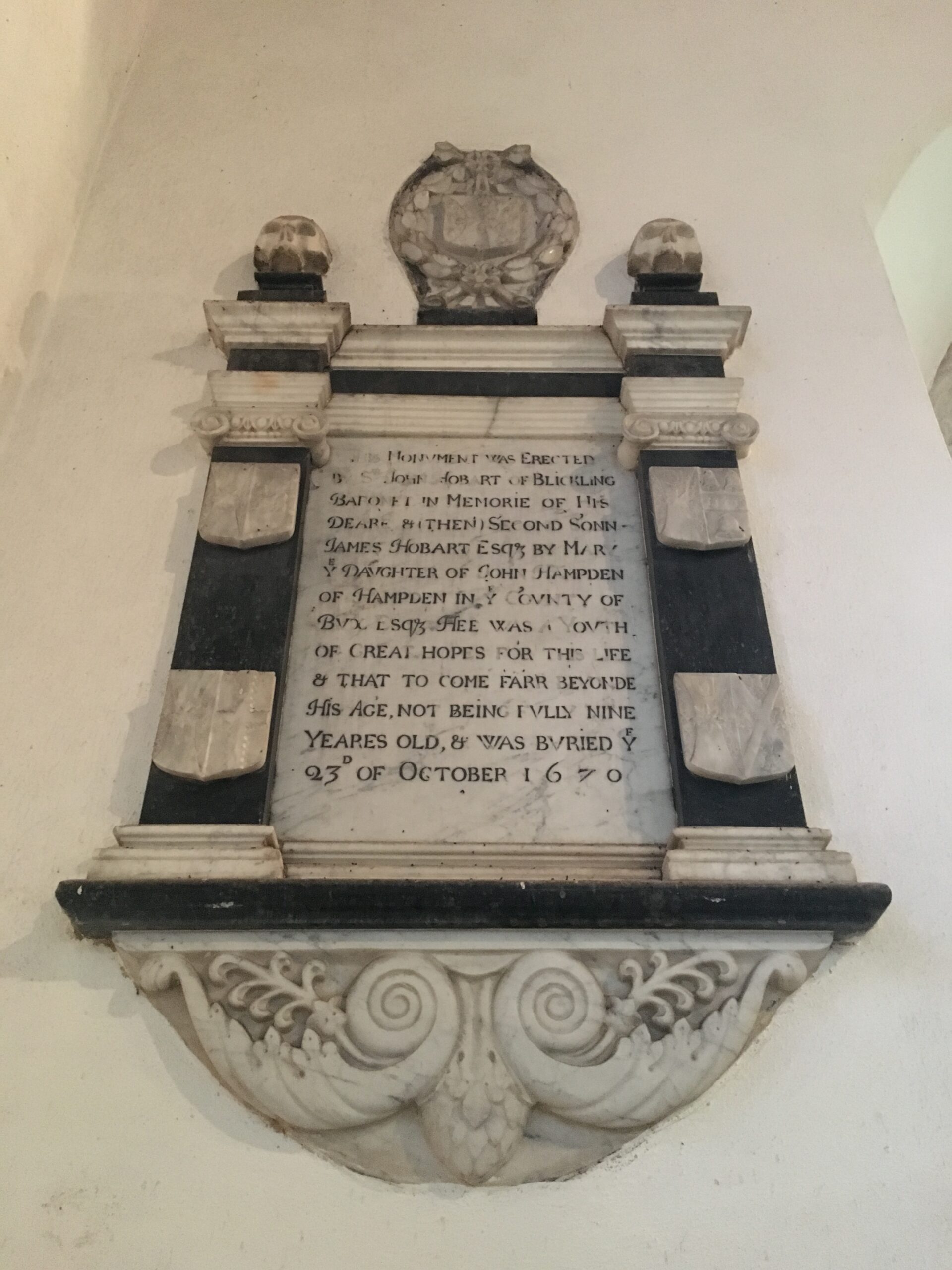
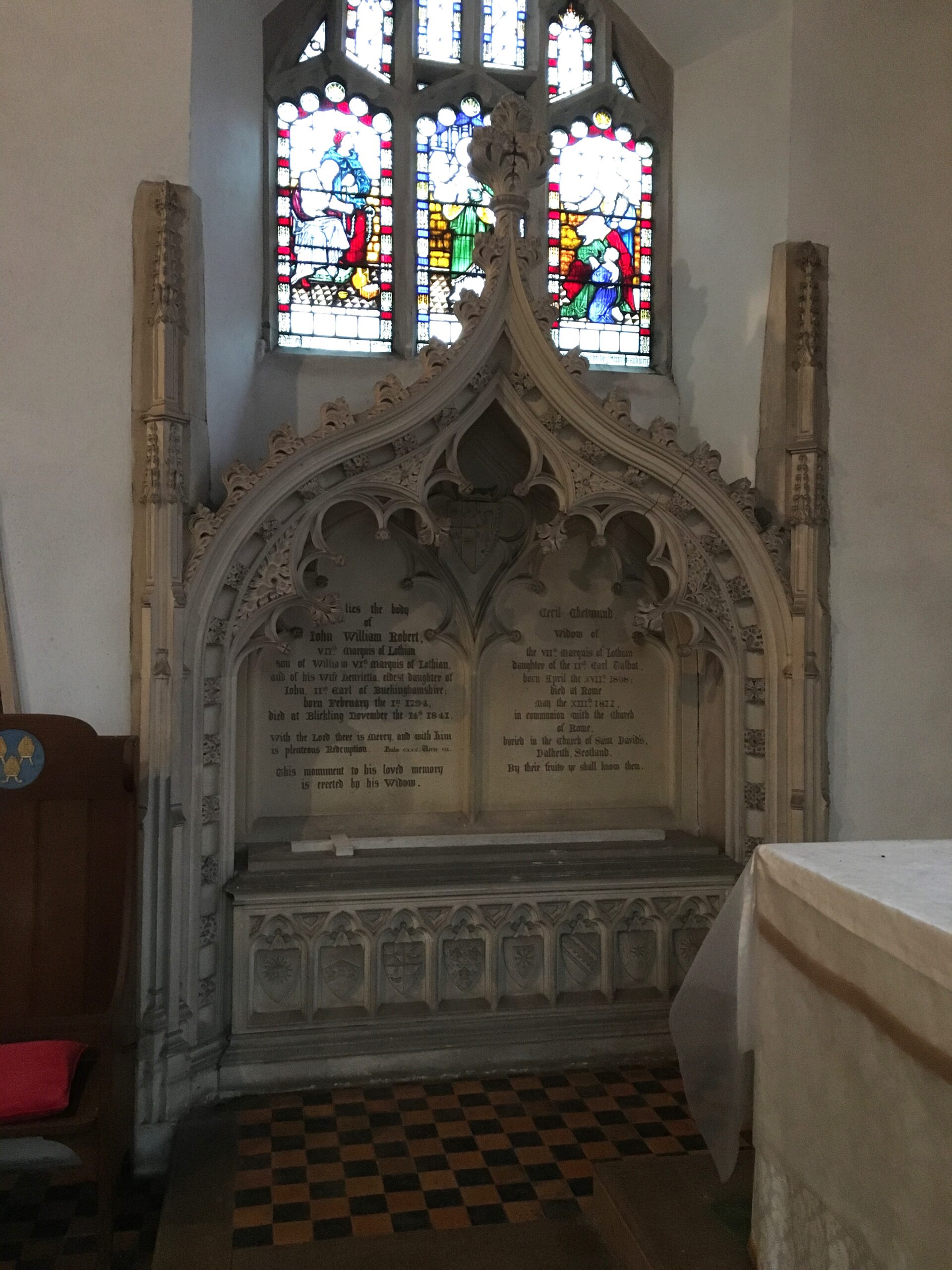
St Andrew’s Church is situated next to the entrance to Blickling Hall. The majority of the exterior is Victorian. Inside, the large memorial depicting two life-size angels is dedicated to the 8th Marquess of Lothian but he is buried elsewhere. The church boasts a collection of replica brasses. One commemorates Sir Nicholas Dagworth (d. 1401) who built the first Blickling Hall, in full armour with a lion at his feet. Anne Astley (d. 1512) is depicted with two babies as she died after the birth of twins. Another to Roger and Cecily Felthorpe (d. 1454) shows them alongside their sixteen children. Other brasses include those to members of the Boleyn family. In the chancel, a hand-less bust commemorates Elizabeth Gurden in a cap and ruff in the style of the late 16th century. Look out for the carved eagle and young on one of the piscina arches. The pulpit dates to the 17th century.


Houghton Hall
Built by the de facto first British Prime Minister, Sir Robert Walpole, in 1722, Houghton Hall is a beautiful Neo-Palladian stately home situated a few miles east of Sandringham in Northwest Norfolk. A dome rises from each corner and statues look out from the pediment. No expense was spared and the interior is particularly lavish as a result, despite Sir Robert only visiting Norfolk twice a year. The State Bedroom was adorned with green velvet, the most expensive material at the time. The Marble Parlour is dedicated to Bacchus and bunches of grapes and vine leaves appear on the marble chimney-piece, on the plaster ceilings and carved above the doors. The crest of the Walpole family features a Saracen’s head, symbolising their participation in the Crusades. Look carefully and you will notice Saracens’ heads everywhere, from the ceilings and newel posts to the drainage hoppers and pediments. The gardens are a jewel in the parkland. Carefully designed ornamental gardens include an Italian garden and a rose parterre. A significant collection of contemporary sculpture challenges the visitor to view the new with the old. Also worth exploring is the Soldier Museum. It is the largest private collection of model soldiers in the world, numbering around 20,000 figures, and was started in 1928 by the 6th Marquess of Cholmondeley.

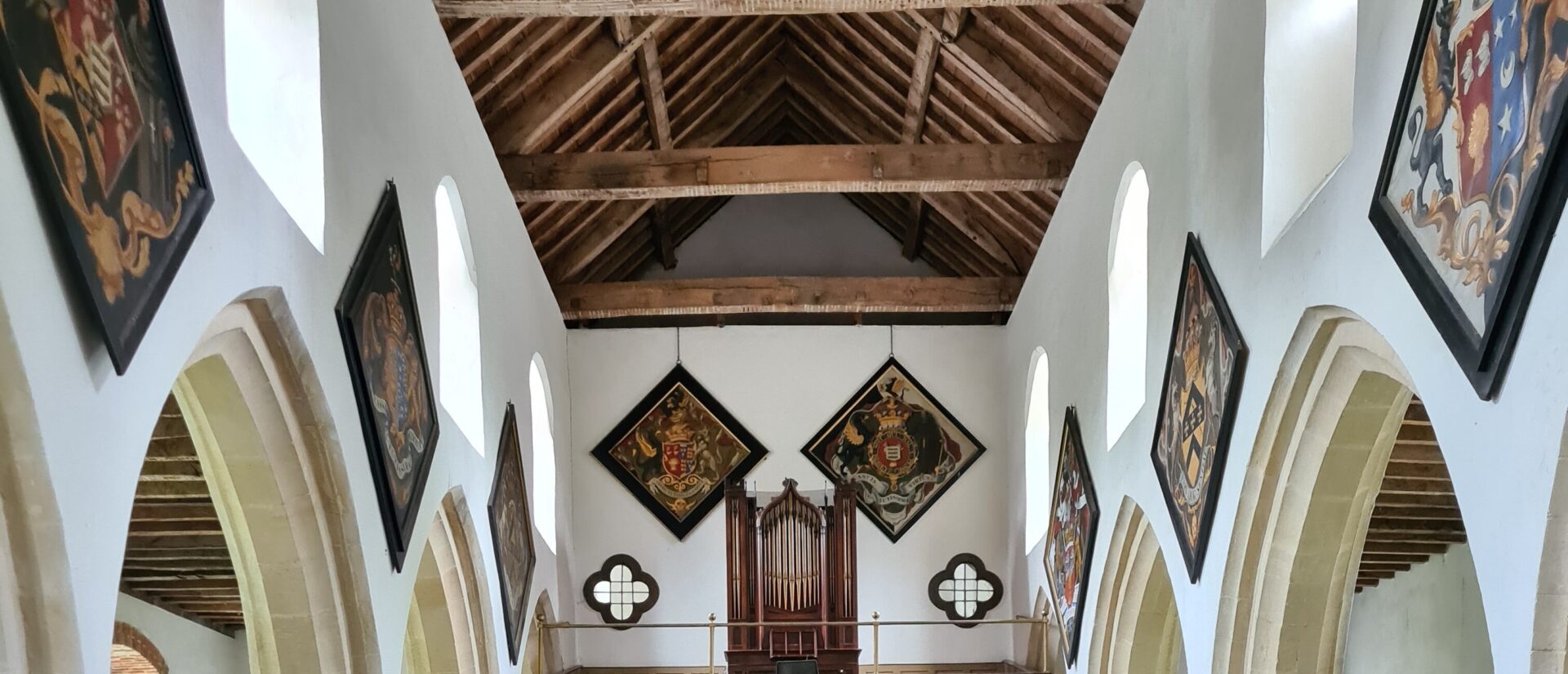
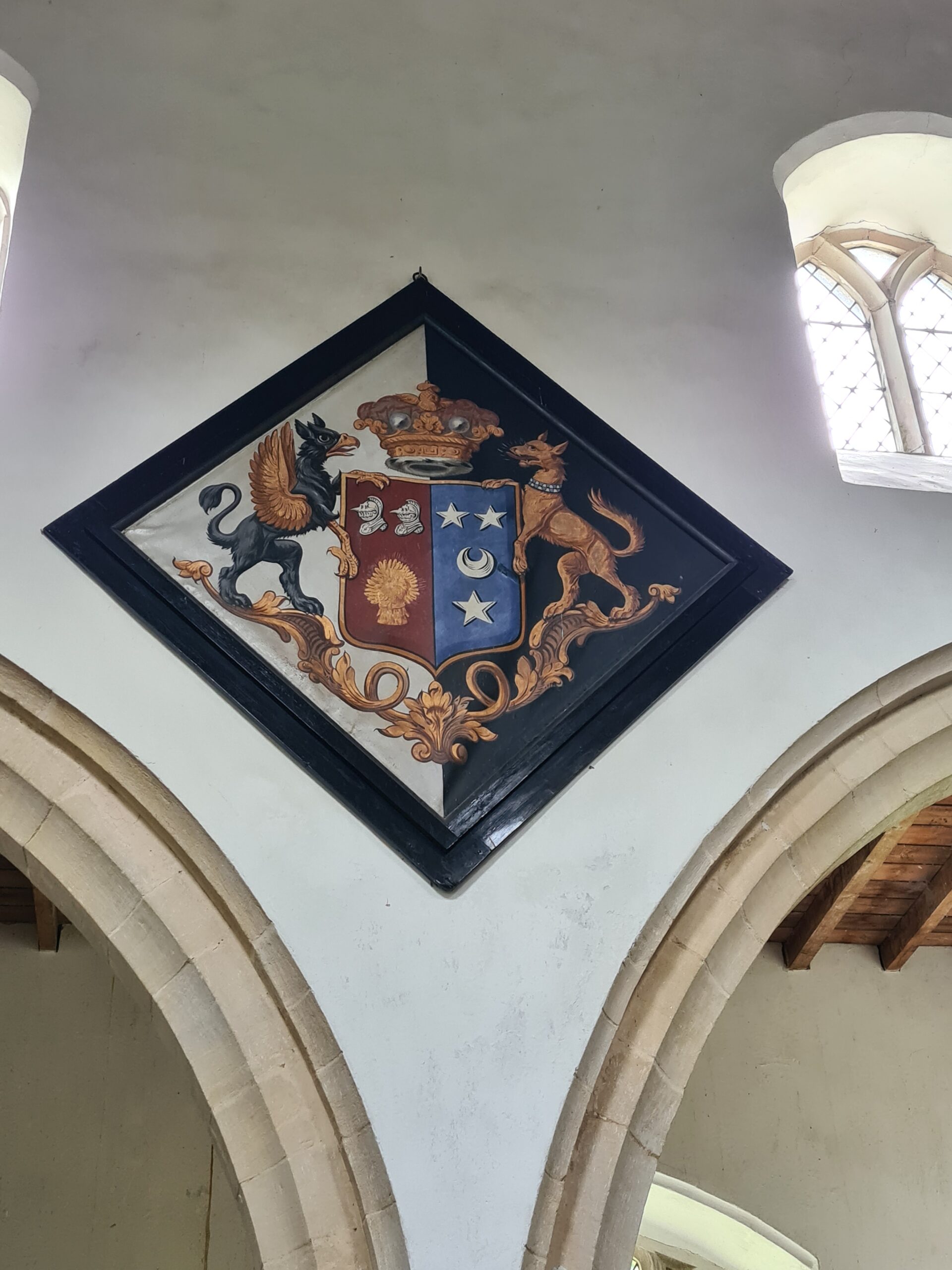
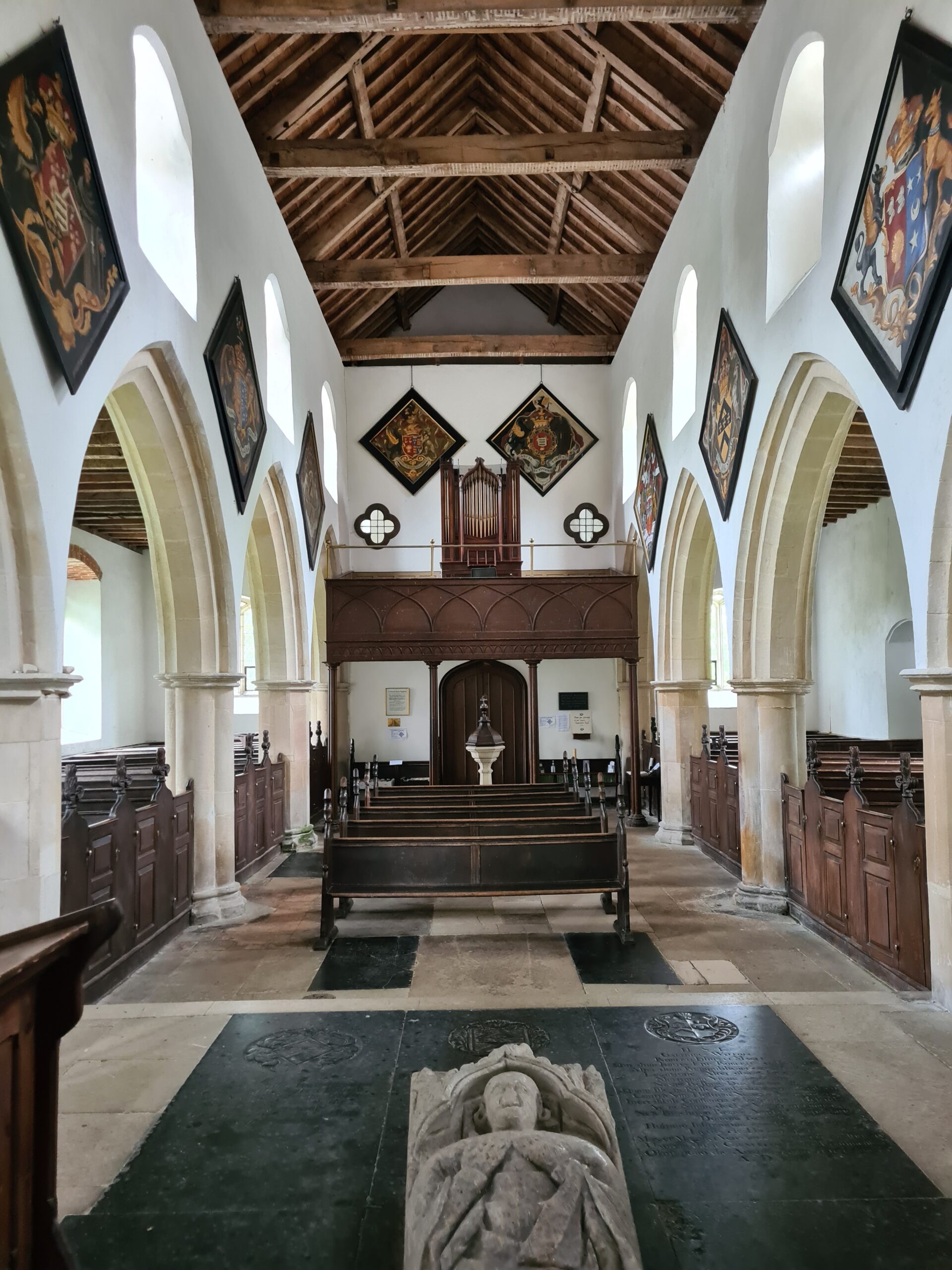
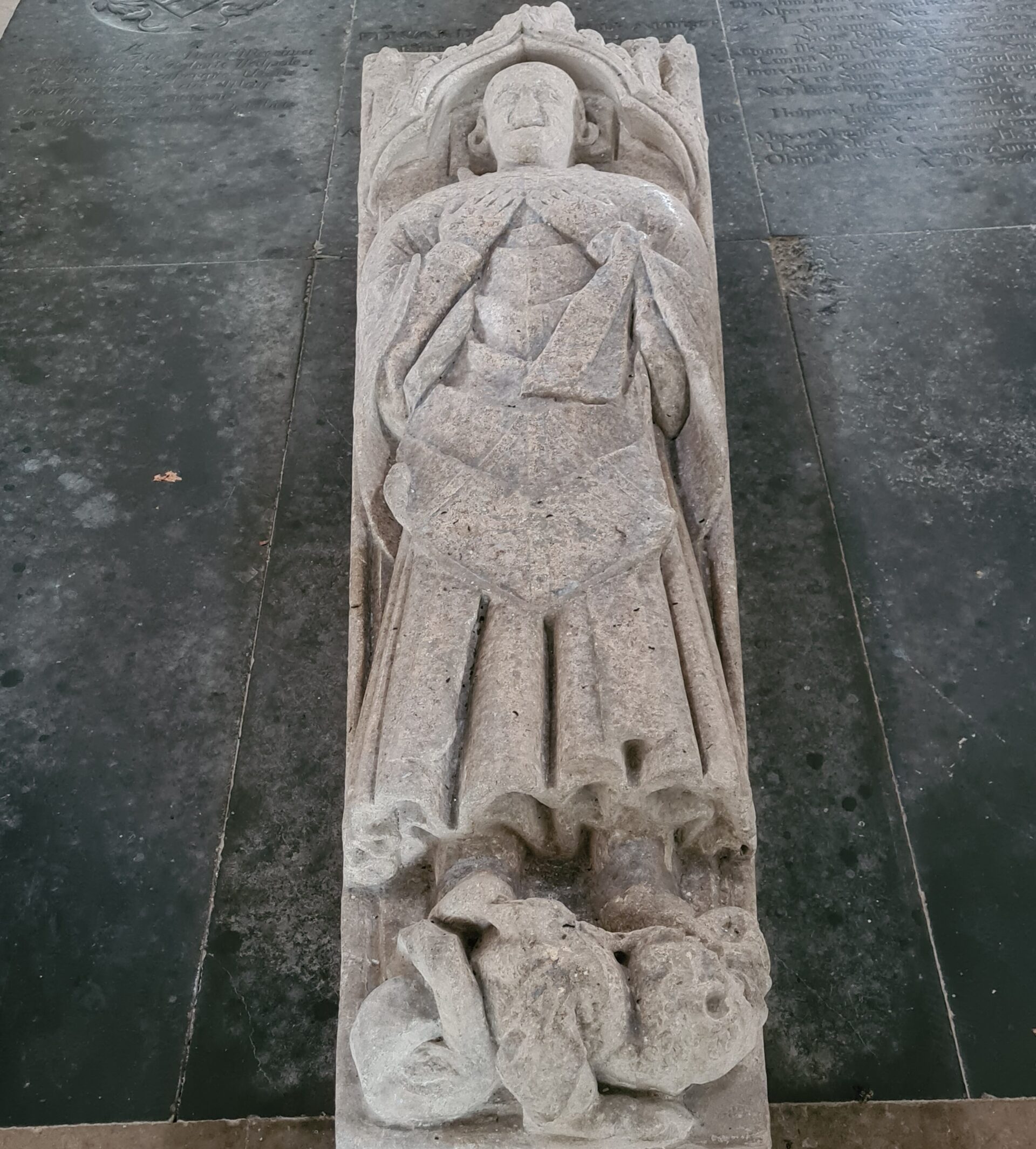
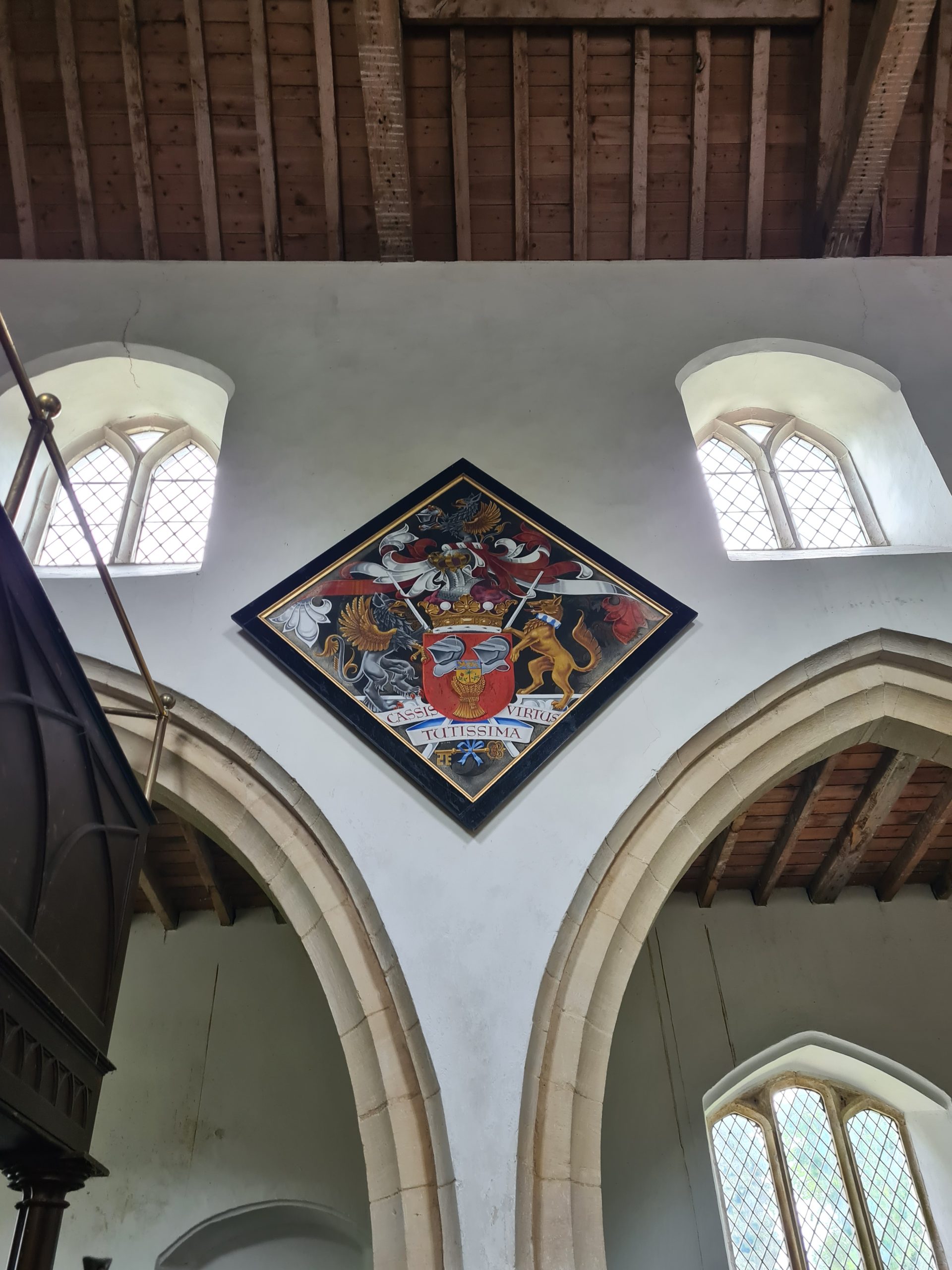
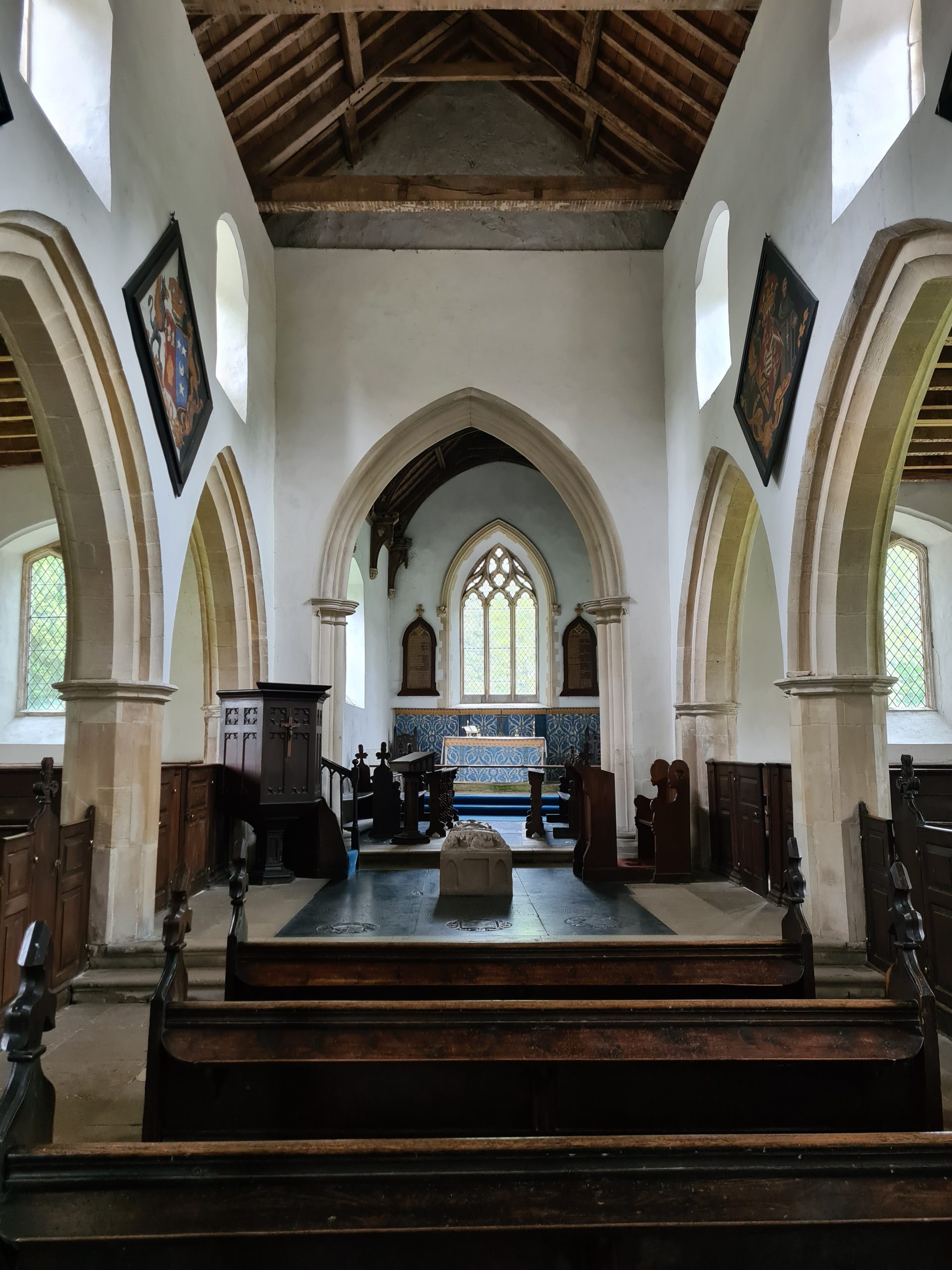
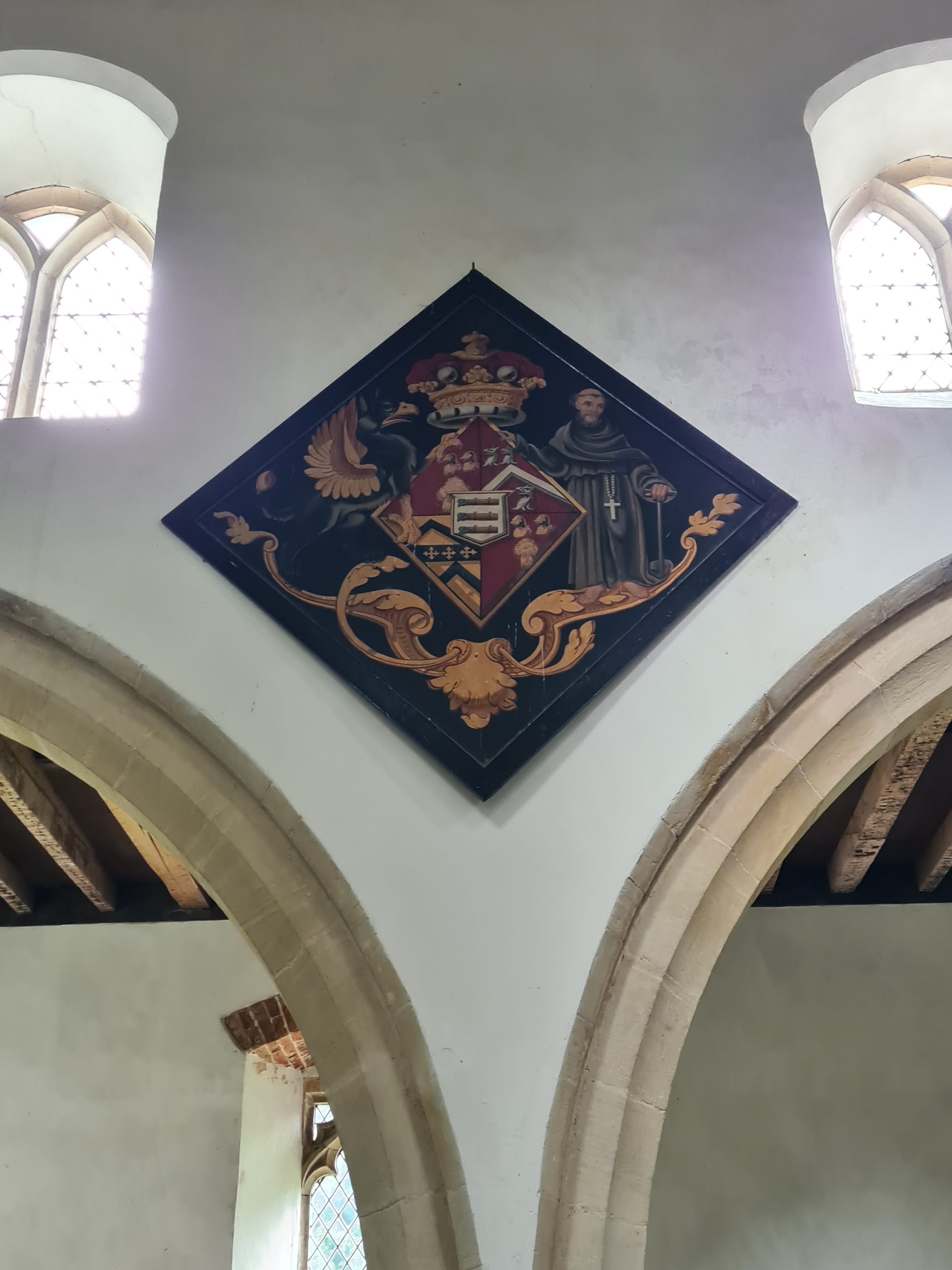
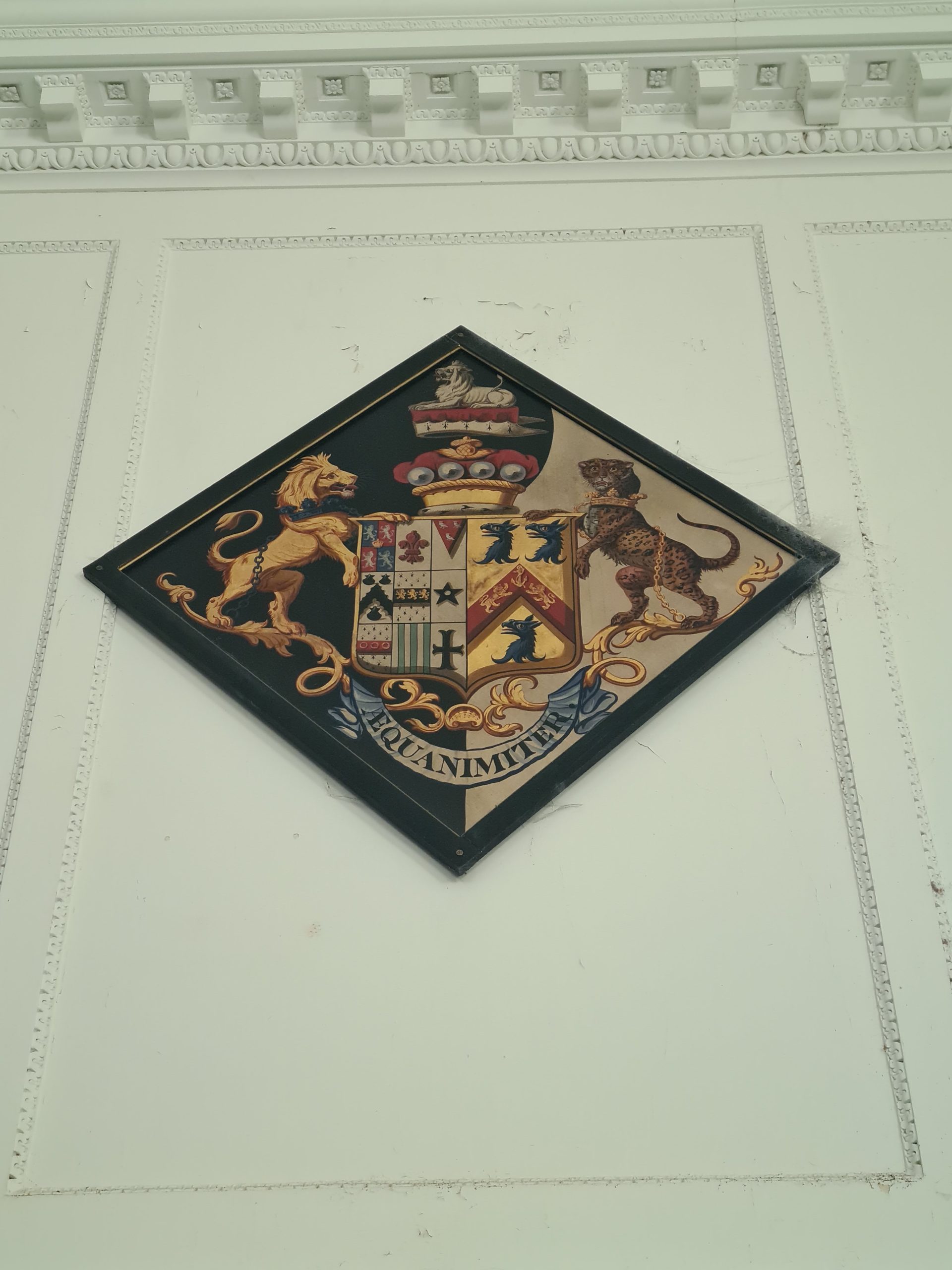
The Church of St Martin at Tours is situated in the extensive deer park of Houghton Hall and continues to serve as the parish church. There was once a village here before it was moved elsewhere when the Hall was built. The majority of the current building dates to the 19th century but has 13th century origins. The tower was added by Sir Robert Walpole. In the nave is an impressive life-sized effigy of the Prior of Coxford who died in 1307, brought to the church before the Dissolution of the Monasteries. Notice the dragon at his feet. There is an impressive array of hatchments on the walls of the nave. In the second half of the 17th century it became the custom for those entitled to bear a coat of arms to be commemorated on his or her death by a funeral hatchment, a diamond-shaped board depicting the arms. It was set up over the entrance to the house of the deceased, and remained there for about a year, after which it was taken to the church and hung on the wall. This custom continued for around two hundred years. If married, the husband’s coat of arms is placed on the left from the viewer’s perspective and the wife’s on the right. The background of each half is either black if the person is deceased or white if they are alive. Sir Robert, his two wives, his brother Galfridus and his successors, the 2nd, 3rd and 4th Earls of Orford are all buried here along with the 5th Marquess of Cholmondeley and his wife, Sybil.

St Martin at Tours, Houghton-next-Harpley
Felbrigg Hall
The Felbrigg Estate had its origins with the de Felbrigg family in the late 11th century before passing to John Windham (d. 1475). In 1599 the Somerset branch of the family, the Wyndhams, took over and the south front of the hall was built from the remains of the early Tudor building between 1621 and 1624. The Norfolk spelling Windham was adopted. The west wing was built in the 1680s. William Windham embarked on a grand tour from 1738-42 and displayed the objects he had collected in a cabinet, which amounts to the most complete example in England. John Ketton, a Norwich merchant, bought the estate in 1863. Robert Wyndham Ketton-Cremer, known as The Squire, inherited the estate in 1924. He installed a Victory ‘V’ avenue of trees behind the house in honour of his brother Richard who was killed in action in Crete in 1941. Robert devoted his life to preserving Felbrigg, finally bequeathing it to the National Trust in 1969. There is a delightful walled garden with double flower borders, vegetable beds, trained fruit trees and an octagonal dovecote. 380 acres of beech, oak, sweet chestnut, hawthorn and sycamore populate the Great Wood. Don’t miss the ice house which dates to the 18th century and was built to look like a ruin.

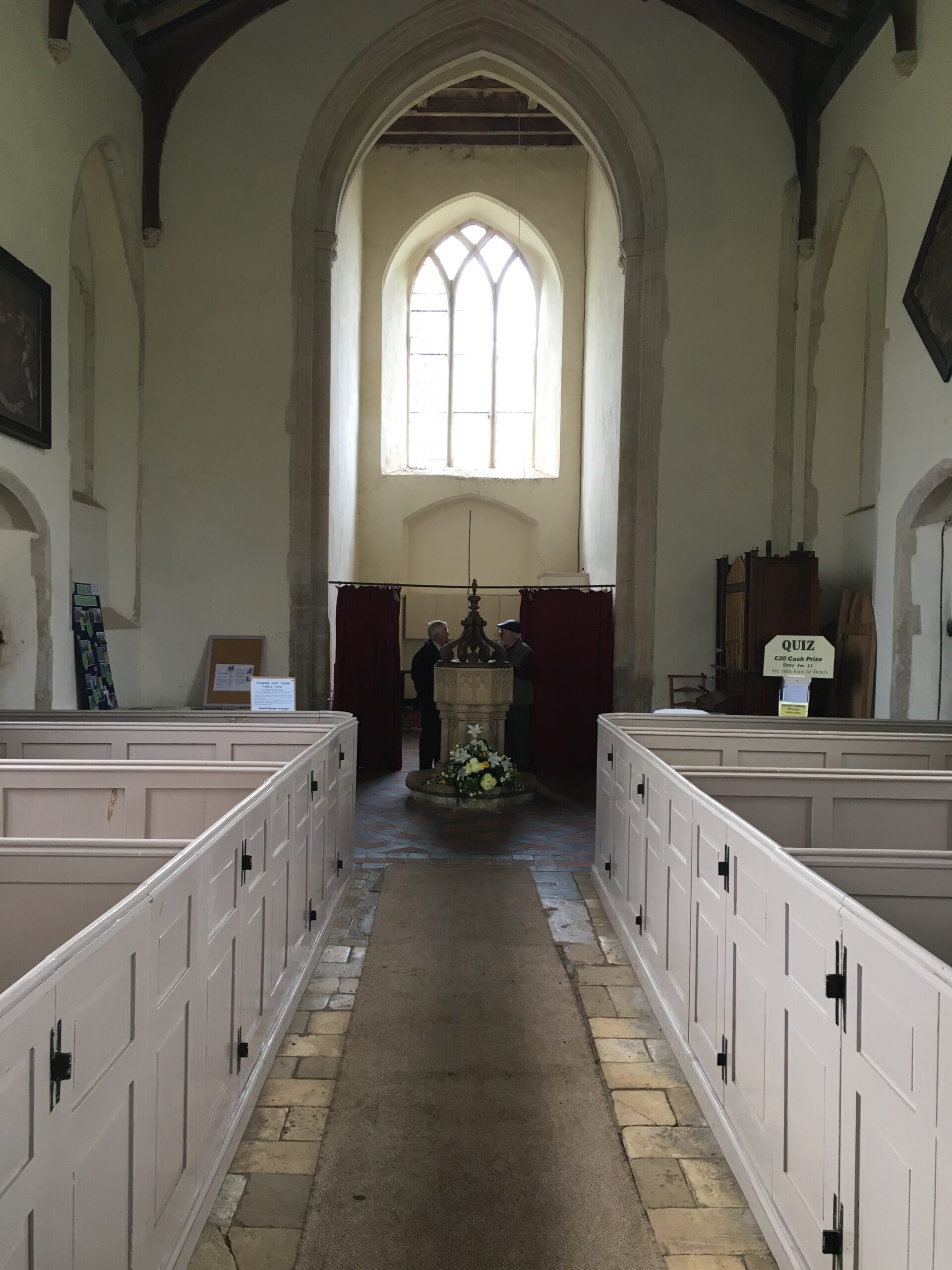
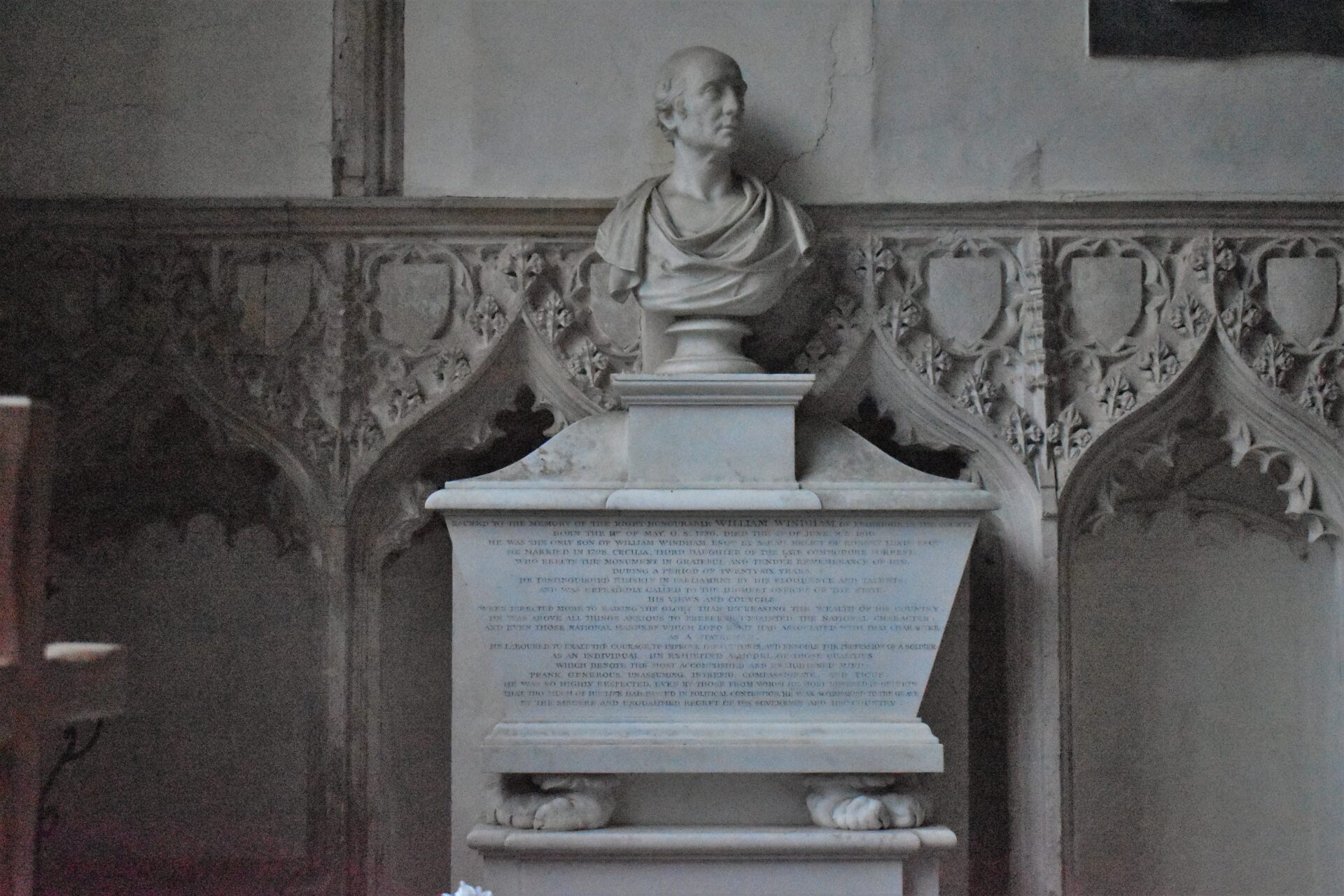
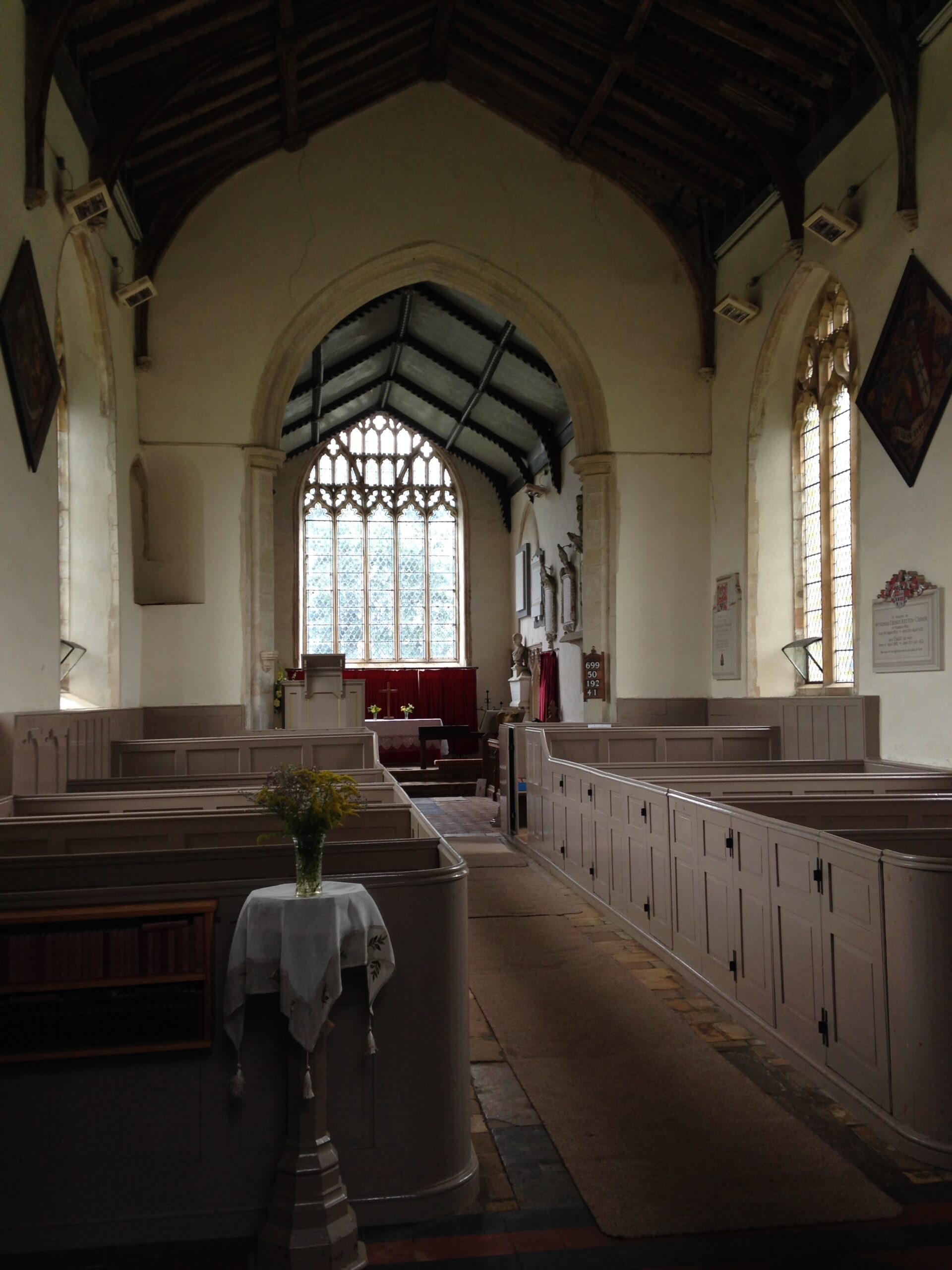
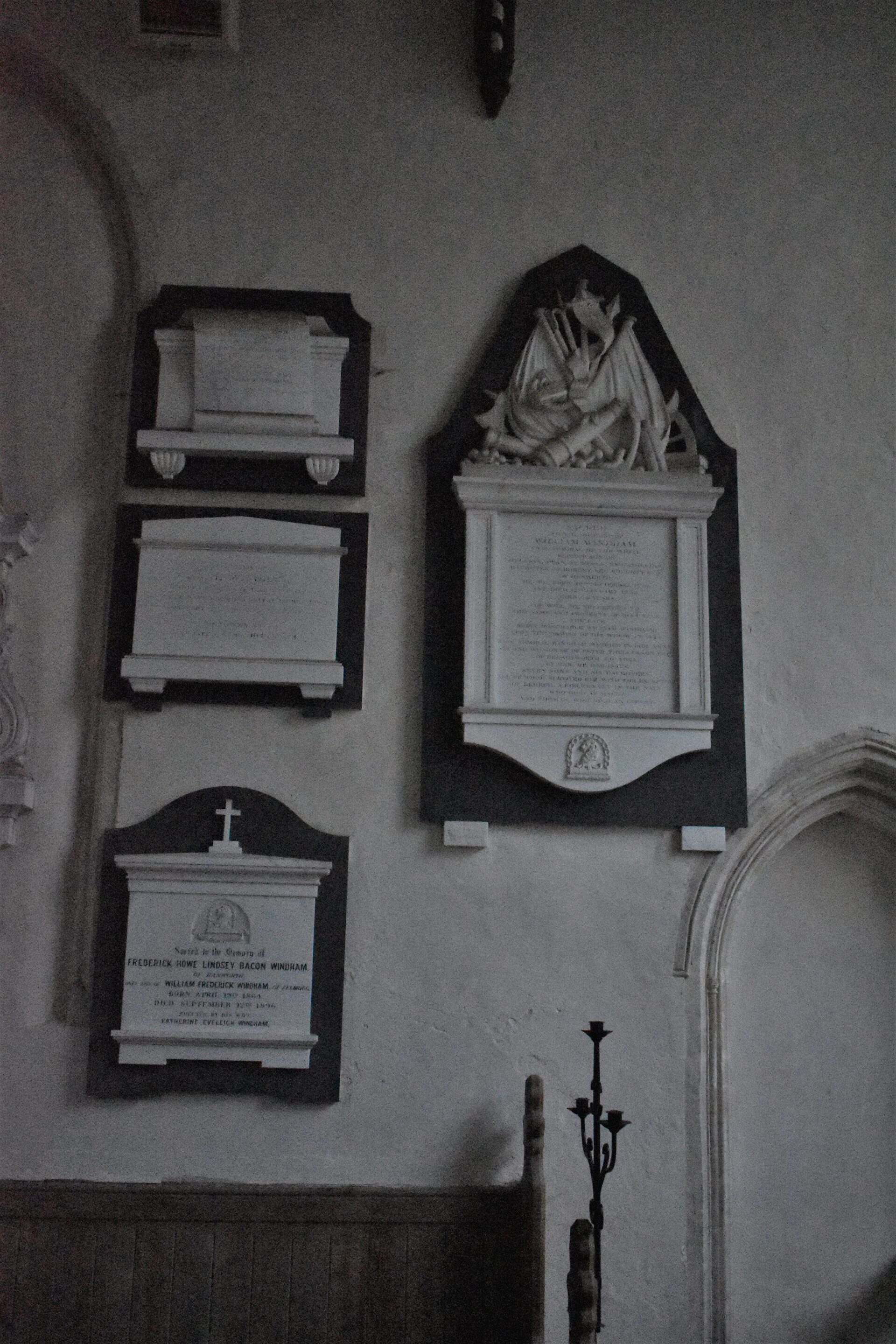
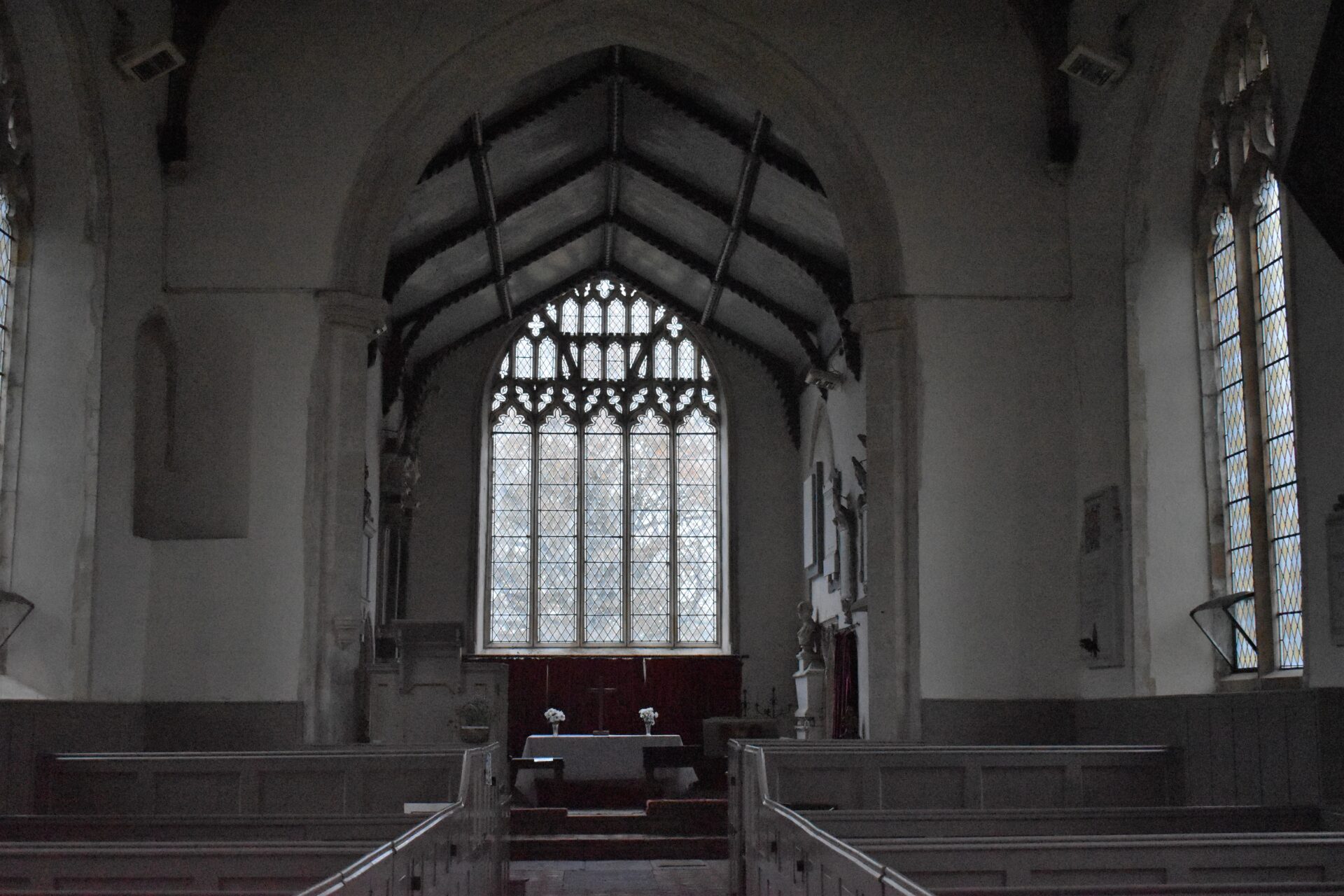
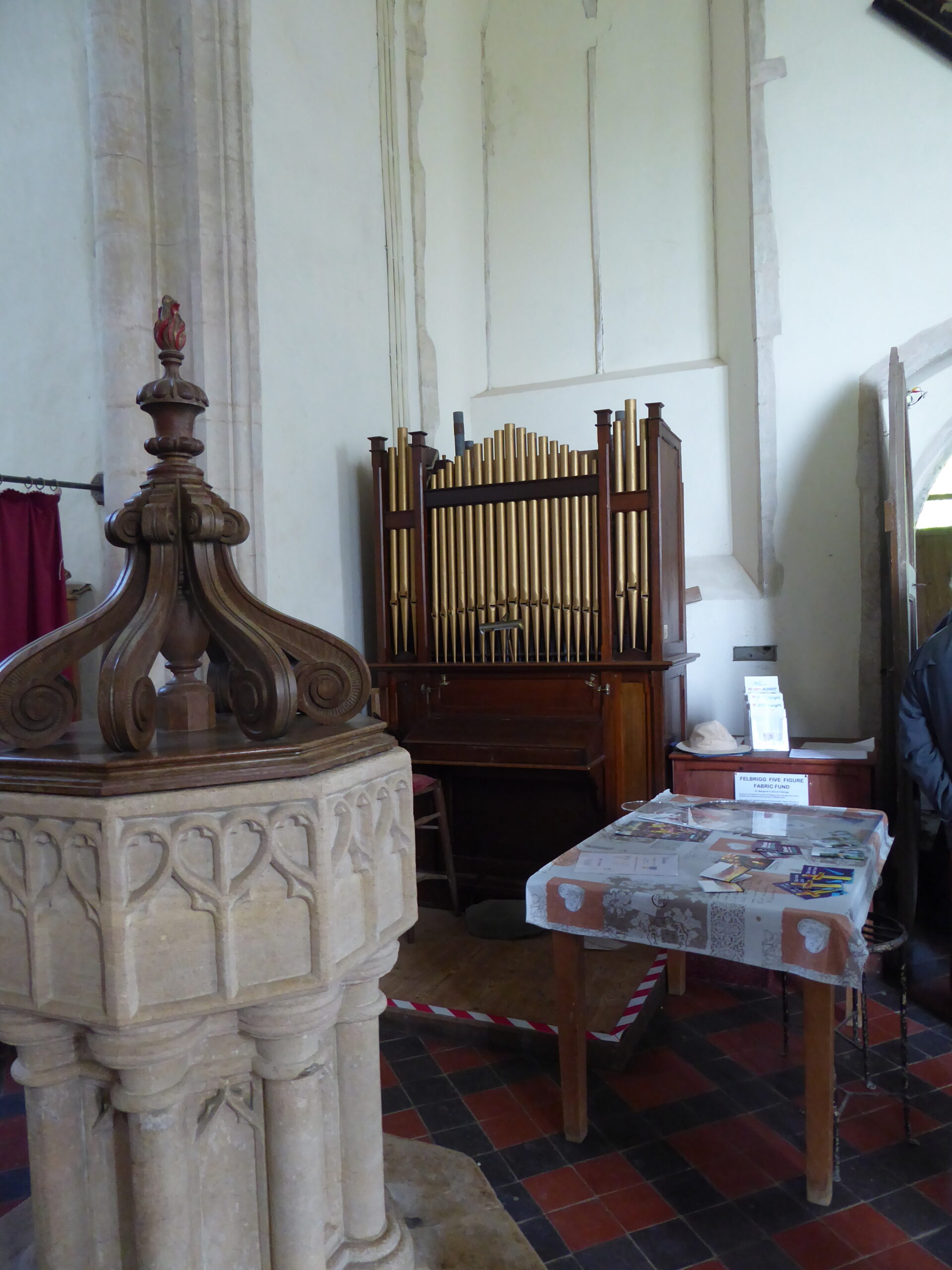
St Margaret’s Church is located in the parkland to the east of Felbrigg Hall and is accessible via a winding farm track. The village of Felbrigg once surrounded the church but, possibly due to plague which befell the parish in 1549, the village was rebuilt a considerable distance away. The church houses one of the best brasses in England, depicting Sir Simon de Felbrigg (d.1442) and his wife Margaret. Sir Simon served as Standard Bearer to King Richard II and was the Queen’s cousin, making him one of the most distinguished knights of the time. His coat of arms, a shackle and a lion, is visible in the spandrels of the west door. Sir Simon made additions to the church, including the embattled tower, the porches and the buttresses. The church is full of monuments. One commemorates the historian Robert Ketton-Cremer who lived at the Hall and wrote Felbrigg: Story of a House. In fact, the north and south chancel windows were blocked up to make room for more monuments! The 19th century monument to William Windham was unfortunately built into the early 15th century sedilia (the stone benches on the south side of the chancel). In the south wall of the tower is a rare feature: a recess known as a ‘wafer oven’. Smoke escaped from the belfry windows. The 15th century roof retains its original timbers.

St Margaret’s, Felbrigg
Raynham Hall
Completed in 1637 by Sir Roger Townshend, Raynham Hall has been the seat of the Viscounts Townshend for over four hundred years. Apart from the gables, the design represented an innovative departure from the architectural style at the time with its neo-classical influences seen in the Ionic columns and the great Venetian window on the east front. Horatio Townshend, 1st Viscount, was honoured by a royal visit by King Charles II to Raynham Hall in 1671 following the Restoration of the Monarchy. The Second Viscount was renowned agricultural innovator Charles “Turnip” Townshend, a pioneer of the four-course rotation crop system which was a driving force of the Agricultural Revolution and resulted in the large scale cultivation of turnips across England. In the Norfolk four-course system, wheat was grown in the first year, turnips in the second, followed by barley, with clover and ryegrass under sown in the third. The clover and ryegrass were cut for feed or grazed in the fourth year. The turnips were used for feeding cattle in the winter. Farming remains at the heart of Raynham, with around 3,700 acres of land yielding a variety of cereal, root and break crops. There is also a herd of Aberdeen Angus beef cattle. You may have heard of the Brown Lady who is said to haunt Raynham Hall and is one of the most famous hauntings in the country. A photo of a ghostly figure, reported to be Dorothy Walpole, descending the main staircase was published in Country Life in 1936. The first recorded sighting was in 1836. Skeptics argue that the photo is an image superimposed with that of a statue of the Virgin Mary. Raynham Hall is sometimes open for several days each year and tickets must be booked in advance.

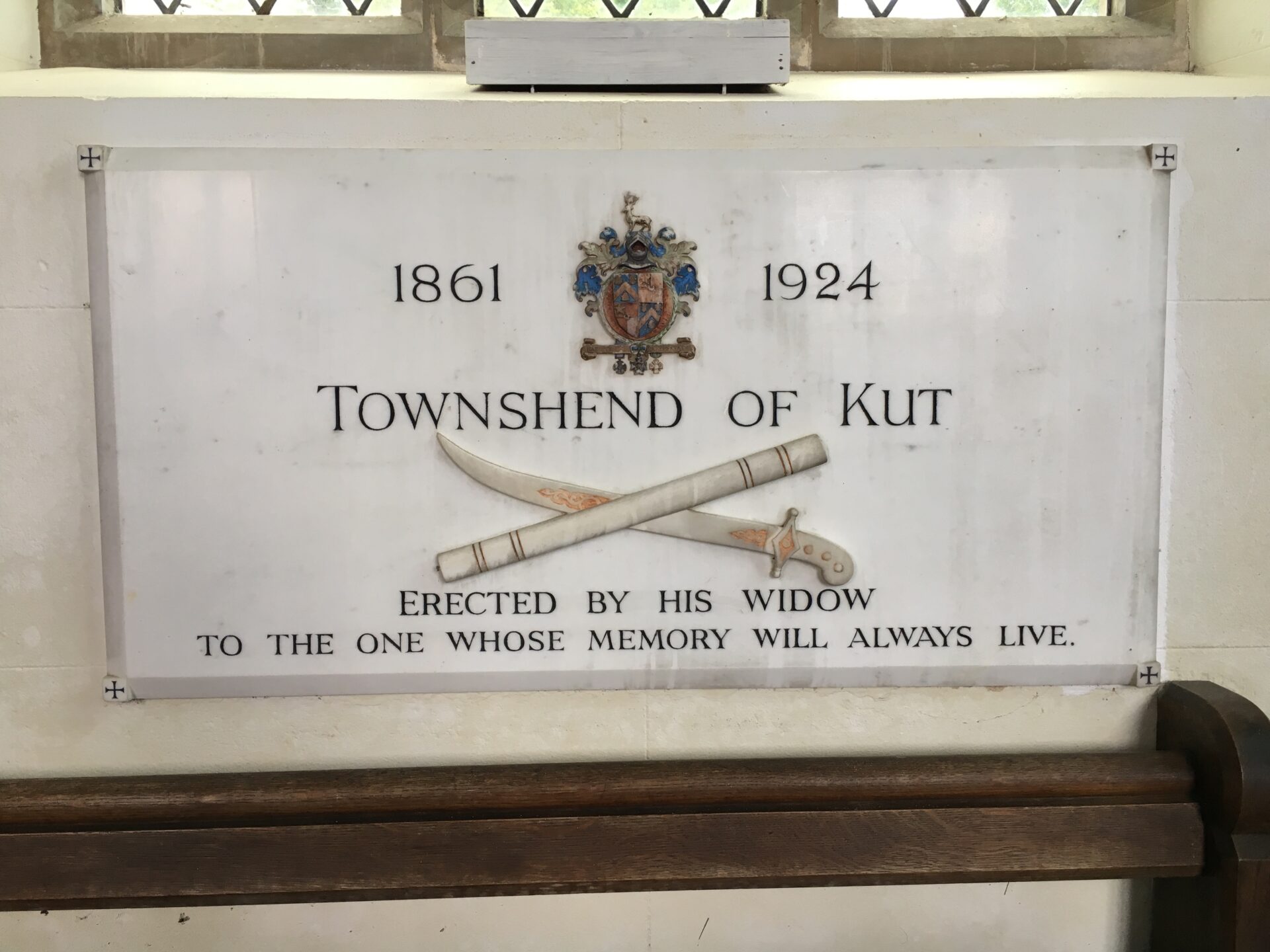
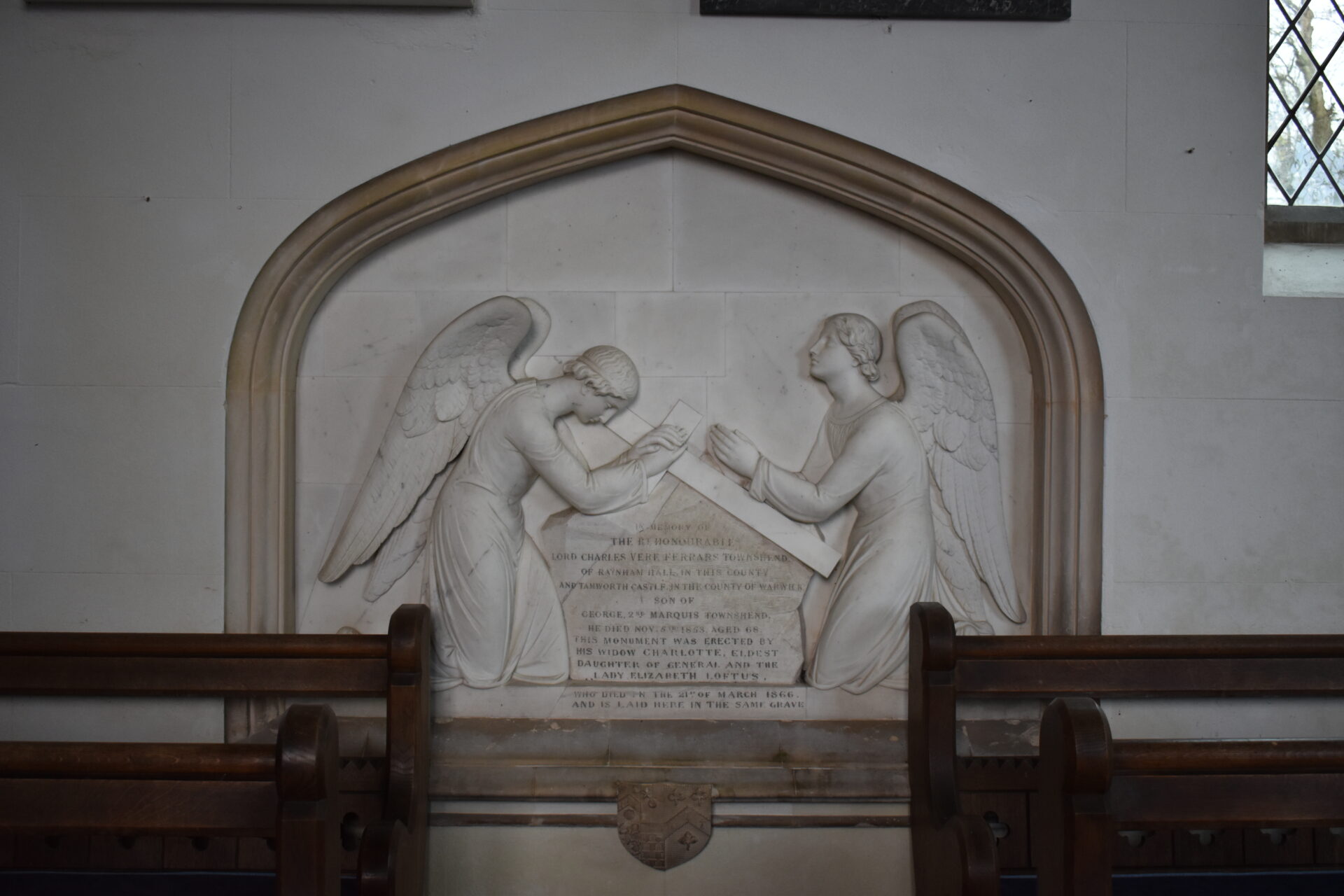
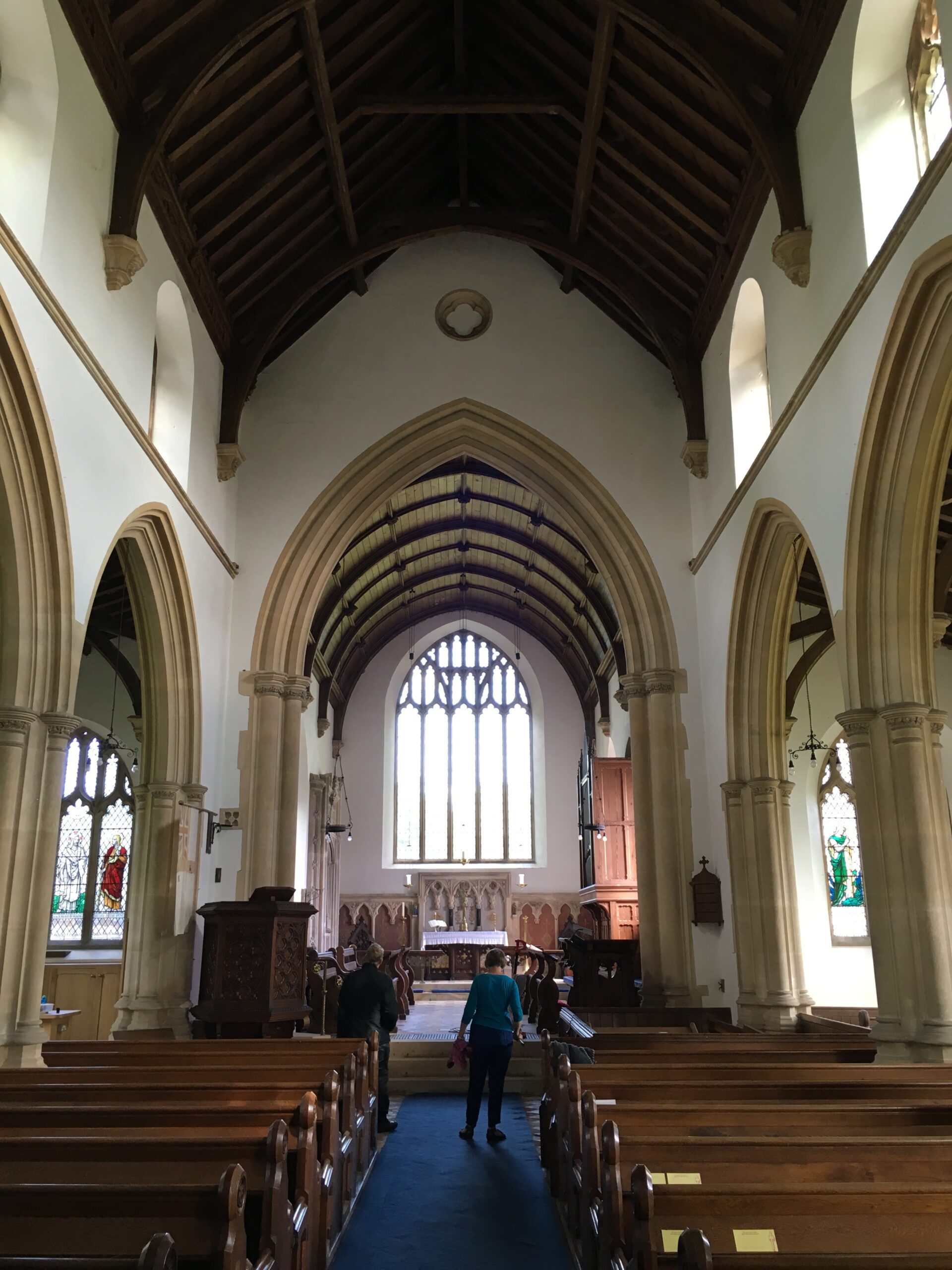
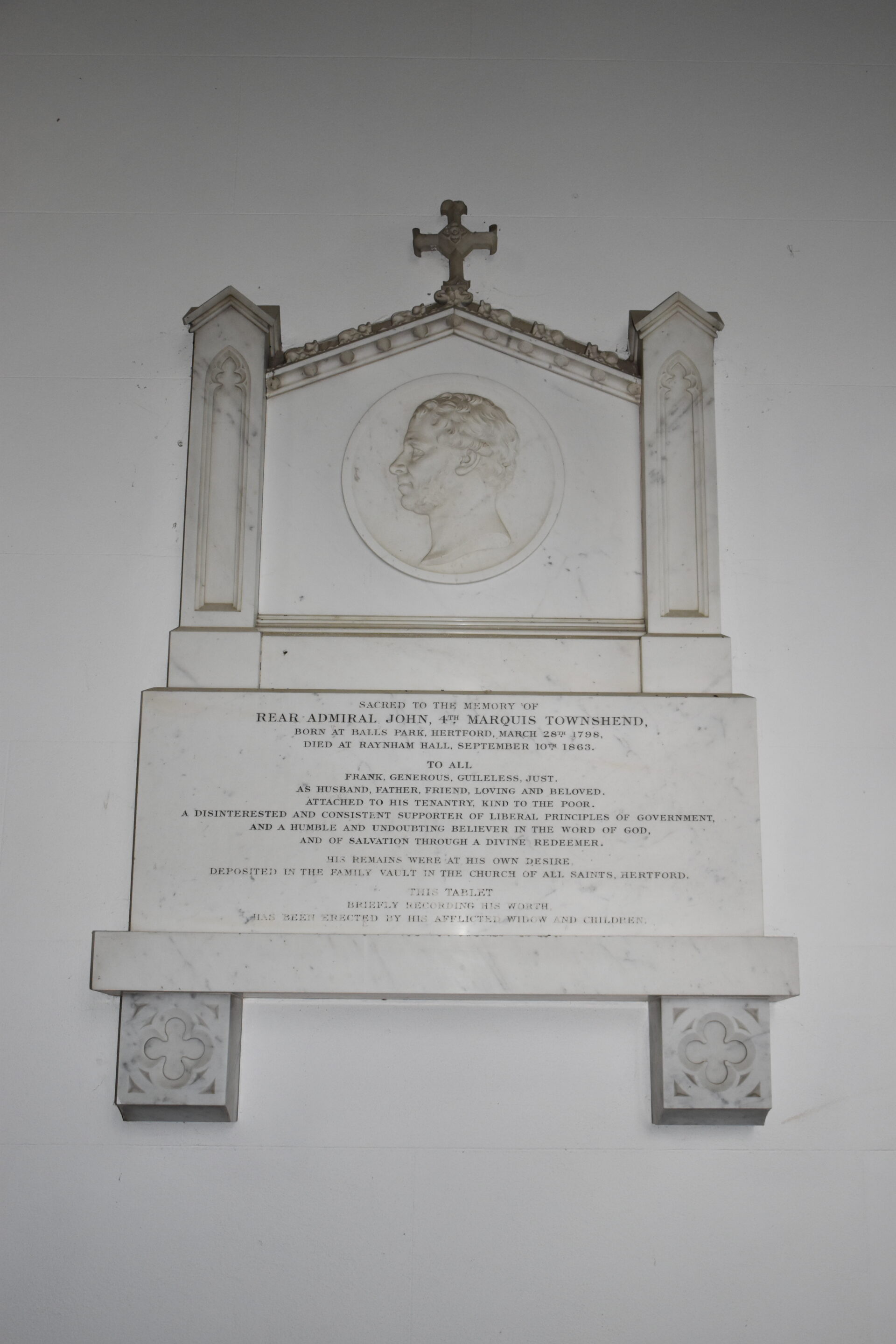
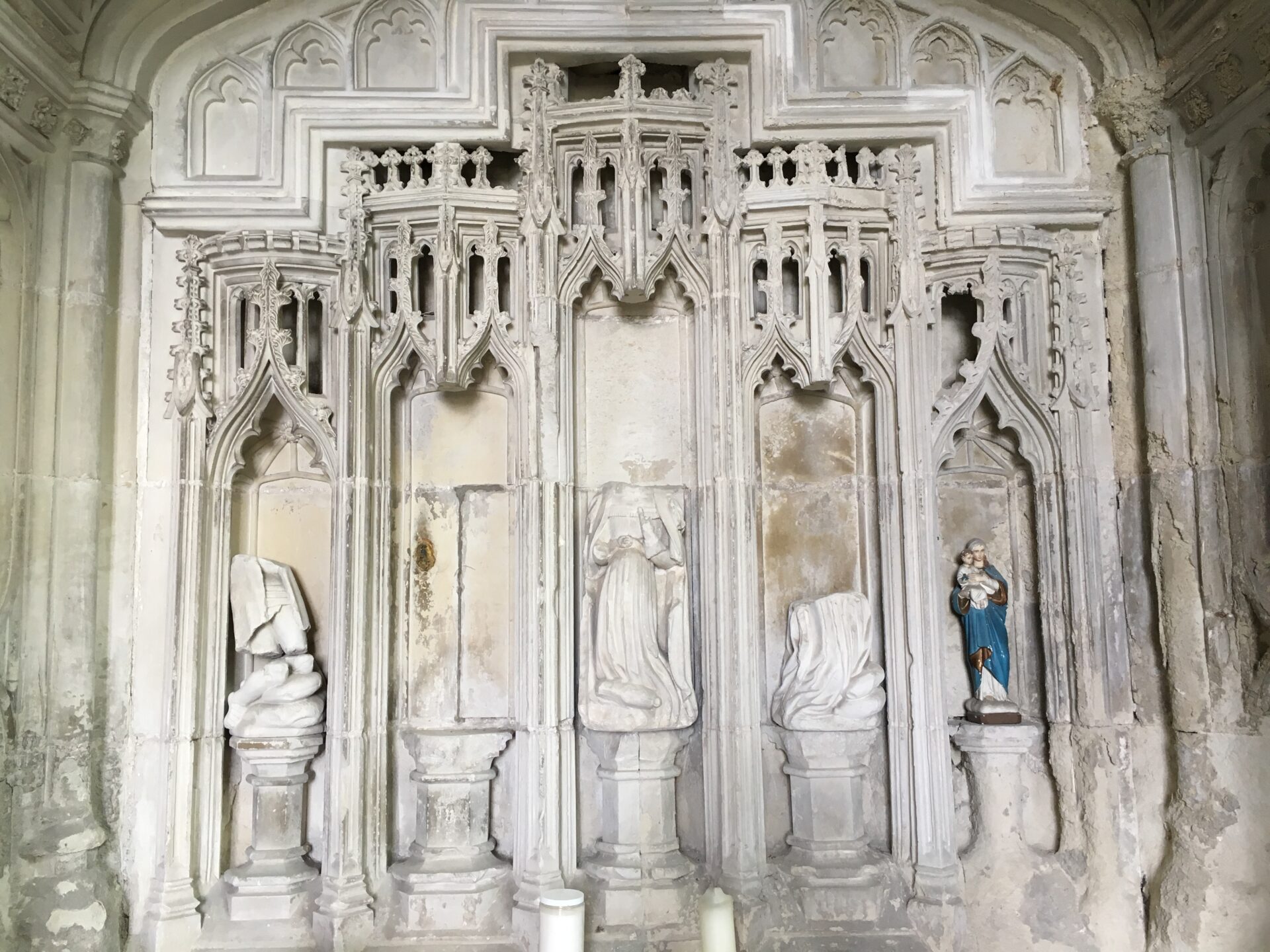
St Mary’s Church is set in rolling parkland, between Raynham Hall and the lake. It was designed in 1858, copying the style of the previous 15th century church. Nearby St Margaret’s Church in West Raynham was already in a ruined state and so St Mary’s became the heart of a new joint parish. The jewel in the crown is the richly decorated Easter sepulchre in the chancel, dating from 1499 and commemorating Sir Roger Townshend and his widow. Another interesting memorial is to Townshend of Kut, a well-known General in his day. In 1915 he led 30,000 British soldiers against Ottoman forces at Kut-al-Amara in Iraq which resulted in a huge military disaster. The elegant stained glass windows at the east of the aisles date from the 1950s.

St Mary’s, East Raynham
Sandringham House
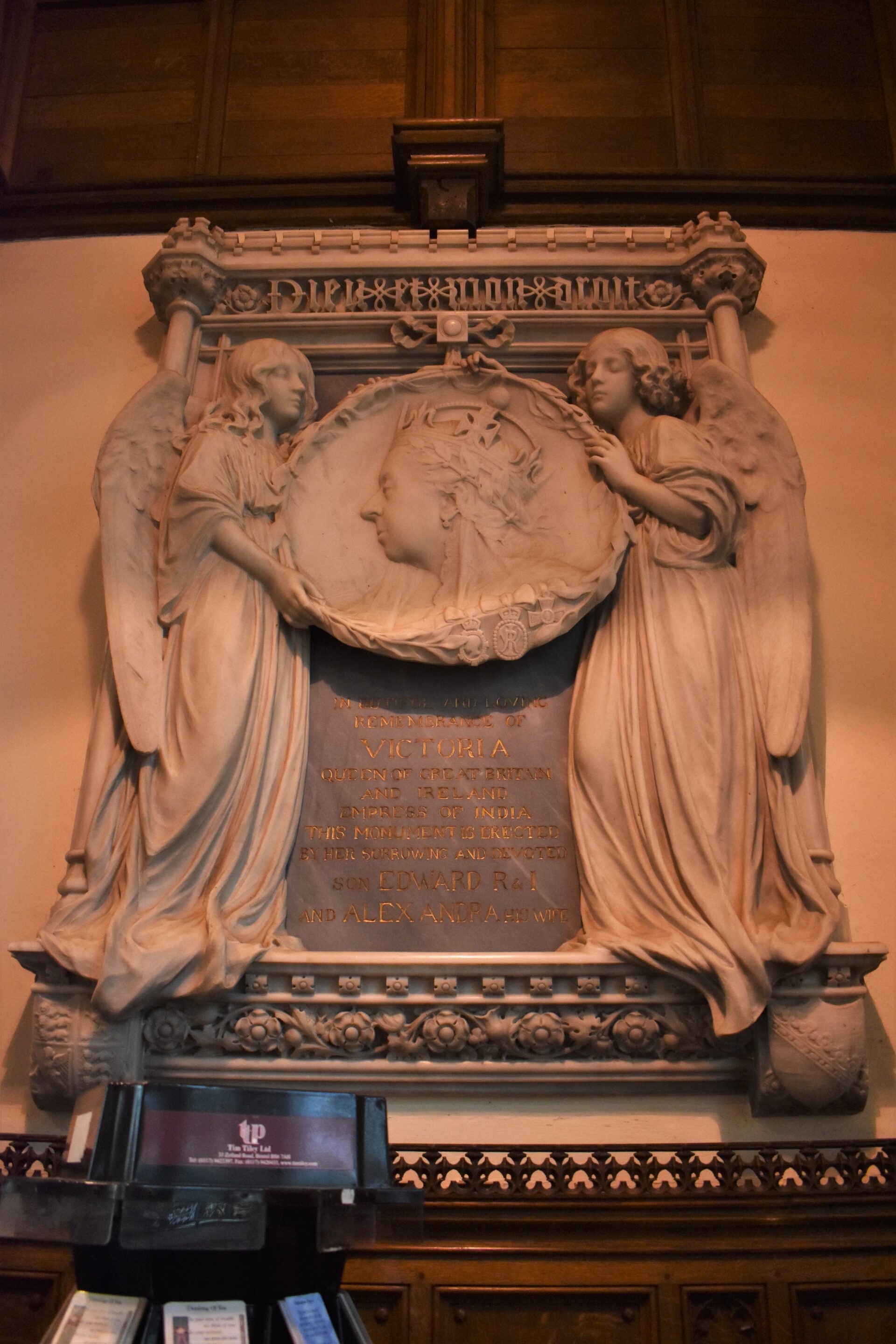
The Norfolk retreat of their Majesties, Sandringham House is one of the best known stately homes in the country. “Sant-Dersingham” is mentioned in the Domesday Book and evidence points to a residence on this site as far back as 1296. An Elizabethan manor house was replaced in 1771 by a Georgian mansion by the owners, the Hoste Henleys. The hall changed hands a couple more times before being bought by the Royal Family for the Prince of Wales, the future King Edward VI. Deemed too small to accommodate the swathes of guests, the Prince had the hall razed and a much larger building constructed in 1870. Jacobean in style, the design was inspired by Blickling Hall. In 1883 the Bachelors’ Wing was added, along with a billiard room and a bowling alley. Members of the Royal Family and distinguished visitors would arrive at nearby Wolferton Station which served the house from 1862 until its closure in 1969. The station also saw at least three royal funeral processions. It is carefully maintained by a group of volunteers and enables visitors to step back in time. Sandringham became known for its elaborate shooting parties and the colossal bloodshed required the largest game larder in Europe. Sandringham time was established which was half an hour ahead of GMT to facilitate longer shooting windows. When Queen Alexandra died in 1925, King George V moved into the house and it proved to be a welcome retreat from political struggles and the cataclysm of World War One. Kaiser Wilhelm II and Tsar Nicholas II had both visited Sandringham. The King died at the house in 1936. Three monarchs later Queen Elizabeth II took ownership of the house, becoming one of two homes owned by the Sovereign in her private capacity rather than as head of state, and opened it up to the public in 1977 for her Silver Jubilee. 24 hectares of woodland and heath are open to the public every day.


St Mary Magdalene’s, Sandringham
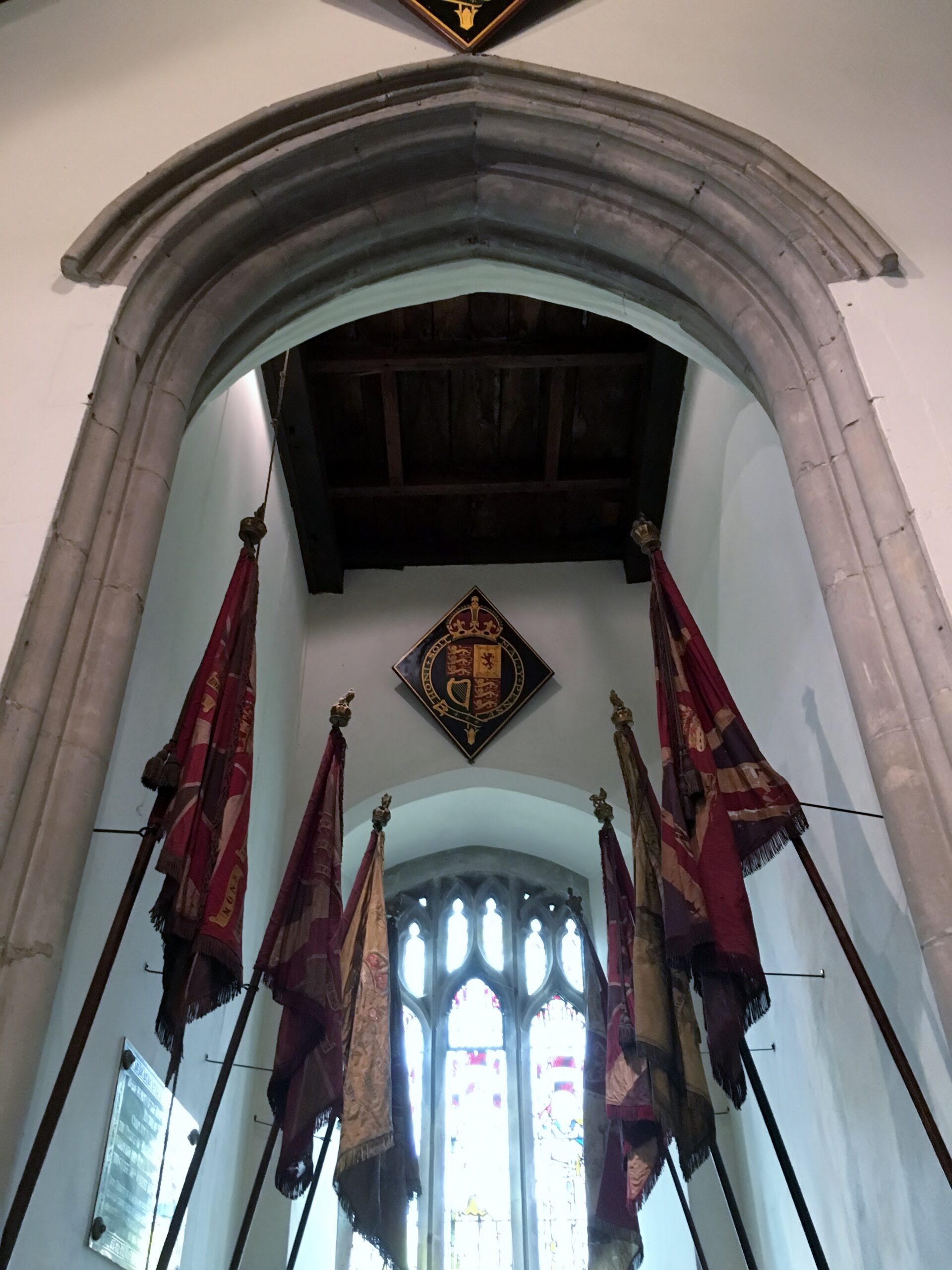
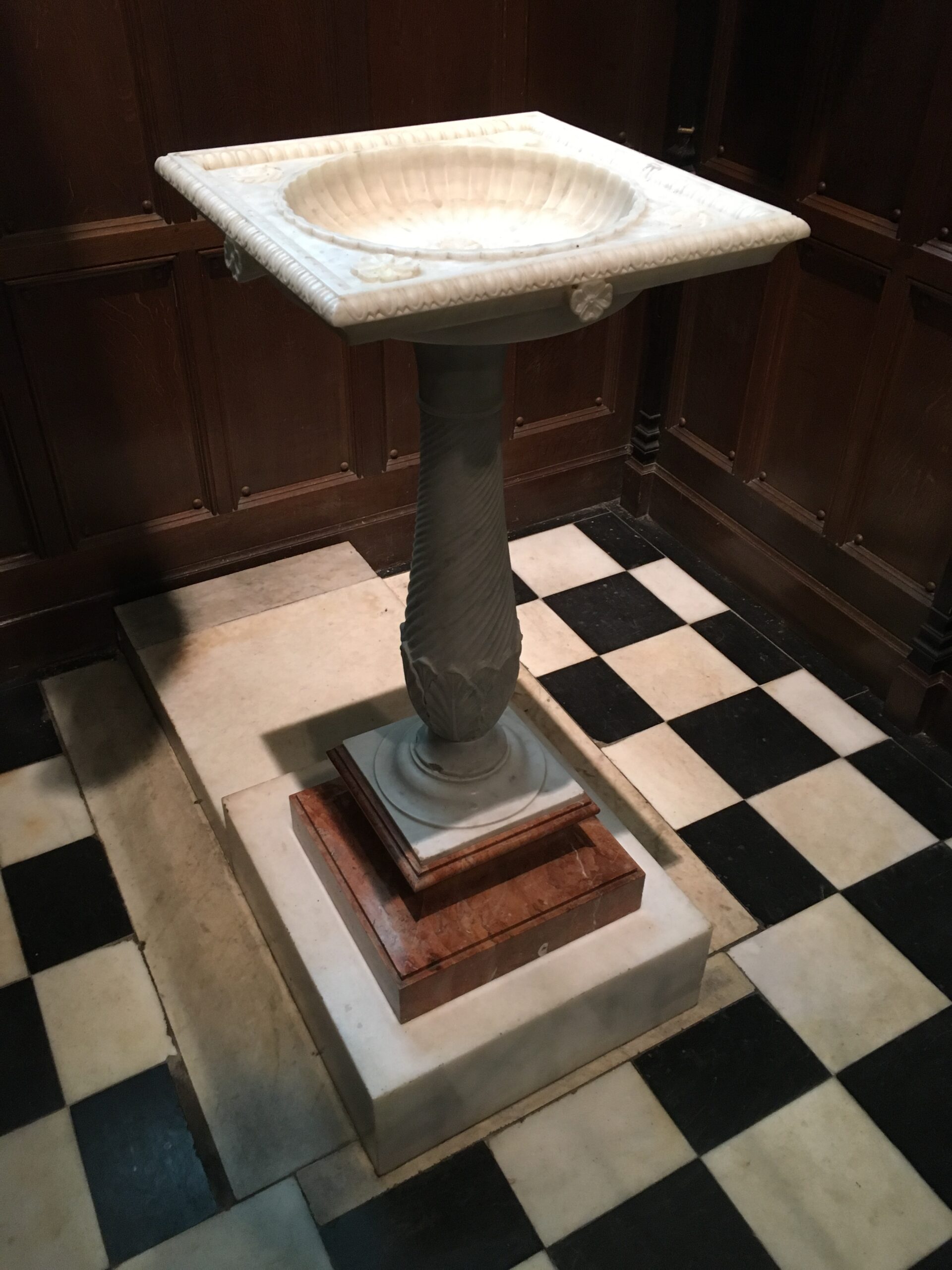
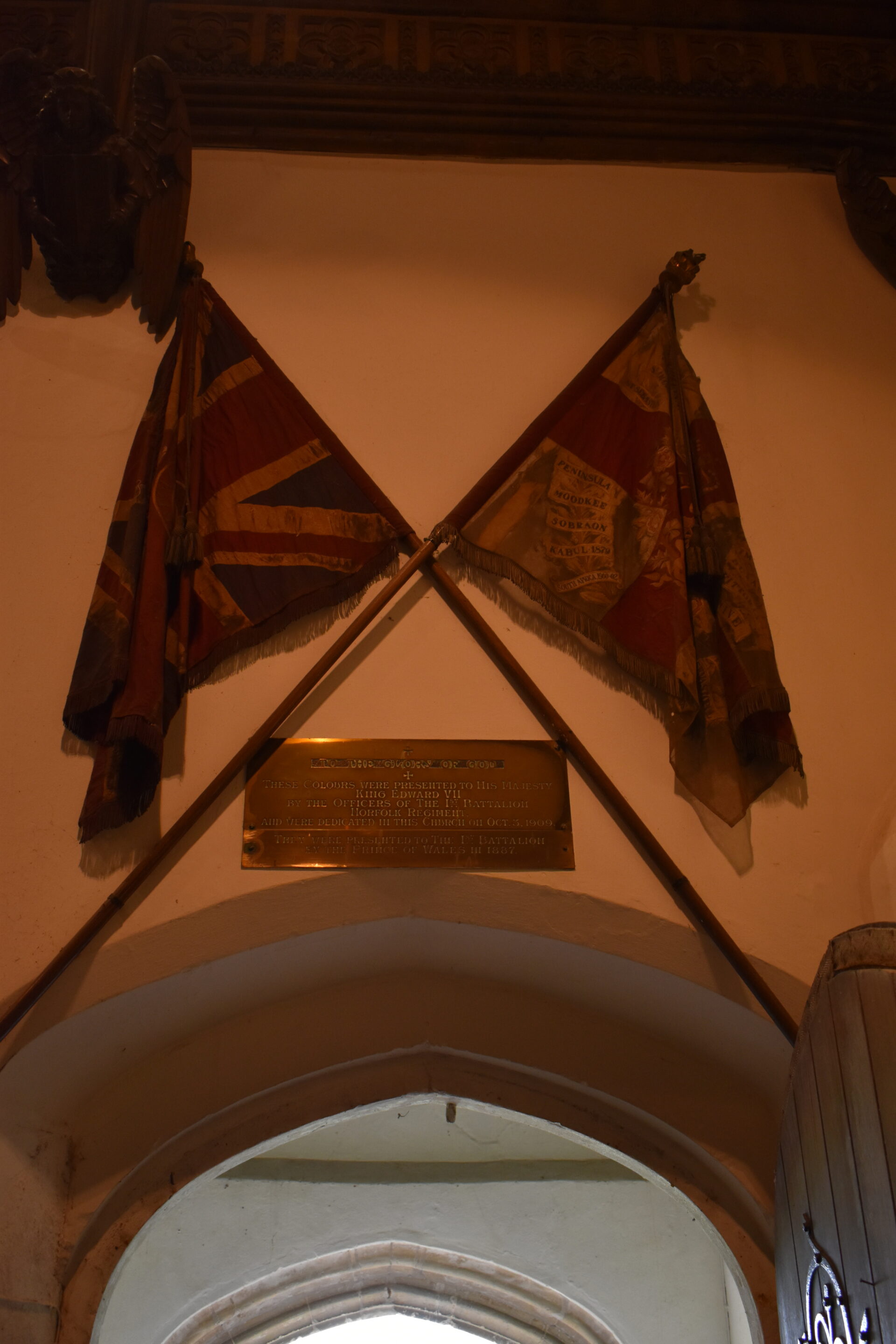
Holkham Hall
Holkham Hall is an imposing, angular pile built in an authentically severe Palladian revival style between 1734 and 1764. Sir Edward Coke, an eminent lawyer, purchased a manor house in the parish of Holkham in 1609 and founded what came to develop into the Holkham estate. His grandson Thomas Coke, who later became the Earl of Leicester, embarked on a six year grand tour of Europe and returned laden with treasures and keen to build a fitting hall in which they could be displayed – a temple to the arts. The house is entered through the Marble Hall which was modelled on a Roman basilica. The interior achieves a heightened grandeur rarely seen in other houses in England. At the entrance to the estate, the Triumphal Arch ensured visitors were struck by the splendour of the approach to the estate, before they had even seen the hall itself. Meat and fish were preserved in the state-of-the-art ice house and ice sculptures were made for table decoration. Thomas Coke, the great agriculturalist known as ‘Coke of Norfolk’, inherited the estate in 1776. He pioneered modern methods of farming and crop rotation. A giant wheatsheaf sits atop the forty metre high Coke Monument, with carved farm animals and equipment on each corner of the plinth. The estate stretches over 25,000 acres and vast pine woods act as a sea defence.

St Withburga’s Church proudly occupies a corner of the parkland of Holkham Hall. The sandy mound it sits on could be an Iron Age tumulus or simply a large dune and is surrounded in its entirety by the churchyard wall. Notice the mausoleum to the west. The imposing hall is about a mile away, beyond the lake and the herds of deer and sheep. There is another entrance to the church via the coast road. The dedication is highly unusual. The only other church of St Withburga was East Dereham (the site of her well) before it became St Nicholas. The medieval church was thoroughly restored and rebuilt in the 1860s. There is evidence of an earlier, Saxon church on this site. Inside there is an array of memorials, but for the vast Coke family memorials a visit to St Mary’s Church in Tittleshall is in order. At Holkham there is a memorial depicting three couples above their fifteen children. Some of the children are turned towards the viewer, smiling. The touching marble figure of Juliana Countess of Leicester lies peacefully in the north chapel. She paid £9,000 for the 1868 restoration (£563,481 in 2017 money). There are wall memorials in the north aisle commemorating the Coke sons killed in the World Wars.

St Withburga’s, Holkham
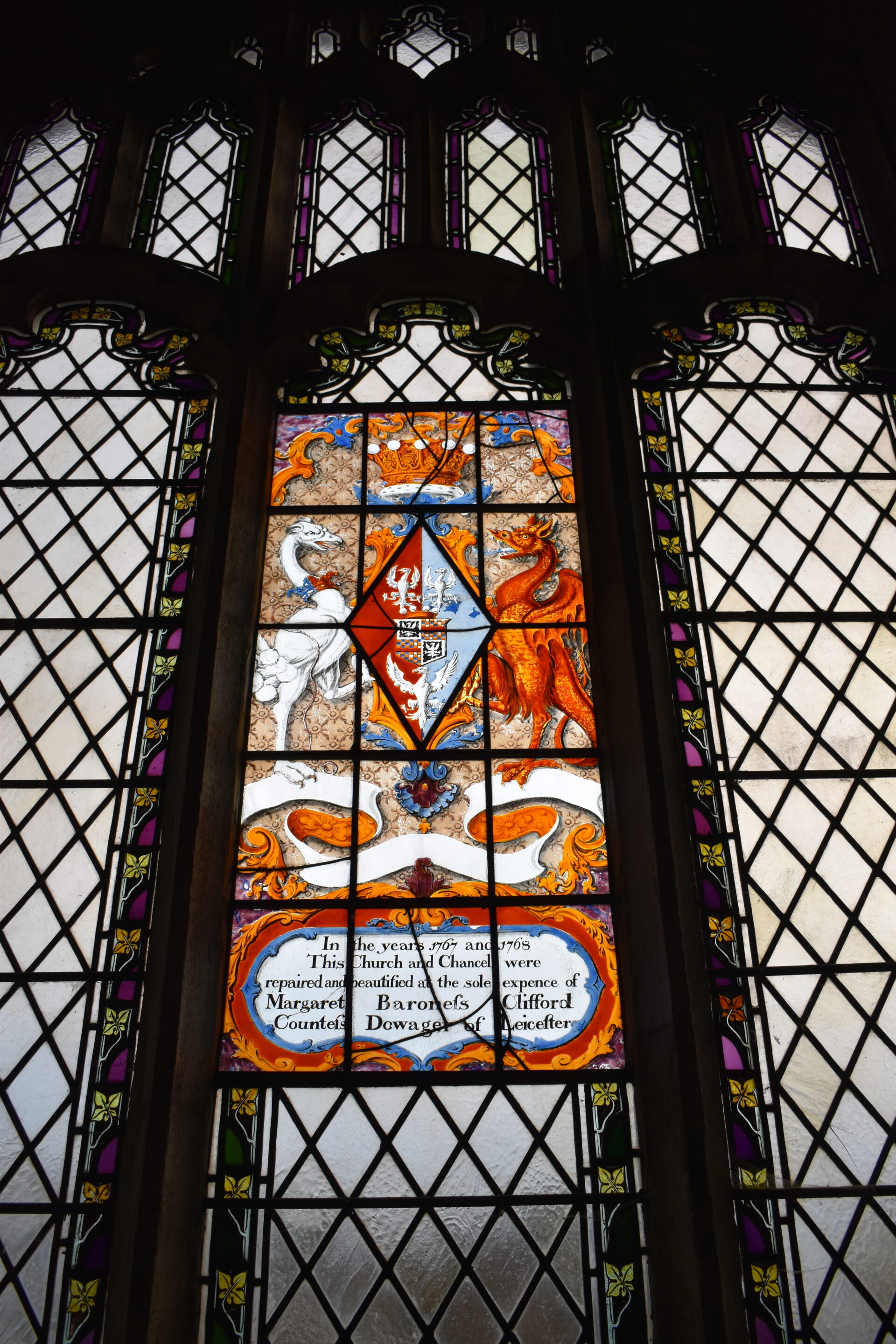
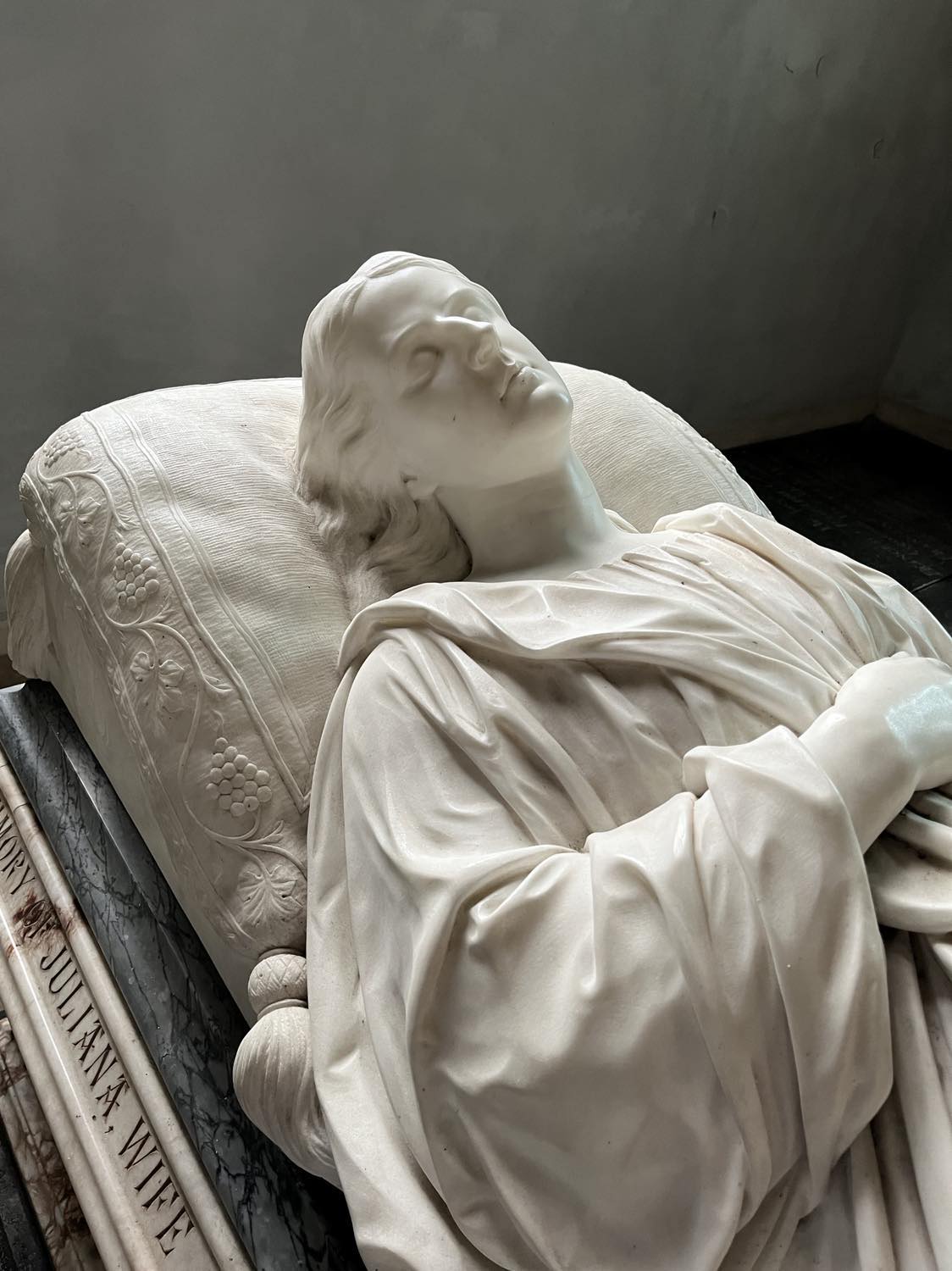
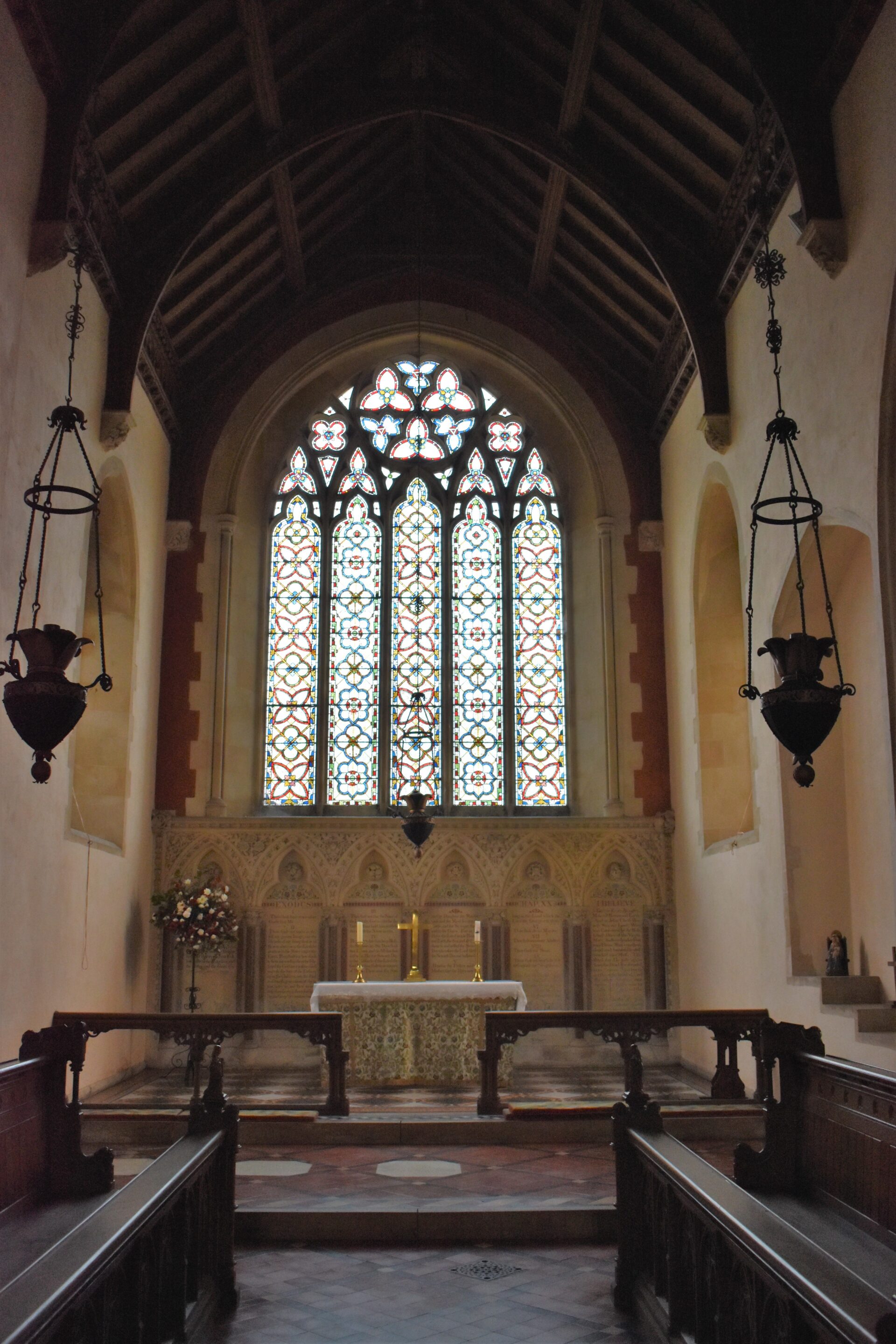
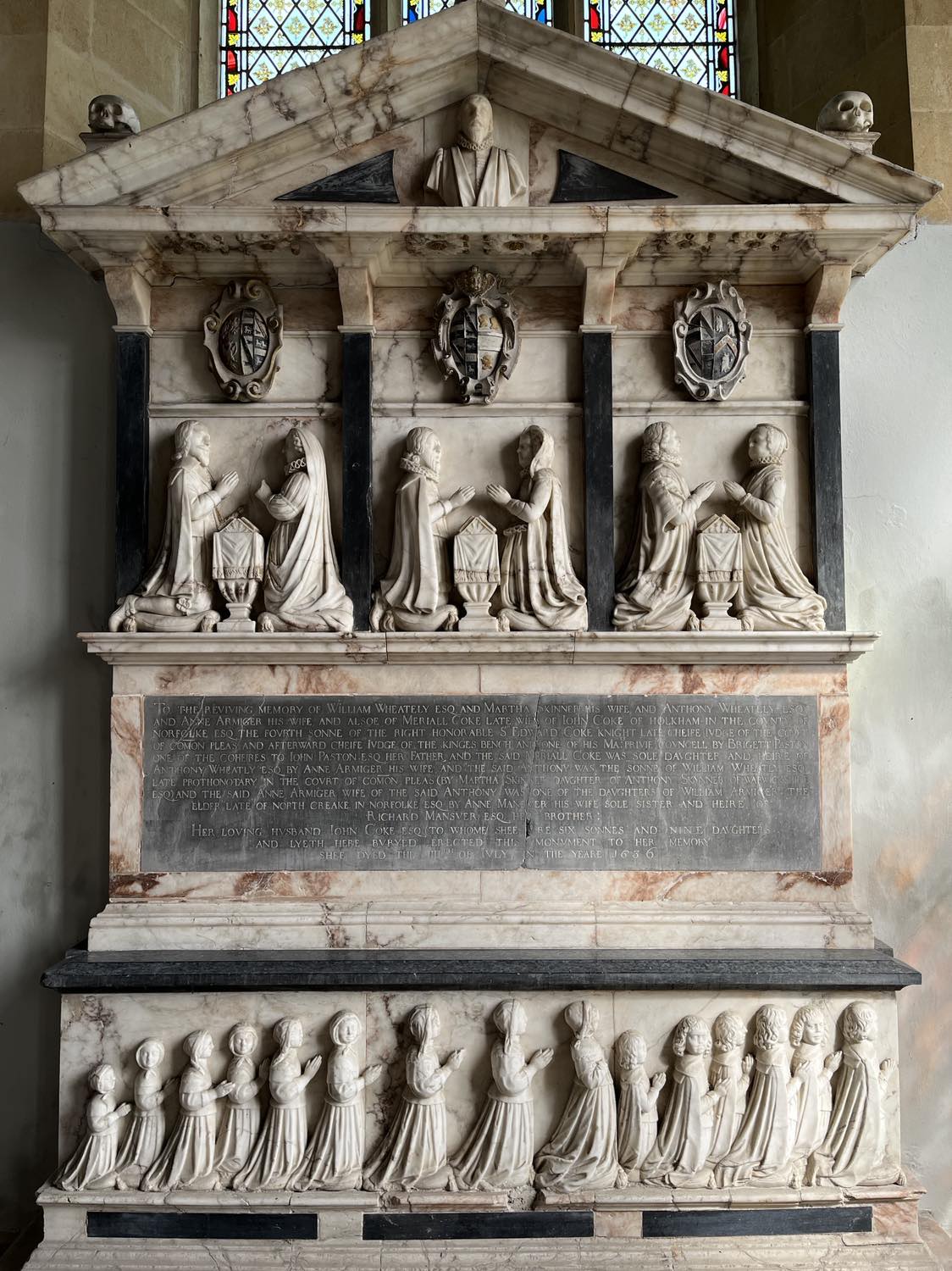
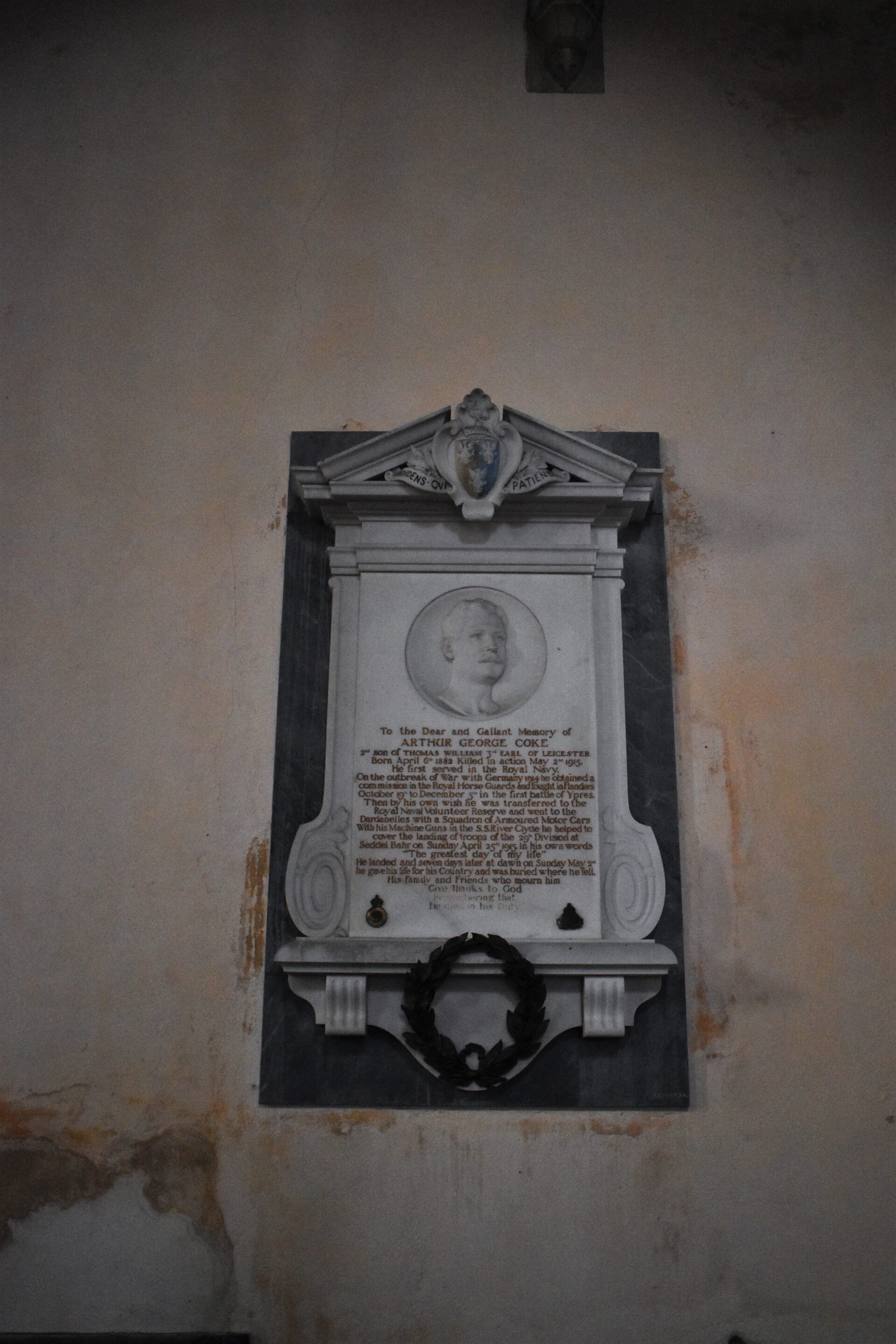
 Holkham Estate from St Withburga's Church
Oxburgh Hall
The Bedingfeld Family has called the magnificent, moated Oxburgh Hall home since 1482. King Edward IV granted Sir Edmund Bedingfeld permission to crenellate, i.e. royal planning permission, and the bold brick building resulted. There was a royal visit by Henry VII, Elizabeth of York and his mother, Lady Margaret Beaufort, in 1498 with the rooms named in their honour. Sir Henry Bedingfeld was a staunch supporter of Catholic Queen Mary I. Elizabeth I was implicated in the rebellion over Mary’s marriage to King Philip of Spain and Sir Henry became Elizabeth’s jailer during her imprisonment in the Tower of London and during her time under house arrest. Sir Henry’s fortunes did not last once Elizabeth became queen – his involvement at court ceased and his fervent Catholicism led to fines. The hall is known for its priest hole accessed through the lavatory, for the concealment of Catholic priests from priest hunters. The next Sir Henry and his sons fought on the Royalist side at Marston Moor in 1644. As a result, the Hall was pillaged and partially burnt down but by 1680 it had been restored. During William and Mary’s reign taxes were doubled for Catholics and Sir Henry was not permitted to travel further than 5 miles from Oxburgh. Fast forward to 1951 and Oxburgh Hall was sold to the Eagle Star Insurance Company due to financial difficulties and faced demolition. Eagle Star offered Oxburgh back to the family for the sum of £5,000. Sybil, Lady Bedingfeld, her husband’s niece, Violet Hartcup, and her daughter Frances managed to raise the money to secure it. Much of the contents were sold in a separate auction. In 1952 Sybil, Lady Bedingfeld gave Oxburgh to the National Trust. Oxburgh has a rich collection of portraits, furniture and manuscripts. It also houses the Oxburgh Hangings, embroideries worked on by Mary, Queen of Scots during her captivity. The gardens are a mixture of formal and wild, with the kitchen garden, orchard and herbaceous border adding colour and seasonal interest. For those wanting to explore further, you can follow one of the estate walks through woodland, along the River Gadder, and out into open meadows.

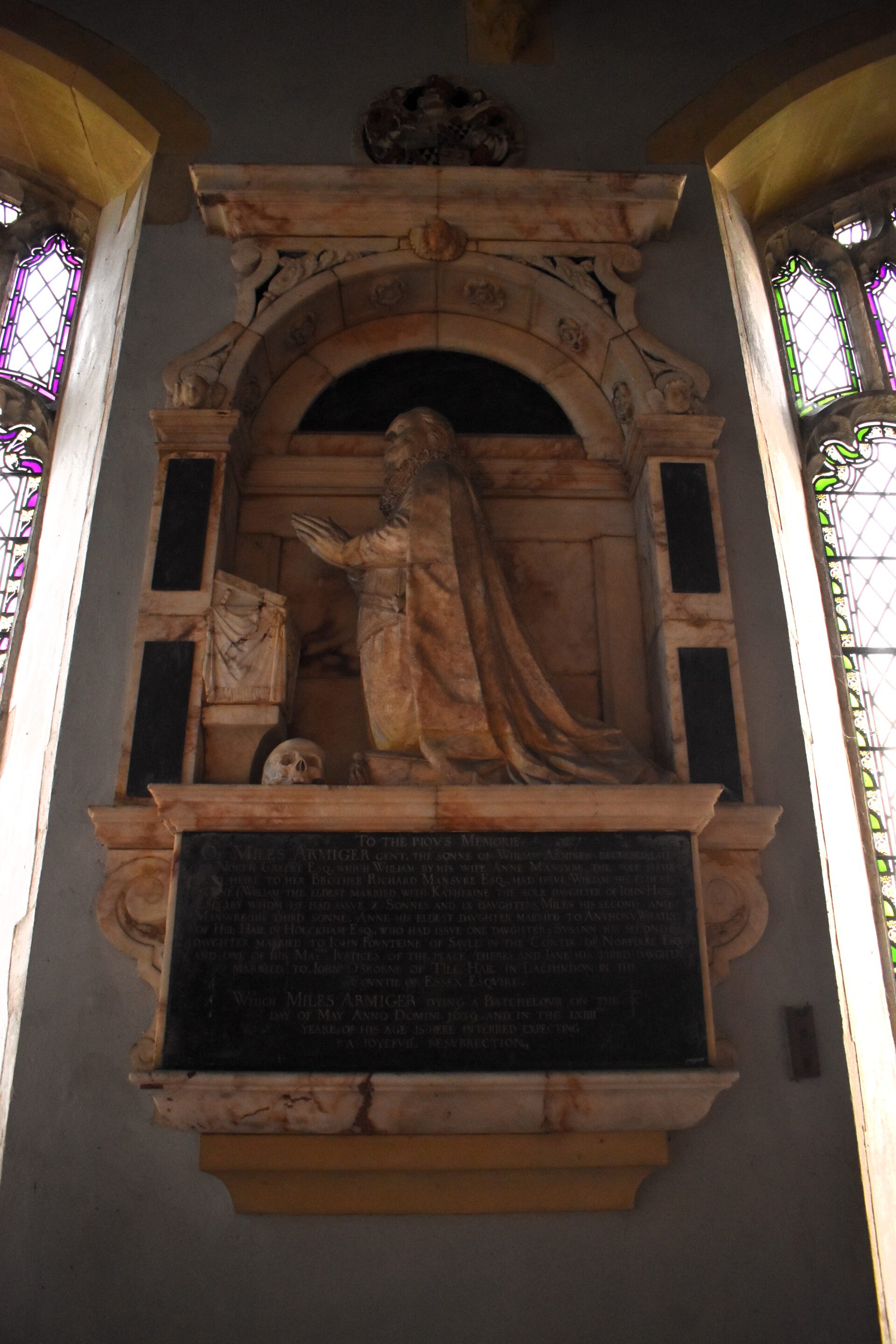
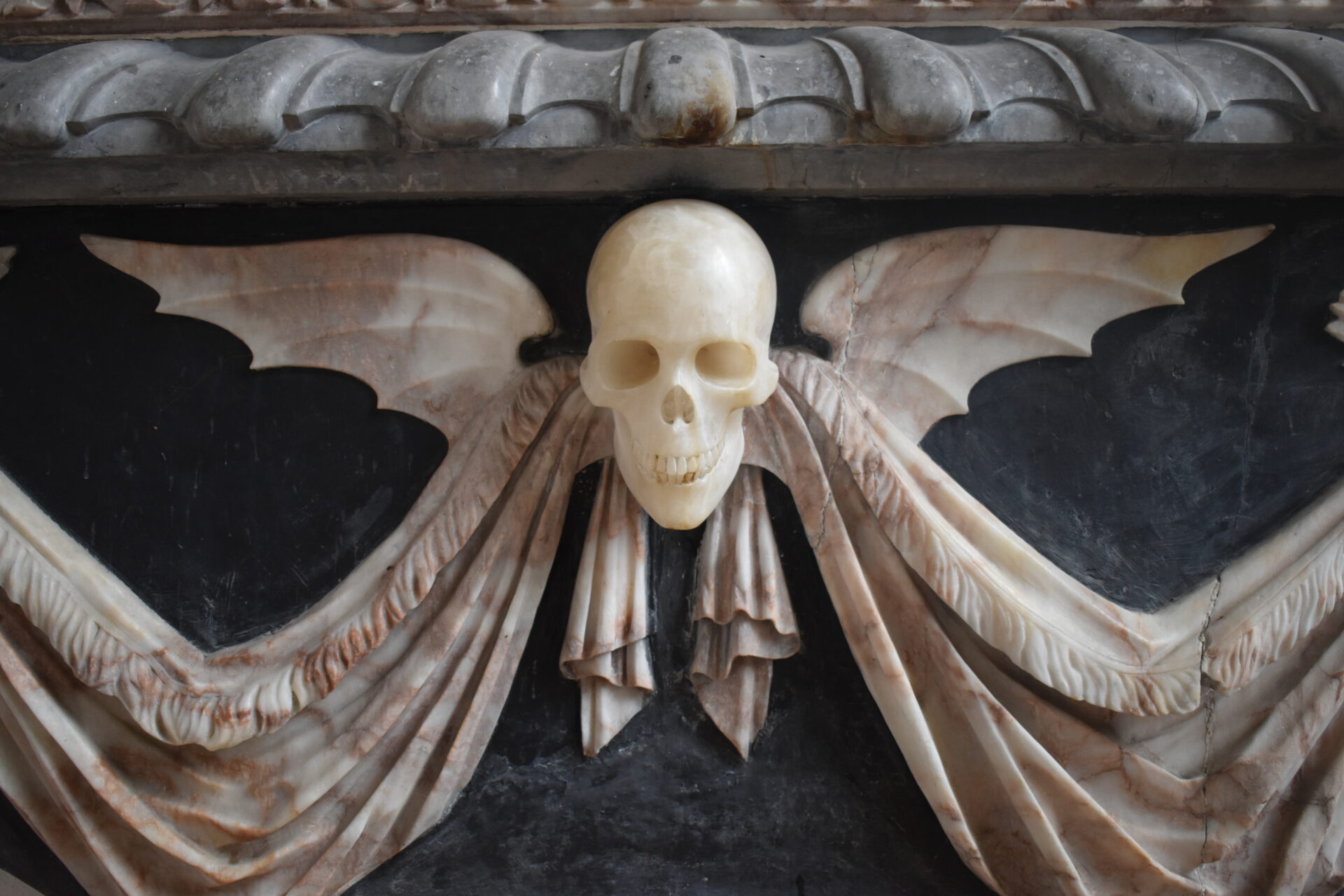
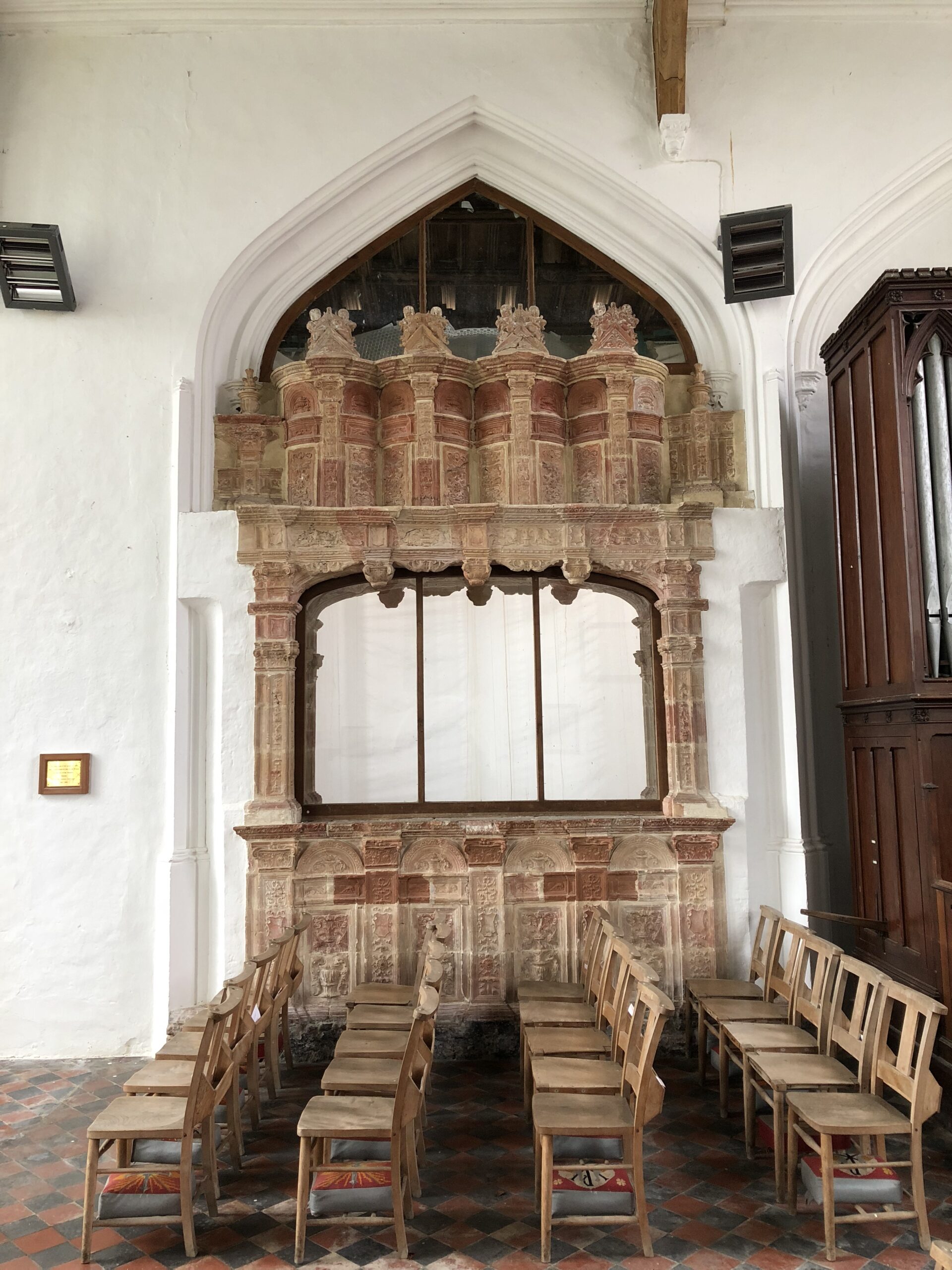
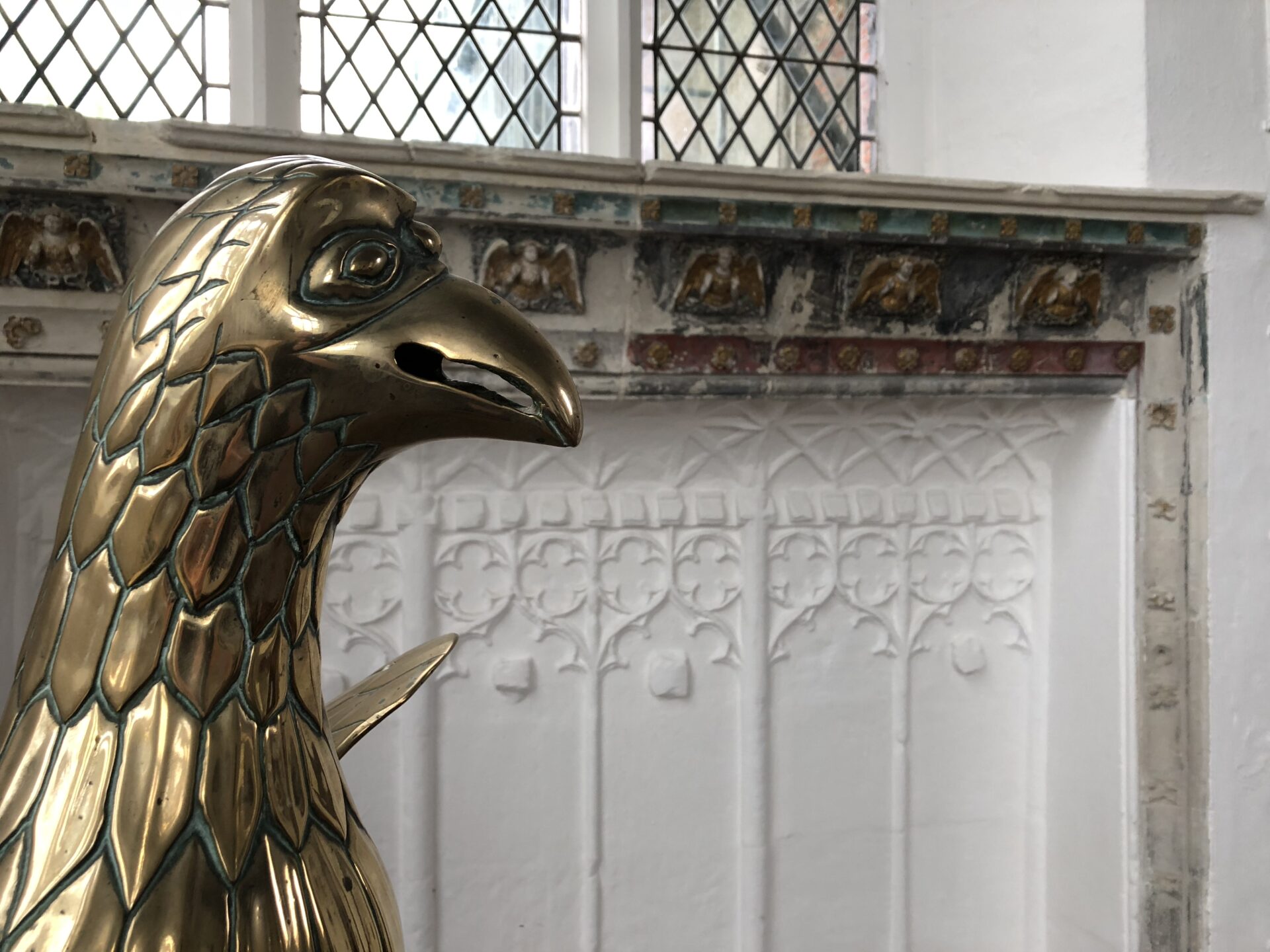
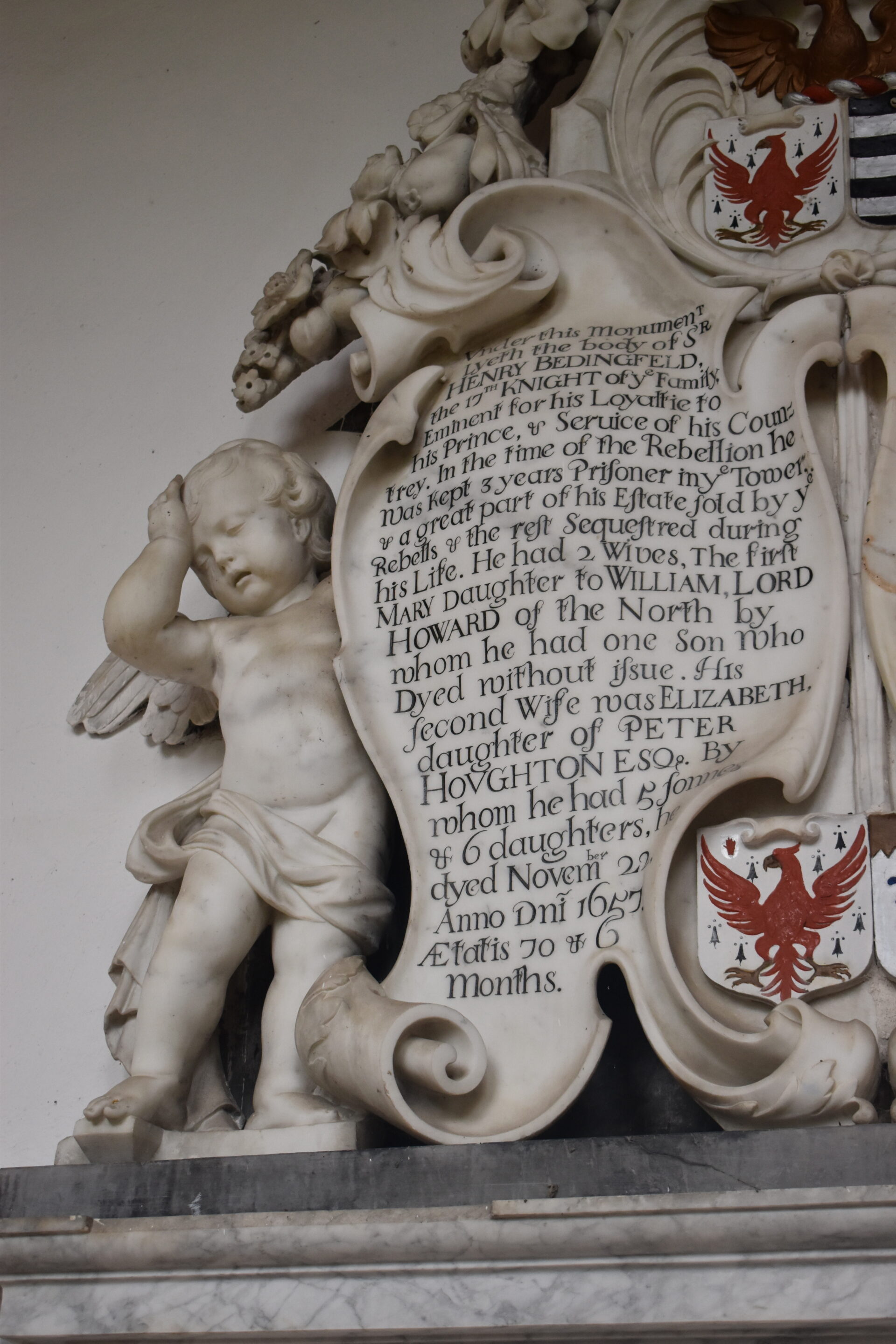
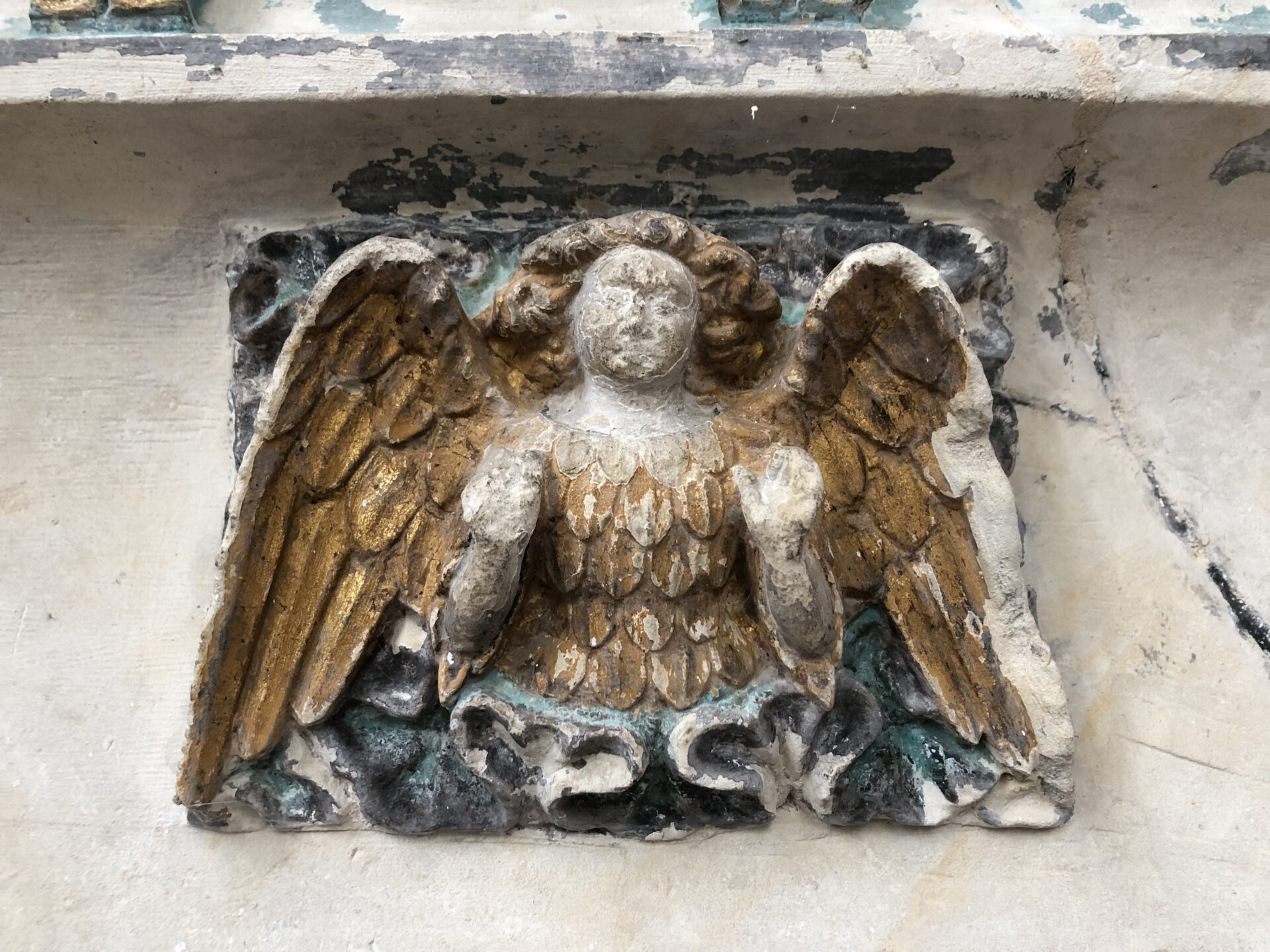
The spire of this large church collapsed in 1948, partially ruining the nave and leaving the picturesque ruins you see today. Worship became confined to the chancel and Bedingfeld Chapel at the east end of the south aisle. The rood screen was taken to St Nicholas’ Church in Dereham. Notice the carved floral pattern and angels on the piscina arch. The lectern, made by an East Anglian craftsman, dates from the 15th century. It features three lions and an eagle which has lost its claws. The crowning glory of St John’s Church is the Bedingfeld Chapel. An ornate terracotta tomb partitions the chancel from the chapel and another forms a western screen. These terracotta tombs, in the Renaissance style, are the finest examples in the country and comprise crested canopies, cherubs, dolphins and pilasters. The Bedingfelds, who still live in nearby Oxburgh Hall, were a prominent Catholic family. In 1513, Margaret Bedingfeld left directions in her will to be buried ‘where I will a chapel to be erected.’ Simple Perpendicular windows light the space. A memorial to Henry Bedingfeld (d. 1704) and his wives blocks most of the east window. It is framed with acanthus leaves and adorned with scrolls and shields. Underneath, a skull has unfurled its bat wings and sits between cherubs with feathered wings.

St John the Evangelist, Oxborough
Ketteringham Hall
Majestic Ketteringham Hall has medieval origins and was owned by the Grey Family until 1492. In the late 16th century, the Hevenyngham Family from Suffolk rebuilt the hall. In 1717 it was sold to Edward Atkyns before being bought by Sir John Boileau, 1st Baronet, in 1836. Sir John became the High Sheriff of Norfolk and the Deputy Lieutenant. He was involved in the Norfolk and Norwich Archaeological Society, the Society of Antiquaries, the Zoological Society, the Royal Institution and the Geological Society. Sir John remodelled the house in the Gothick style, adorning the structure with battlements, buttresses and pinnacles. A single storey hall was added to the west in 1840 in the Perpendicular style and was used for special social occasions. The late 19th century stables have two octagonal gate turrets with inset Greek marble stelae (a monument containing information in text, images or a combination of the two) dating to the 2nd century BC. The Greek influence continues in the garden, with the presence of caryatids (female figures serving as the architectural support a building in place of a column). These were discovered to be the originals from the Nelson Monument in Great Yarmouth. They were cast in 1819 in London, and were removed from the Nelson Monument in 1896. It appears that at this time they were acquired by the owner of Ketteringham Hall and put on display in the garden. The Hall was used as a headquarters for United State Army Air Force 2nd Division during World War Two. The Boileaus left in 1947. The Hall is now used as office space, complete with a creche and nursery within the estate. It is also home to the Ketteringham Hall Cricket Club and The Orangery, a tearoom overlooking the gardens and the lake. Thirty-six acres make up the estate, comprising landscaped gardens, pasture and woodland.

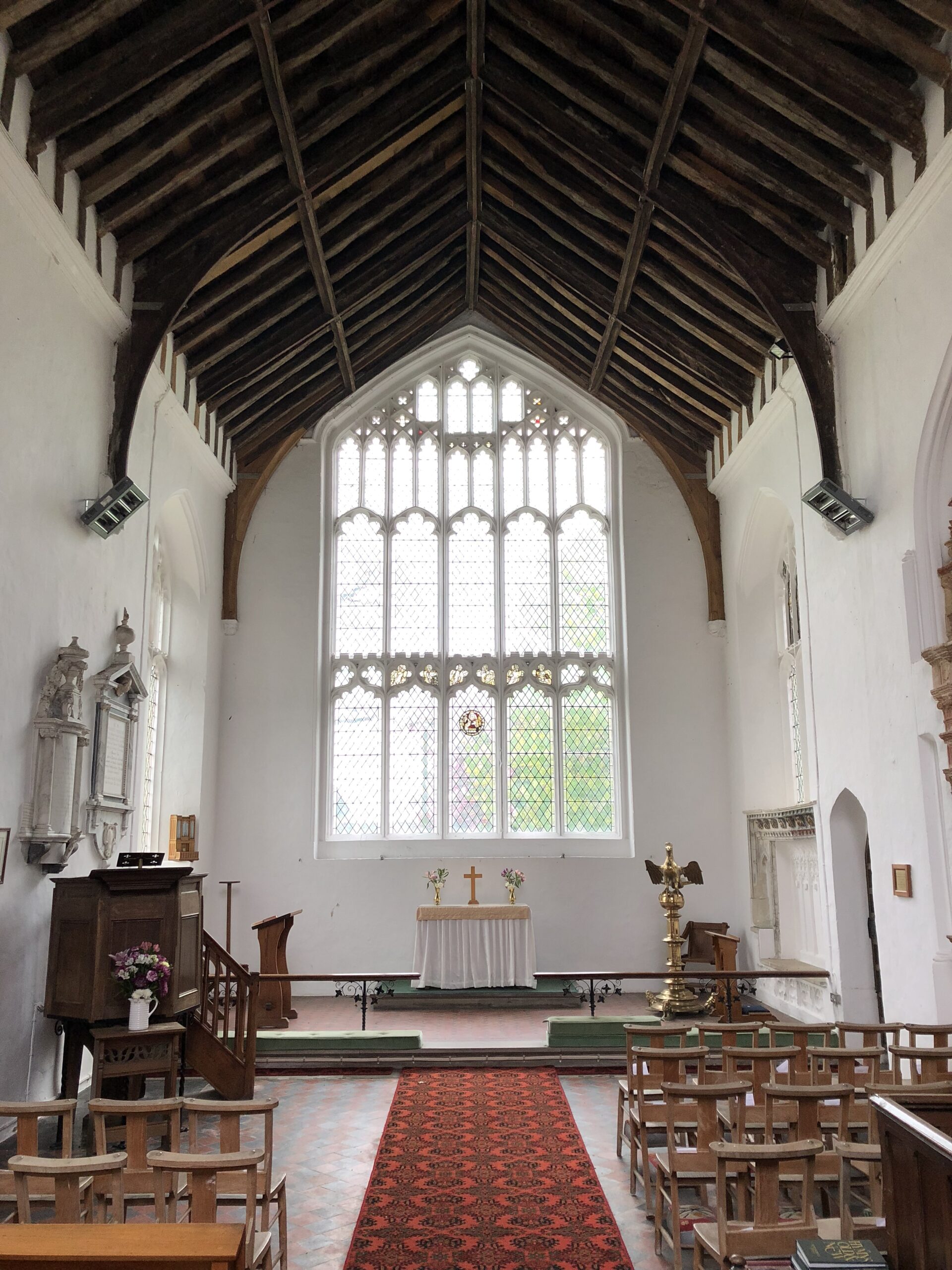
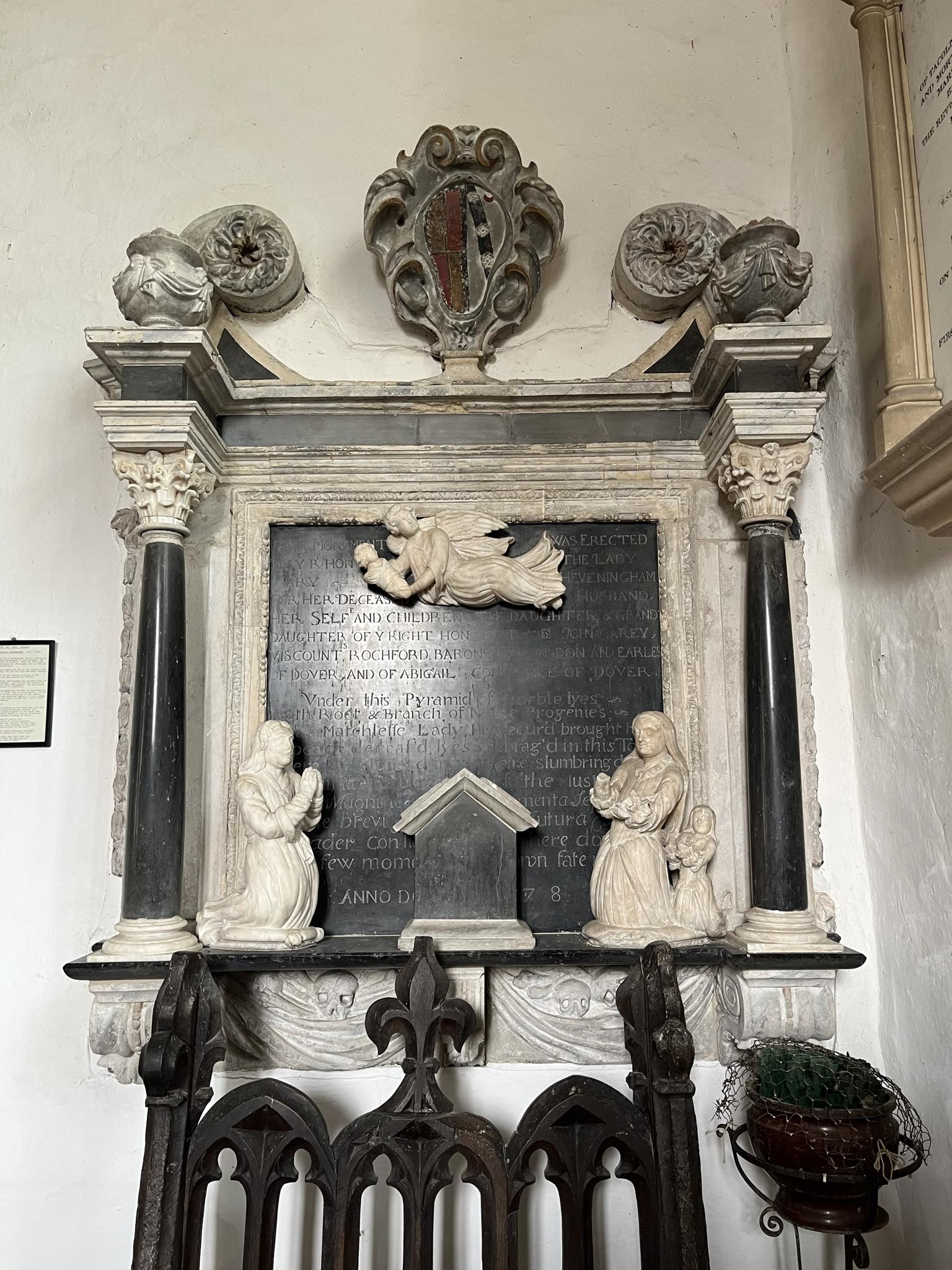
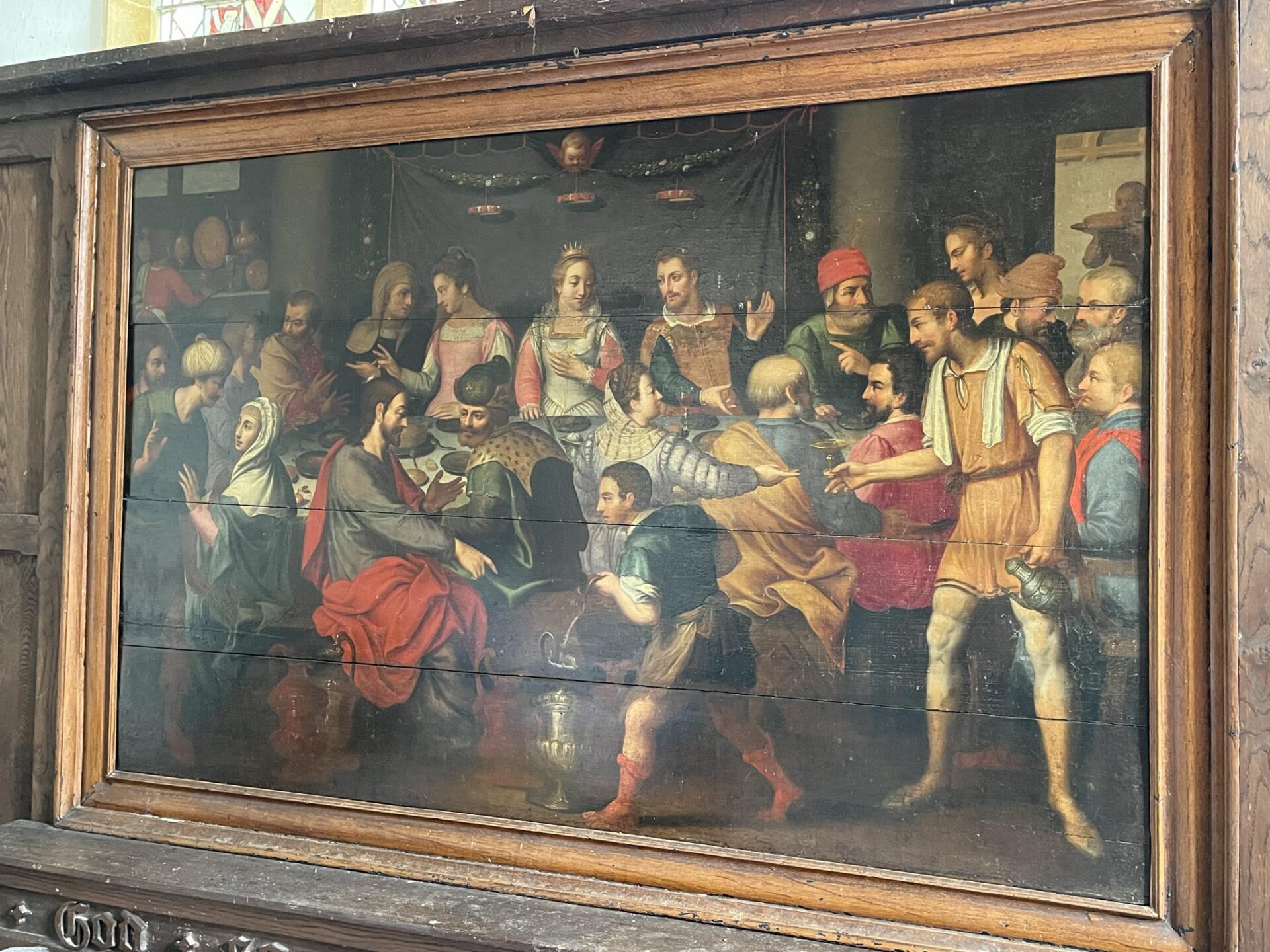
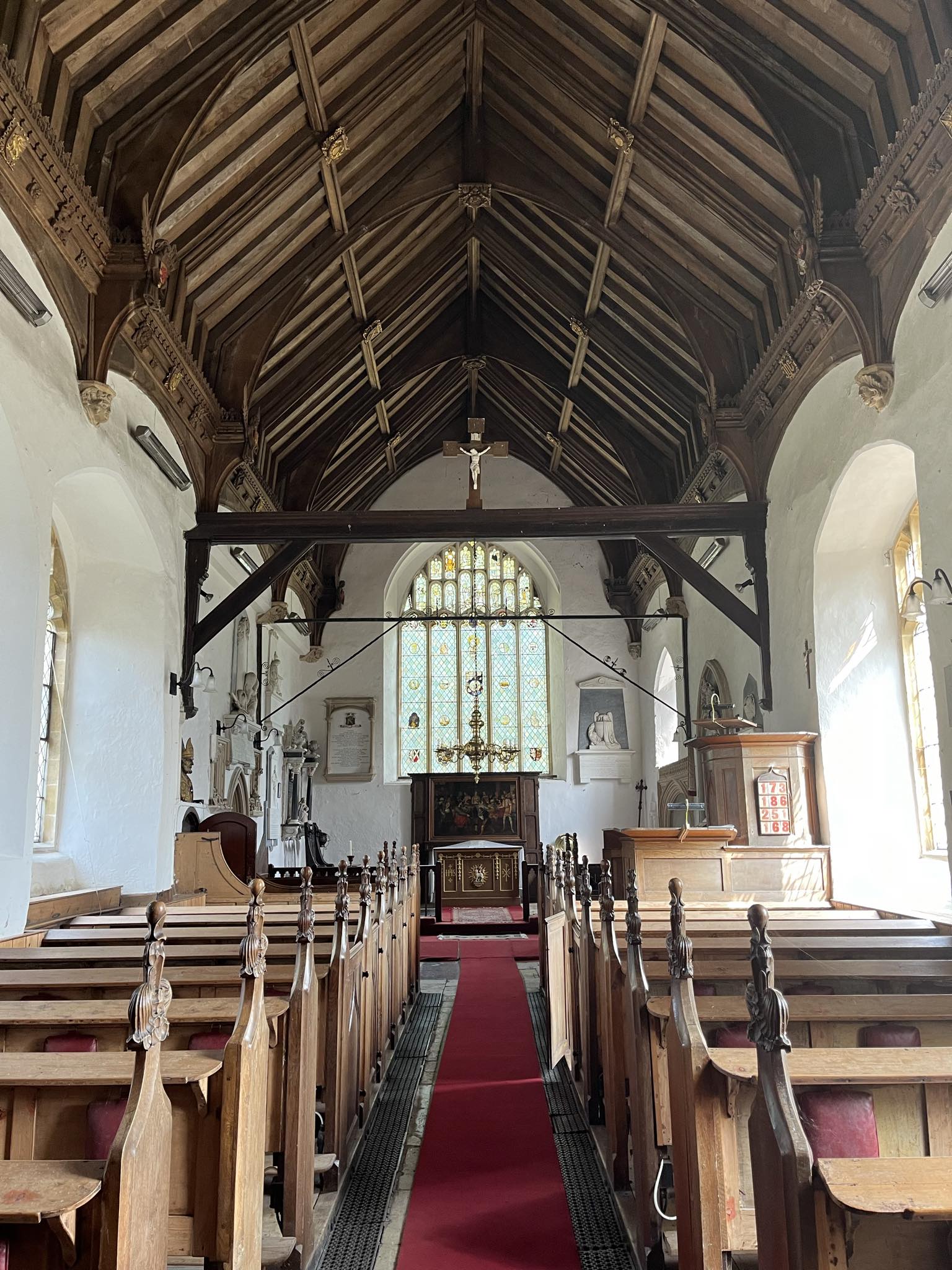
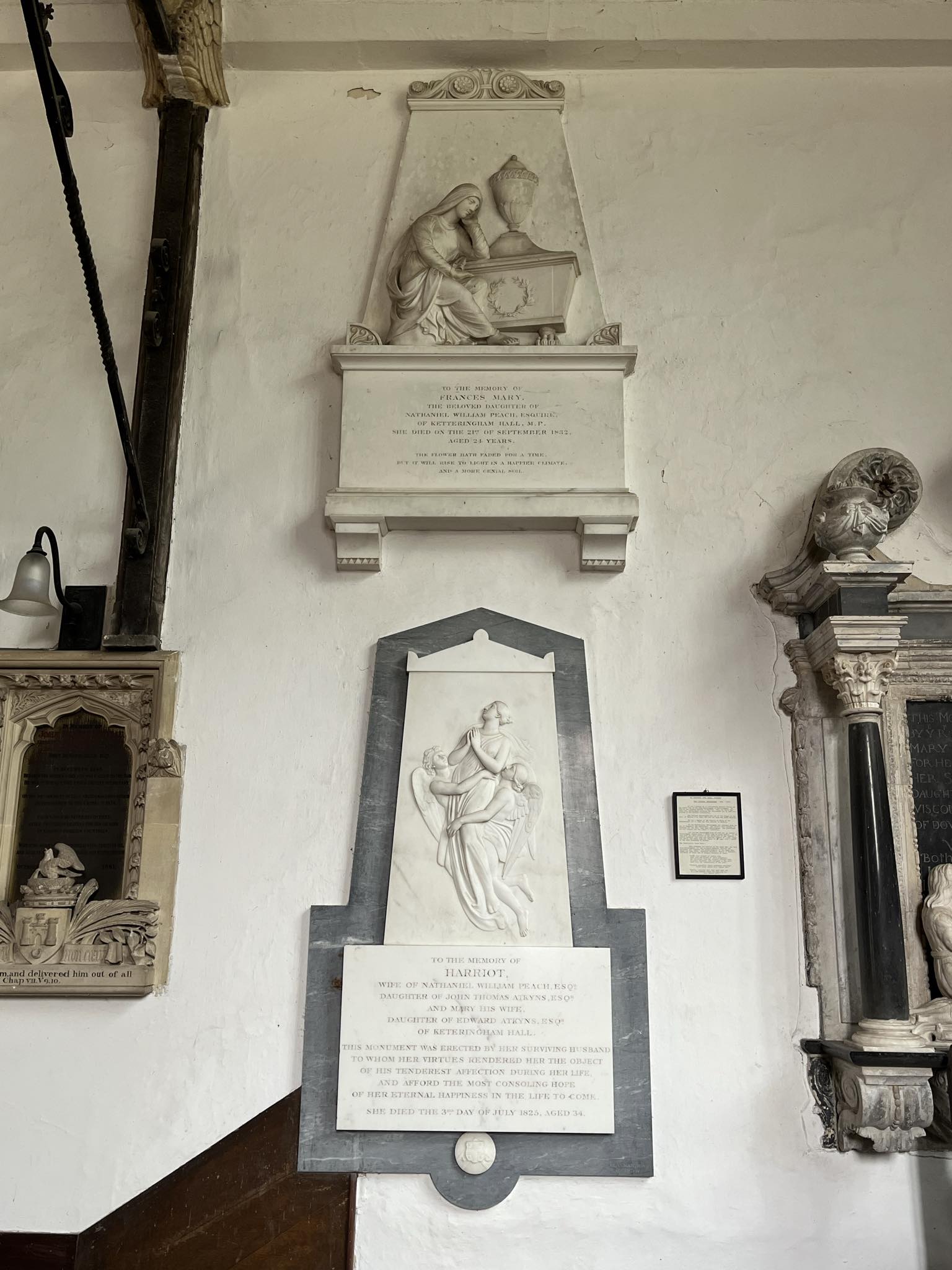
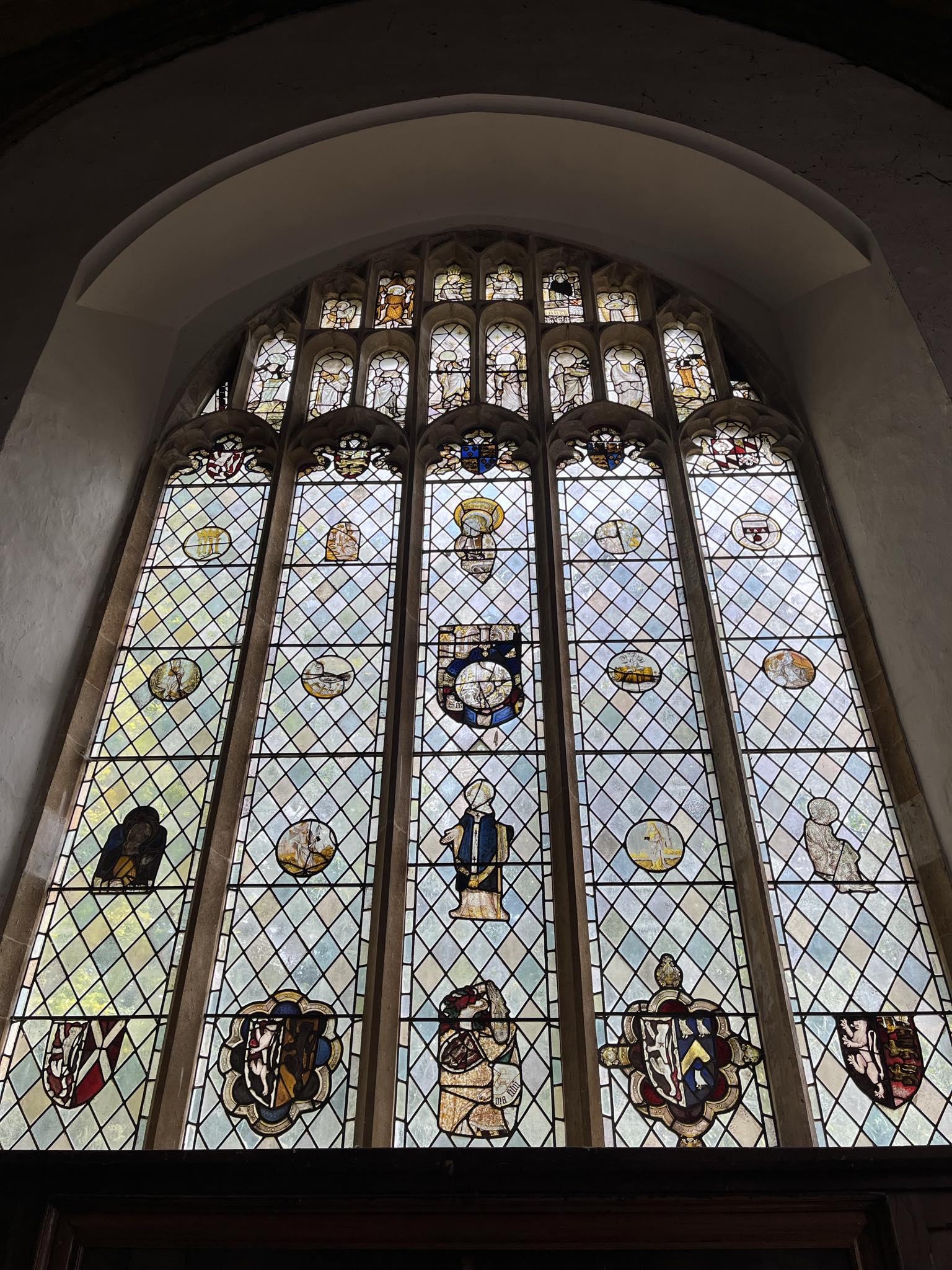
The red brick garden wall of Ketteringham Hall forms the south wall of St Peter’s churchyard. The church is delightful in its proportions and setting, nestled amongst cypress trees and thatched cottages. Look closely and you will see evidence of two blocked Norman windows on the south wall of the nave with small openings framed with flints and rounded arches. The tower was rebuilt in 1609 and the figures standing on top, St Peter and two angels, were added in the 1870s. Floral motifs and shields encircle the 16th century font. The church is overflowing with stories, its walls bedecked in elaborate memorials which reveal the affluence and taste of the owners of the hall from the 14th to the 19th century. Of great interest are the gilded and enamelled brasses commemorating Thomas and Anne Hevenyngham (d. 1499) mounted at the back of the table tomb in the chancel. Five sons kneel with Thomas and five daughters with Anne. Sir William Hevingham (d. 1678) is remembered in a lavish memorial on the north side of the altar. He was on the Parliamentarian side in the English Civil War and present as one of the judges in the trial of Charles I but did not sign the death warrant. Following the Restoration, Sir William’s estates were taken from him and he was imprisoned. Another memorial is that of Drury Lane actress Charlotte Atkyns and states she was a friend of Queen Marie Antoinette of France and made several attempts to rescue her from prison. Intriguing medieval glass survives in the east window and a hand-drawn key mounted on the south west wall of the nave maps the depictions, which include a range of saints and coats of arms.In 1853 a scandal unfolded in Ketteringham. Sir John Boileau of Ketteringham Hall ordered the six bodies buried beneath the chancel to be dug up in the middle of the night and reburied in the churchyard, effectively usurping the occupants to make way for his family, in particular his sick wife. Worshippers soon noticed the smell, as noted in the diary of Revd Wayte Andrew, ‘the stench in the church was insufferable. The long-pent odour of death, released after so many years, hung about the pews like a miasma. The matter could not be hid. Before many hours had passed, the entire village knew what had been done.’ Relatives of the uprooted complained and the Dean of Norwich ordered Sir John to put them back. He then built a mausoleum in the churchyard, which houses his body and that of his wife.

St Peter’s, Ketteringham

Gunton Park
Gunton Park, a mansion in Northeast Norfolk, was designed by Matthew Brettingham who was also responsible for nearby Hanworth Hall and Holkham Hall. The medieval village of Gunton is deserted and no trace of it remains. The grand south elevation of the hall is clearly visible from the track to St Andrew’s Church. It consists of five bays with a nine bay colonnade of Tuscan columns and projecting pavillions. This is only a small glimpse of this substantial building which sprawls to the north where the old service wing, stables, brewhouse yard and octagonal game larder are situated. The estate dates back to the 12th century. It belonged to the Gunton, Berney and Jermyn families before passing into the hands of the Harbords in 1676. Sir William Harbord, 1st Baronet, had the current hall built in 1742 and his nephew, the interestingly named Harbord Harbord, inherited it on his death. Additions were made to the hall, including the building of the main Hanworth Lodge through which the visitor enters the park at the end of a tree lined avenue. A saw mill was constructed in around 1800 below the retaining dam of one of the large man-made lakes in the park. There was a time when the estate was only used as a shooting retreat but prominent abolitionist Edward Harbord, the third Lord Suffield, made further improvements consisting of several new lodges and Gunton Tower following his acquisition of the estate in 1821. The tower stands on high ground and functioned as an observatory. Later, the gardens were developed to an exceptionally high standard to a design by William Teulon. The estate covered 17,000 acres in its heyday in the mid 19th century, which ensured its place amongst the most nationally significant estates. Then, a series of setbacks befell Gunton. In 1882 a devastating fire ripped through the hall and 13 years later a storm felled a huge number of the trees. The estate was in a derelict state when it was broken up and sold in 1979, following the death of Doris Harbord, ending just over 300 years of Harbord ownership. It was sold to Kit Martin who undertook an ambitious restoration project. The hall was converted into individual dwellings in the outer fabric, leaving the central bay unrestored.

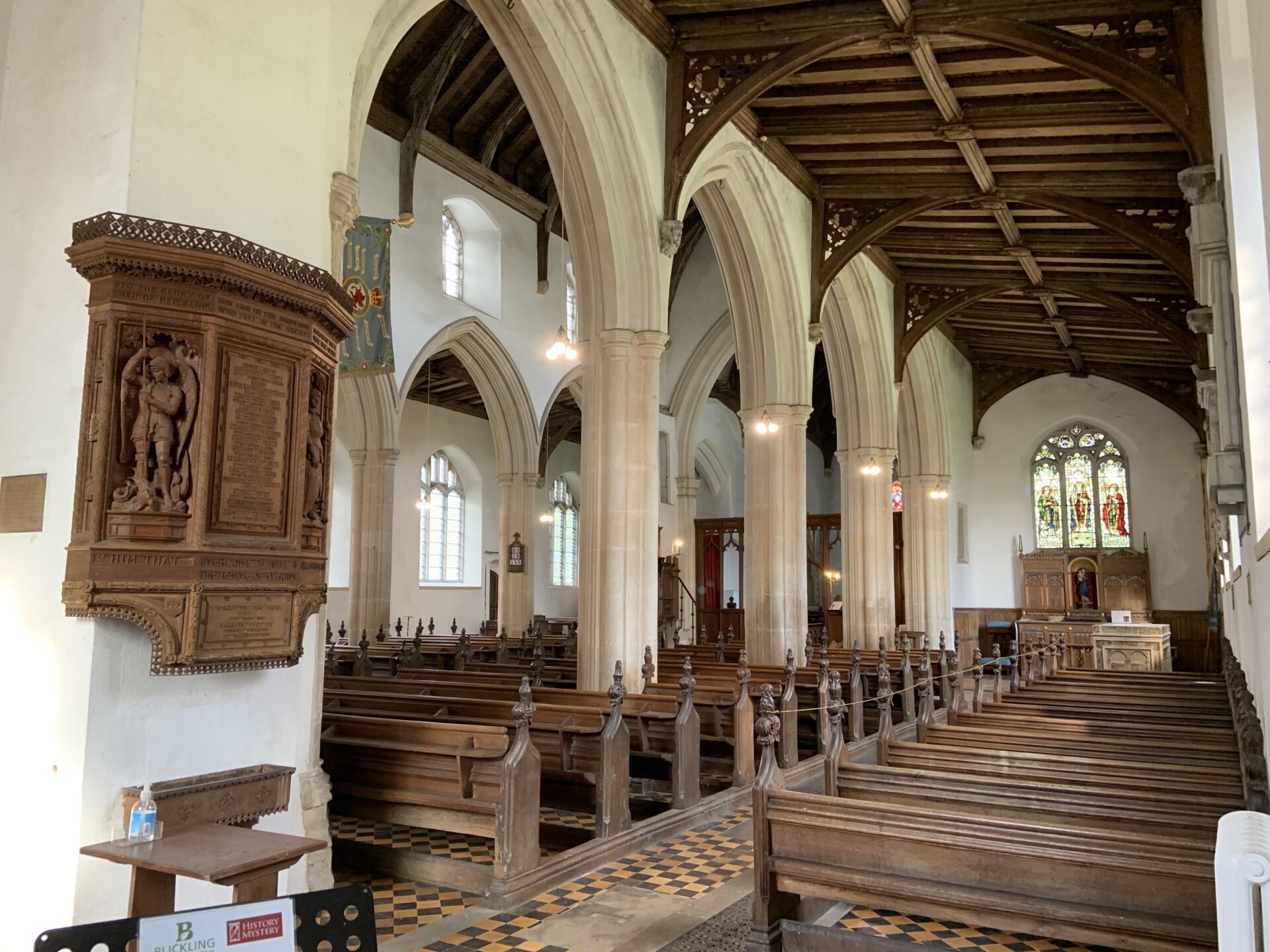
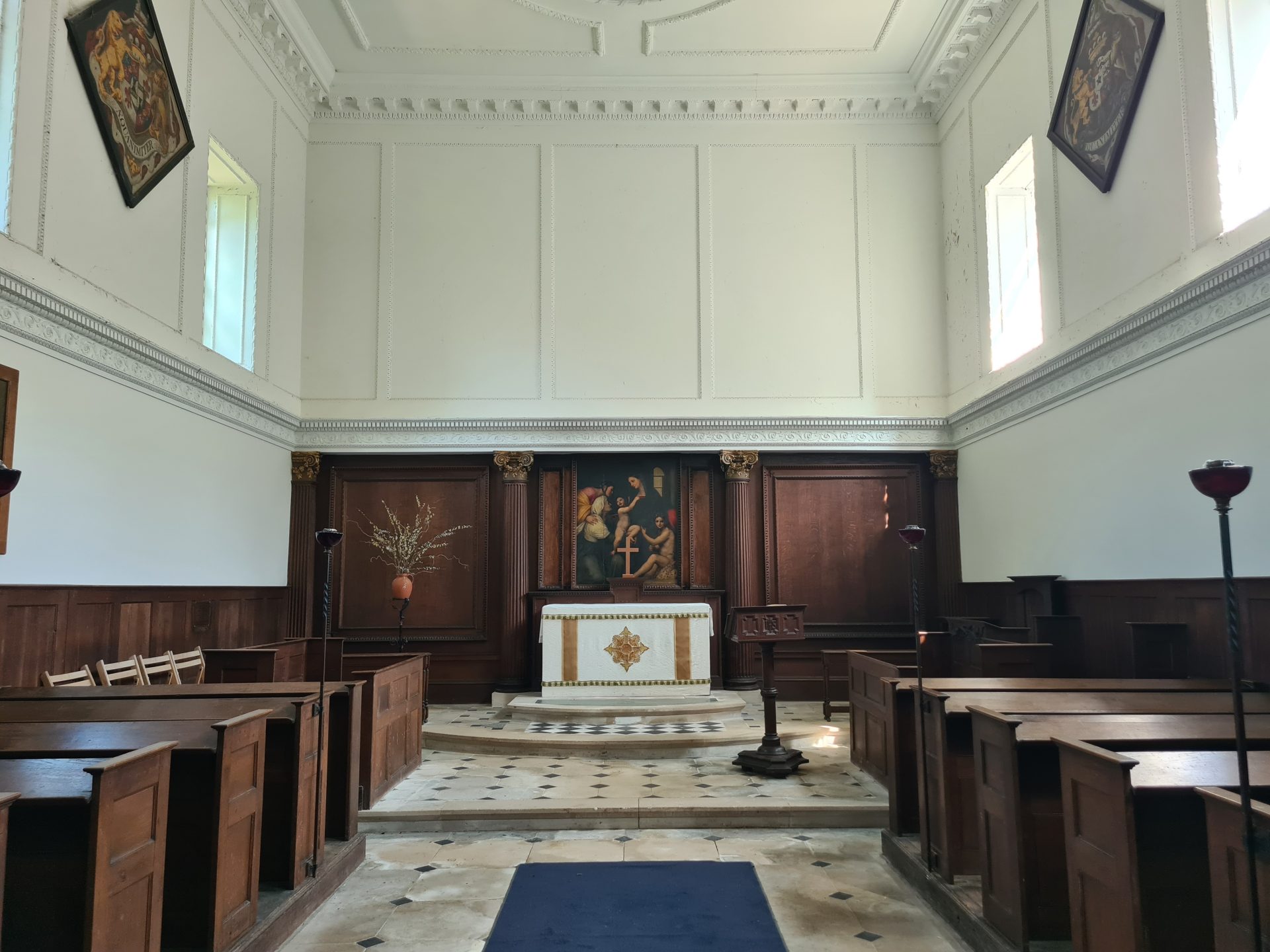
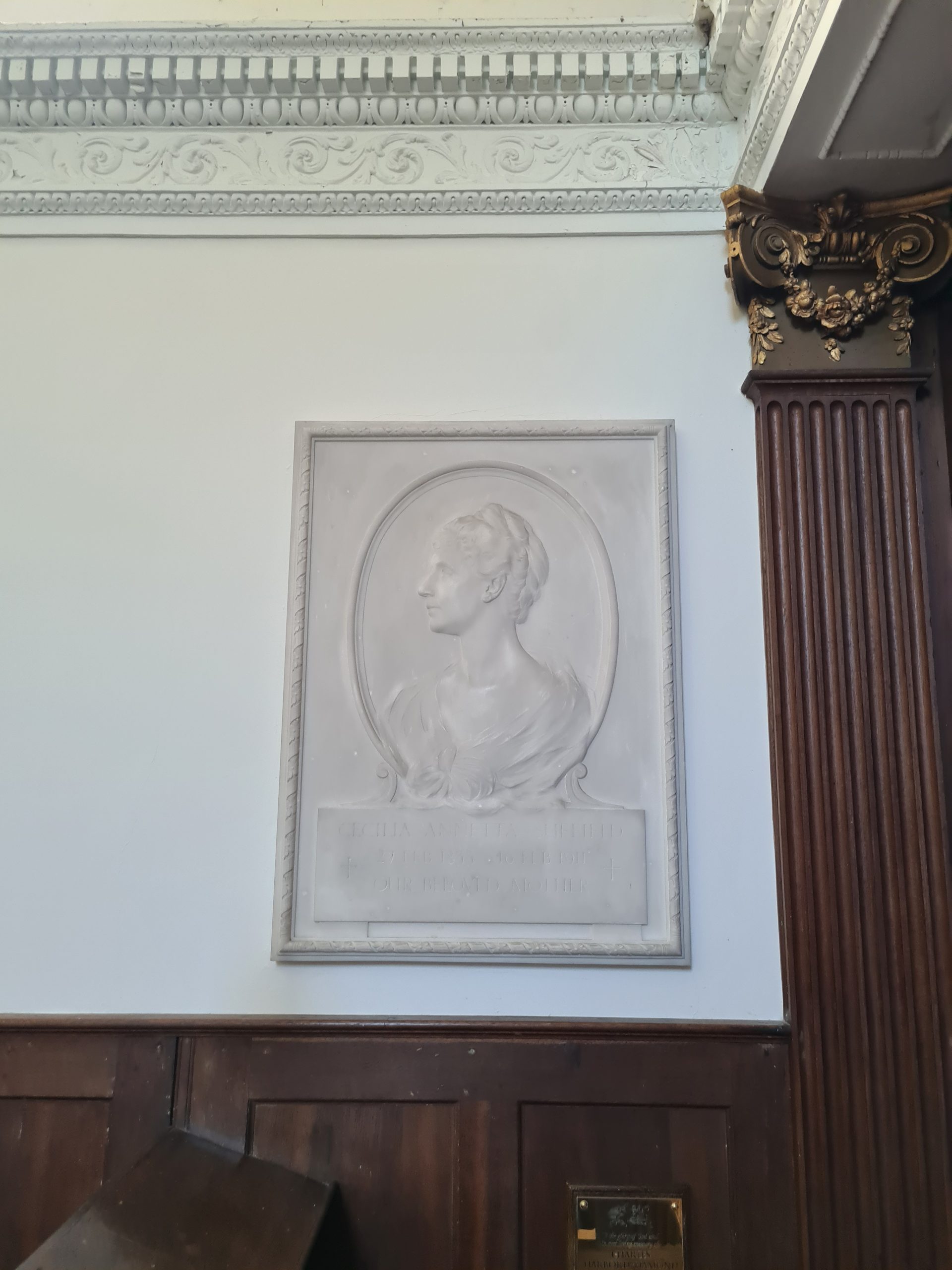
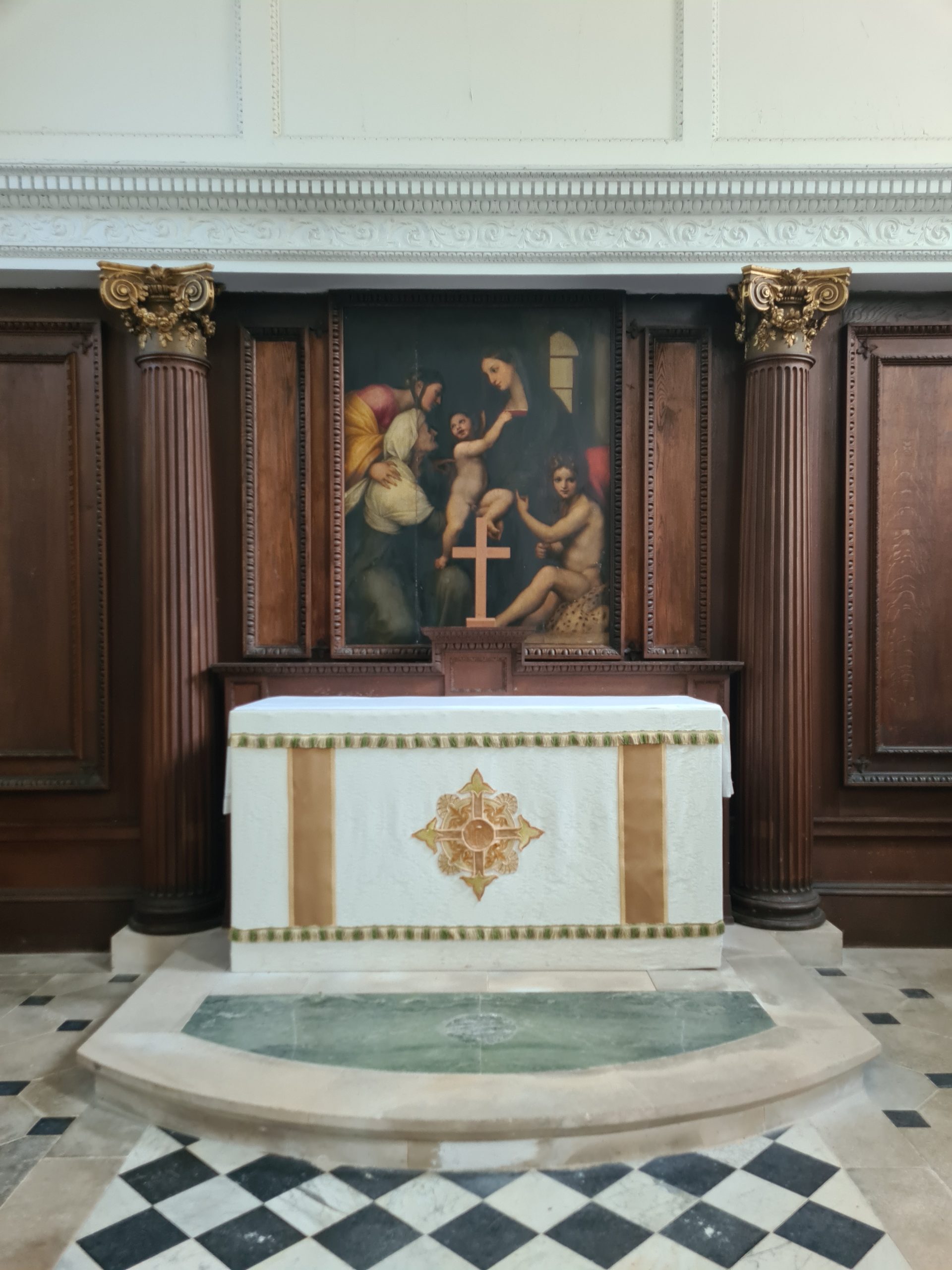
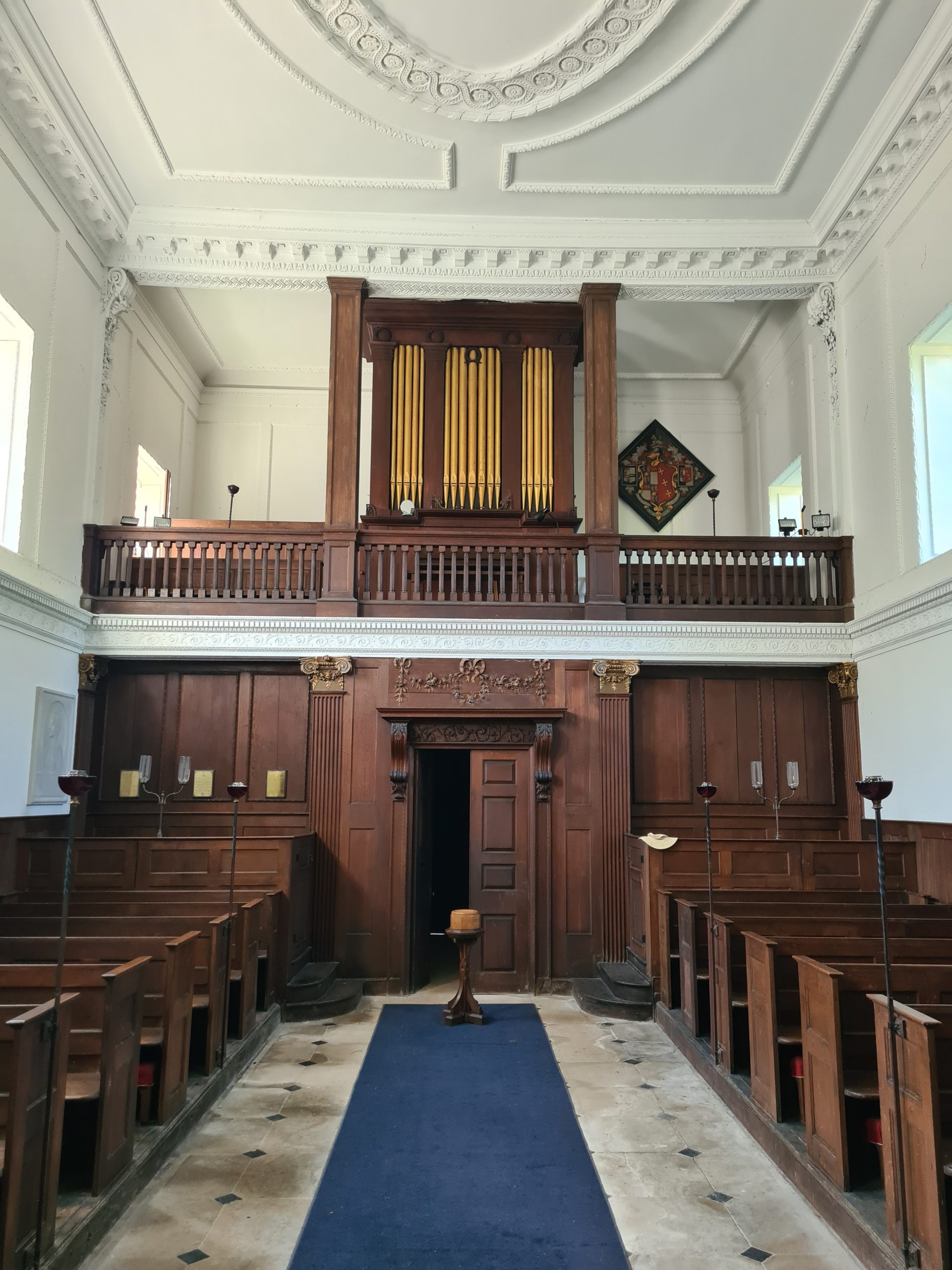
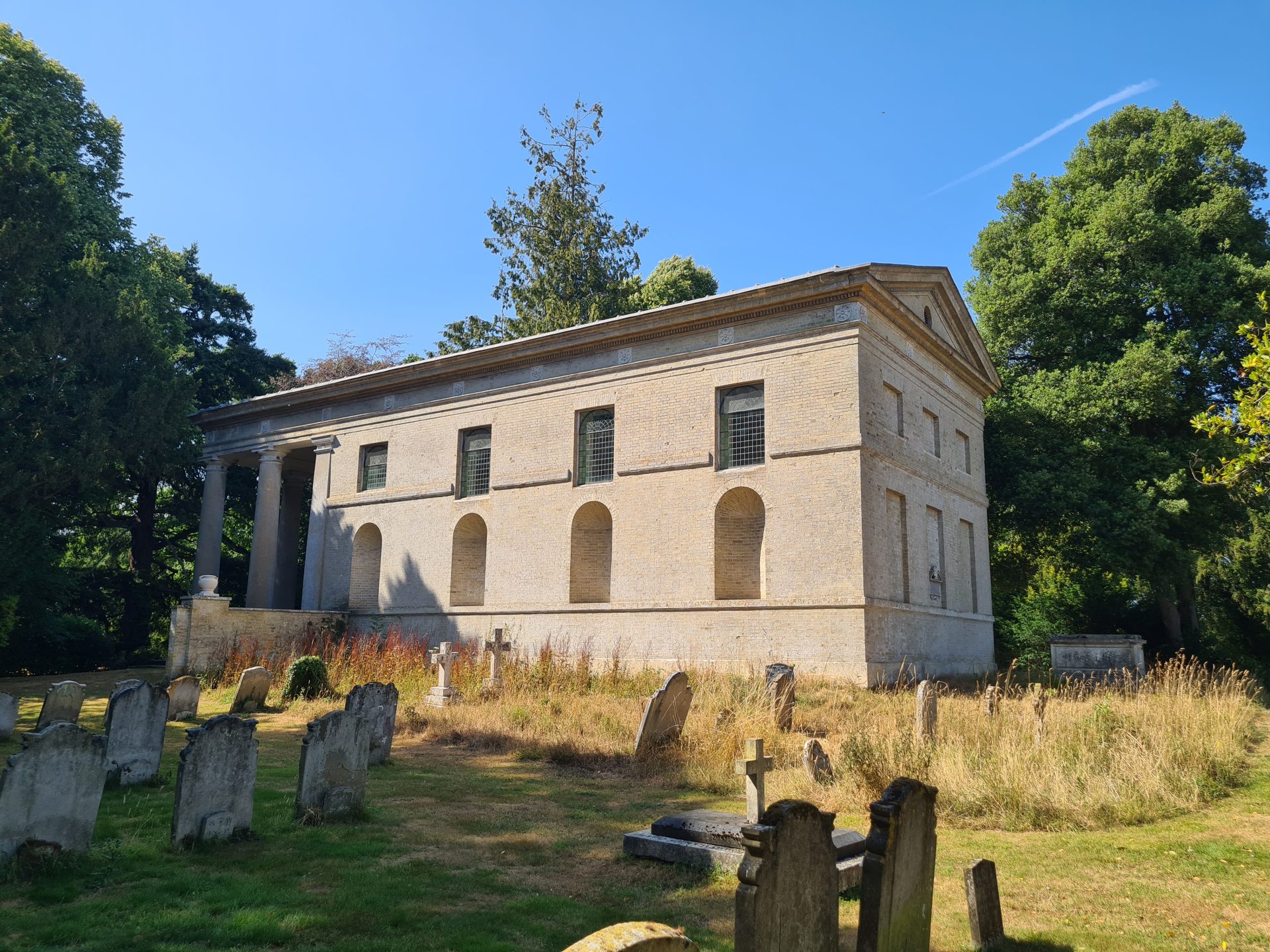
In 1767, after 160 years of neglect, the old medieval church of Gunton was no longer fit for purpose and Sir William Harbord had a new church built in the style of a Grecian temple. The church’s magnificent four-column portico faces the east side of the hall, and is a sight to behold when you emerge through the trees. The esteemed architectural historian Nikolaus Pevsner states ‘it represents everything a C18 park church should be’. A hatchment was reintroduced from the old church and one memorial from the north wall of the old chancel was relocated to the outside of the east wall. The Harbords hung more of their colourful hatchments high on the walls but their other memorials are sparse and modest. In 1826 an austere Greek-revival style organ was installed. For a long time it had to be hand pumped. Under the influence of the Anglo-Catholic movement, the seating was changed so that it faced inwards towards the central aisle, in the style of an ancient college chapel. The floor of the sanctuary was raised up with steps in three stages and inset with green Connemara and Tinos marbles. Paneling separated by four composite Corinthian wooden capitals was placed against the end walls. In 1918 the 6th Baron Suffield changed the pews so they looked east again. He also installed a bas-relief memorial portrait of his mother Cecilia who died in 1911. This is the only one of its kind in the chapel. His wife Evelyn then placed a copy of Raphael’s painting of the Holy family behind the altar. A wooden plaque in the narthex lists the 16 members of the Harbord family buried in the vault beneath the church. In 1976 a serious roof leak caused the ceiling to collapse. The cost of repairing it was beyond the resources of the congregation so the church was declared redundant and is now in the care of the Churches Conservation Trust. Enter the park through the gatehouse on White Post Road, just off the A140. The private property signs refer to the parkland and hall but visitors are permitted to access the church.

Raveningham Hall
Raveningham Hall was built in the late 18th century by Sir Edmund Bacon, 8th and 9th Baronet. This title is the oldest baronetcy in the realm, having been created in 1611, which affords the holder the additional title of Premier Baronet. The Bacons have lived at Raveningham since 1735. The gardens, which Priscilla, Lady Bacon, greatly enhanced in the 1960s, feature herbaceous and mixed borders, wildflower meadows, a rose garden, a walled kitchen garden and 19th century glasshouses. The garden supplies fruit and vegetables for the Hall as it did in its Victorian heyday. A lake was built on the north side of the house as a Millennium project. Ancient trees are dotted throughout the parkland, as are sculptures by Susan, the current Lady Bacon. The gardens are open during February for the snowdrop season with entry fees going to the Priscilla Bacon Hospice. The main visitor season starts in May and pre-booked group tours are available. There is no access to the house.

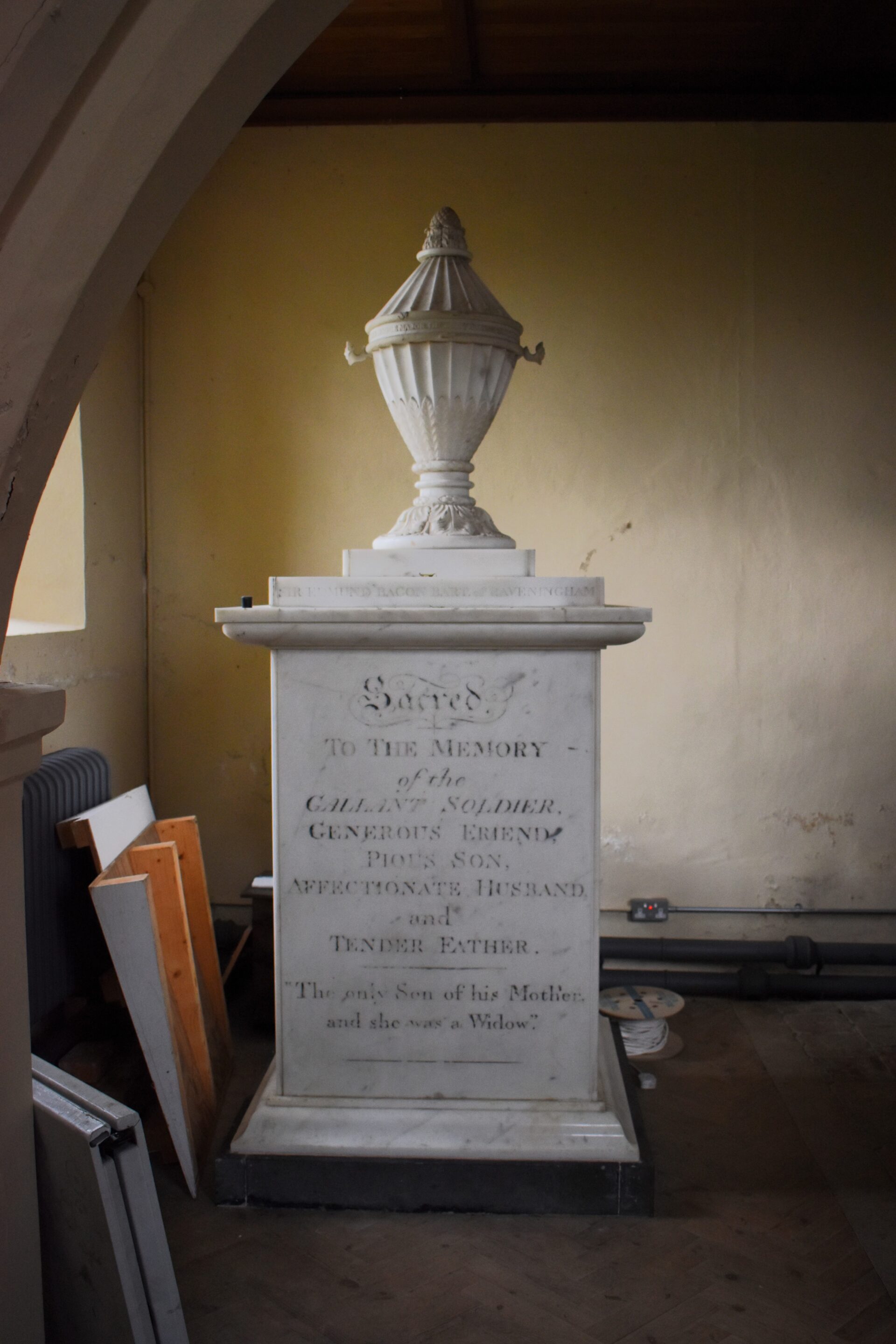
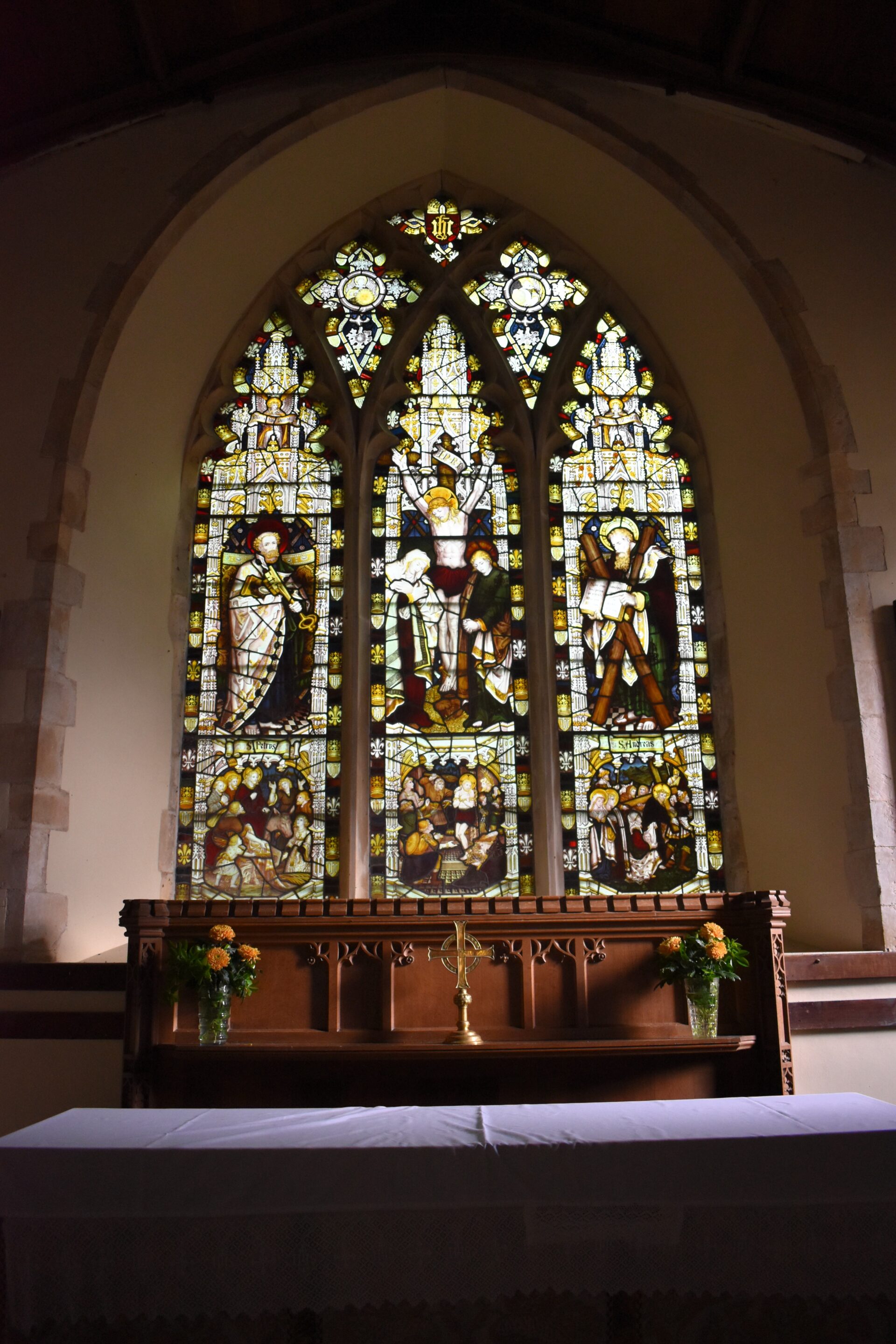
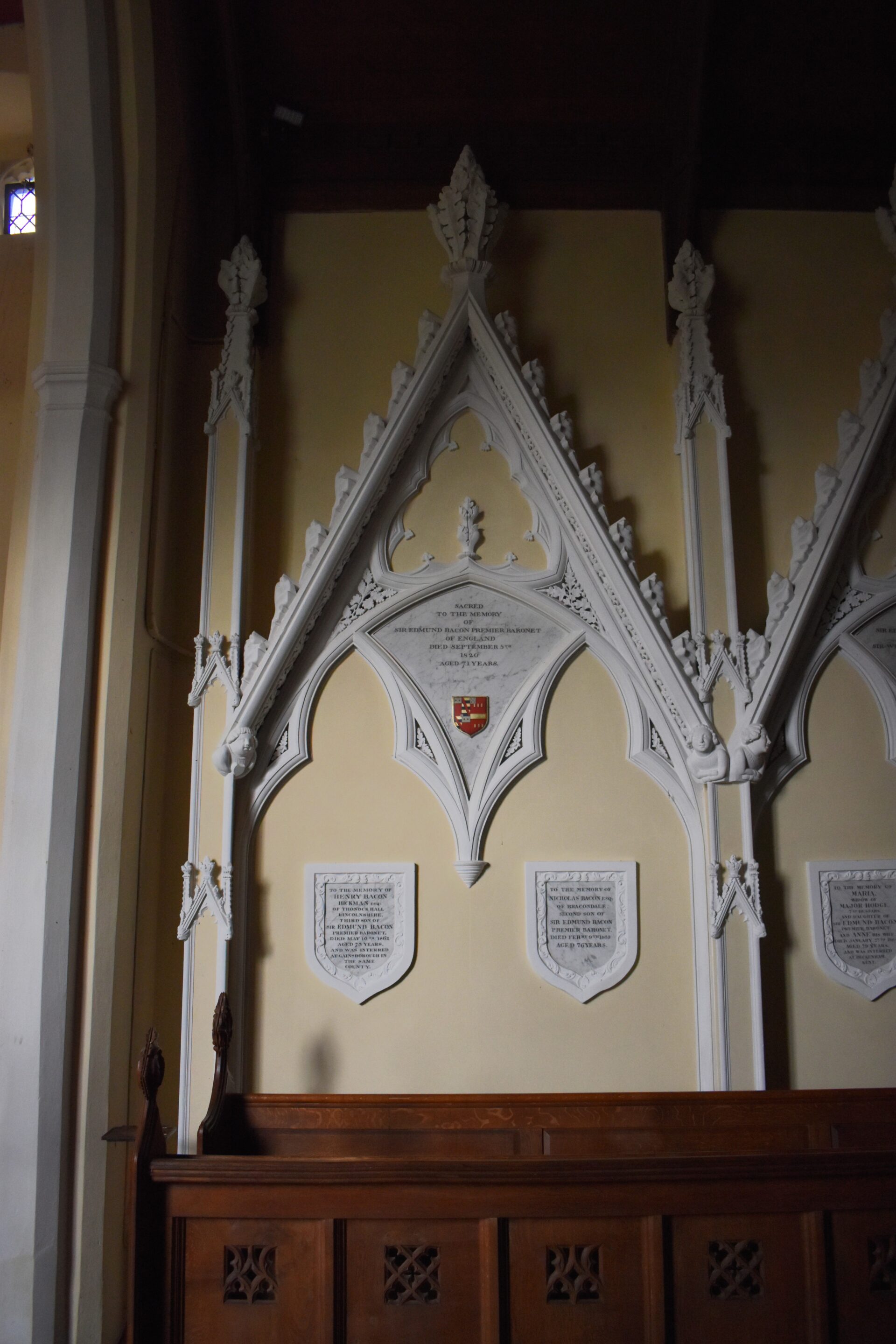
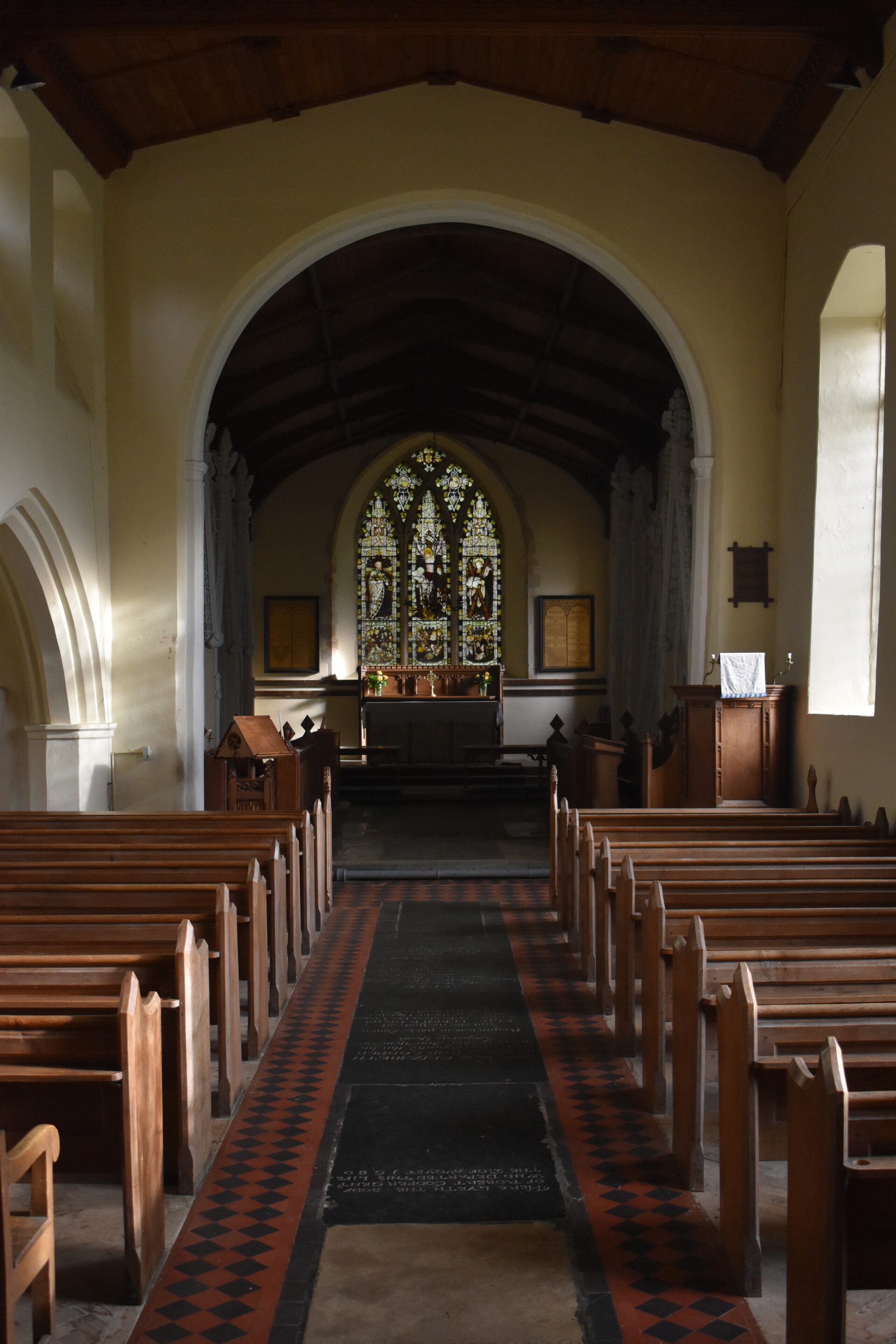
St Andrew’s Church stands in the park of Raveningham Hall and marks the site of the original village. It has a Norman round tower with a 14th century octagonal upper stage, containing a peal of five bells. Step through the grand south door, with wrought iron 13th century crosses, into a bright and airy space. The chancel has canopied memorials on each side, containing commemorative tablets to several members of the Bacon family, dating from 1820. Look carefully and you will notice that the figures on the north side are different to those on the south. A fine brass to Margaret Castyll of 1483 also depicts her dog with bells on its collar and a dragon (St Margaret’s attribute). A large marble monument in the nave, complete with an urn, is dedicated to Major Edmund Hodge who fell in the Battle of Waterloo. The font depicts the symbols of the evangelists and saints.

St Andrew’s, Raveningham

St Martin at Tours, Houghton-next-Harpley
Houghton Hall, Houghton-next-Harpley, PE31 6TZ
Written by Eliza Greenwell
Share


